


Useful articles

Robotic Surgery in Gynaecology: Which Operations and When a Robot Is Chosen
Doctor's blog
sbdrmn
Direction: Robotic surgery · All services
Robotic surgery in gynaecology is a modern way of performing complex operations on the uterus, ovaries and other pelvic organs through small cuts. For most women, though, the real question is a different one: does my operation actually need a robot? Below, in plain language, we explain which gynaecological operations use a robot, when hysteroscopy or standard laparoscopy is enough, which factors influence the choice, how the approaches differ, and what preparation and recovery involve.
Contents
- What robotic surgery in gynaecology is and how the robot works
- Which gynaecological operations are done with a robot?
- When a robot is not needed: hysteroscopy and simple laparoscopy
- What factors influence the choice of a robot?
- Hysteroscopic, laparoscopic, robotic and open surgery compared
- Risks and limitations of robotic gynaecological surgery
- Preparing for robotic gynaecological surgery
- Recovery after robotic surgery
- What to ask your doctor, and help at Saba Darmon clinic
- Frequently asked questions
What robotic surgery in gynaecology is and how the robot works
Robotic surgery in gynaecology is a way of operating on the uterus, ovaries, fallopian tubes and other pelvic organs with robotic assistance through several small cuts in the abdomen. In essence it is an advanced form of keyhole (laparoscopic) surgery: the abdomen is filled with gas, and a camera and slim instruments are passed inside. The difference is that the surgeon does not hold the instruments directly but sits at a nearby console and controls the robotic arms.
The robot does not make decisions and does nothing on its own: every movement copies a movement of the surgeon’s hand. The system provides a magnified three-dimensional view, instruments that bend in every direction like a wrist, and filtering of hand tremor. These features are especially useful in the narrow space of the pelvis, when the surgeon has to stitch deep down or separate delicate tissues carefully.
Which gynaecological operations are done with a robot?
Robotic assistance is most often considered for complex or lengthy operations, or those that involve a lot of stitching:
- Fibroids and myomectomy — removing fibroids while keeping the uterus, and repairing the wall in layers. More detail is in the article on fibroids and robotic surgery.
- Hysterectomy (removal of the uterus) — particularly when the uterus is large, or there is excess weight or scar tissue from previous operations. When it is needed is explained here.
- Endometriosis — deep infiltrating disease, endometriotic ovarian cysts, and deposits close to the bowel or bladder. Protecting ovarian reserve is covered in a separate article.
- Uterine prolapse — sacrocolpopexy, which means attaching the uterus or the top of the vagina to the sacrum with a special mesh; it involves a lot of stitching. See the article on sacrocolpopexy.
- Complex ovarian cysts — large cysts or heavy adhesions where keeping the ovary is important.
- Ectopic pregnancy — in some planned situations; in an emergency, the quickest available method is usually chosen, most often standard laparoscopy.
Robotic surgery is also used for some gynaecological cancers; in these cases the treatment plan is drawn up separately, following cancer-care principles.
When a robot is not needed: hysteroscopy and simple laparoscopy
Many gynaecological problems are dealt with very well without a robot, and in these cases it adds nothing. Problems inside the uterus, such as a polyp, a fibroid bulging into the cavity, intrauterine adhesions or a septum, are treated with no abdominal cuts at all, through the vagina, using hysteroscopy. To check whether the fallopian tubes are open, or to find the cause of unexplained pelvic pain, diagnostic laparoscopy is enough.
Short operations, such as removing a simple ovarian cyst, tying the tubes or dividing minor adhesions, are usually done by conventional laparoscopy. For prolapse, a vaginal operation is sometimes the most suitable route. In these situations a robot does not improve the result, but it may make the operation longer.
What factors influence the choice of a robot?
The surgeon chooses the method for each woman individually, based on the results of her assessment. The following factors often favour a robot:
- excess weight or obesity, because working with standard instruments through a thick abdominal wall is harder;
- previous operations (caesarean section, appendix removal) and significant adhesions;
- a large uterus or many deep-seated fibroids;
- steps that need deep and extensive stitching (myomectomy, sacrocolpopexy);
- delicate dissection close to the ureters, the bowel or major blood vessels (deep endometriosis).
On the other hand, with some heart and lung conditions it is difficult to tolerate lying head-down for a long time while the abdomen is filled with gas. This applies to both laparoscopy and robotic surgery, and in such cases the anaesthetist is consulted separately.
Hysteroscopic, laparoscopic, robotic and open surgery compared
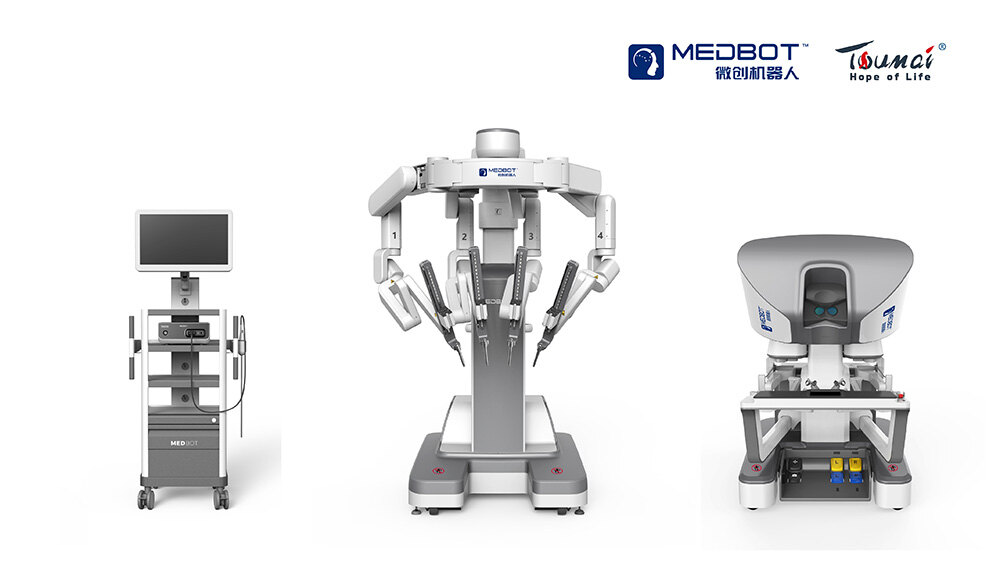
Saba Darmon clinic has the MedBot Toumai robotic system, and when it is indicated a gynaecological operation may be performed with robotic assistance. The table shows the general differences between the approaches:
| Approach | Access | Typical situations | Recovery |
|---|---|---|---|
| Hysteroscopic | Through the vagina and cervix, no cuts | Polyp, submucosal fibroid, intrauterine adhesions | Fastest, often home the same day |
| Laparoscopic | Several small cuts in the abdomen | Cysts, tubes, many hysterectomies and myomectomies, diagnosis | Quick |
| Robotic | Several small cuts, surgeon at the console | Complex myomectomy, large uterus, deep endometriosis, sacrocolpopexy, obesity | Quick, similar to laparoscopy |
| Open | One larger cut in the abdomen | Very large masses, some emergency or cancer situations | Longer |
More about the differences between robotic and laparoscopic surgery is on our robotic surgery page.
Risks and limitations of robotic gynaecological surgery
A robotic operation is still surgery, and its risks are similar to those of standard laparoscopy: bleeding, infection, injury to the bladder, ureter or bowel, blood clots in the leg veins, and complications of anaesthesia. Sometimes the surgeon has to switch to an open operation for safety; this is not a failure but the right decision. A robotic operation can take longer than a laparoscopic one. Research has not shown that in straightforward cases the robot gives clearly better results than laparoscopy: it makes the surgeon’s work easier in complex cases, while the outcome depends above all on the surgeon’s experience.
Preparing for robotic gynaecological surgery
Preparation starts with a consultation with a gynaecologist: an examination, a pelvic ultrasound, MRI or CT if needed, blood and urine tests, and a cervical smear. The anaesthetist assesses your heart, lungs and current medicines. Do not stop blood-thinning medicines on your own; your doctor decides about this. You are advised to stop smoking as early as possible. Before some operations (for example, for deep endometriosis) bowel preparation may be prescribed. Discuss with your surgeon in advance which organs will be kept, the chance of switching to open surgery and the expected recovery time.
Recovery after robotic surgery
Many women are walking on the day of the operation or the next day, and the hospital stay is usually short. In the first few days the gas used during surgery can cause shoulder-tip pain, and bloating and soreness around the small cuts are common; these usually settle within a few days. Walking early helps prevent blood clots. When you can return to light work depends on the operation: sooner after a minor procedure, later after a hysterectomy or myomectomy. After a hysterectomy you should avoid heavy lifting and sex for several weeks until the top of the vagina has healed; your doctor will give you the exact timing. Make sure you discuss the histology result for the removed tissue at your follow-up visit.
If after surgery you develop a fever, worsening abdominal pain, vomiting that will not stop, heavy vaginal bleeding, pus from a wound, difficulty passing urine, a swollen or painful leg, or sudden breathlessness or chest pain, do not wait: contact a doctor straight away, and if you feel seriously unwell call 103.
What to ask your doctor, and help at Saba Darmon clinic
At your consultation, ask: do I need an operation at all, or is there another option; why this particular approach, whether hysteroscopy, laparoscopy or a robot; will my uterus and ovaries be kept; how likely is a switch to open surgery; how long will I stay in hospital and when can I go back to work; when can I plan a pregnancy? Experienced gynaecologists see patients at Saba Darmon clinic, and ultrasound, laboratory tests and CT scanning are available for assessment. The clinic has the MedBot Toumai robotic system, and where appropriate the operation may be performed with robotic assistance; the surgeon chooses the method after assessment. More about our gynaecology department.
Frequently asked questions
Is robotic gynaecological surgery better than laparoscopy?
Not always. In straightforward cases, such as a small cyst or a diagnostic procedure, laparoscopy gives the same result and is often quicker. The robot makes the surgeon’s work easier in complex situations, for example a large uterus, deep endometriosis, extensive stitching or obesity. The outcome depends above all on the surgeon’s experience, and the surgeon chooses the method after assessment.
Which gynaecological operations are done robotically?
Most often complex myomectomies and hysterectomies, surgery for deep endometriosis and endometriotic cysts, sacrocolpopexy for prolapse, and removal of large ovarian cysts or cysts stuck down by adhesions. It is also used for some cancers. There is a separate article on fibroids. Whether a robot is needed in your case is decided individually by the surgeon, based on your test results.
Do I need a robot for a polyp or fibroid inside the uterus?
No. A polyp, a fibroid bulging into the cavity or intrauterine adhesions are usually removed by hysteroscopy, through the vagina, with no cuts in the abdomen at all. It is the least invasive option, and patients often go home the same day. Robotic and laparoscopic surgery are needed for problems within the wall of the uterus or outside it. Read more about hysteroscopy.
When can I go back to work after robotic surgery?
It depends on the operation. After a diagnostic or minor procedure, many women return to light work within one to two weeks, while after a hysterectomy or myomectomy more time is needed. Your doctor sets the limits on heavy lifting and sex according to the extent of the operation. Walking early and following your doctor’s advice help you recover faster.
Can I get pregnant after robotic surgery?
If the uterus and at least one ovary are kept, pregnancy is possible in many cases. The waiting time depends on the operation: after a myomectomy, for example, a wait of several months is advised so that the wall of the uterus can heal. After surgery for endometriosis or an ovarian cyst, ovarian reserve is taken into account. The surgeon who operated and your gynaecologist will make a precise plan with you.
More about robotic surgery:
- Robotic Surgery in Tashkent — all directions
- Robotic Surgery in Tashkent: the MedBot Toumai System
- Is Robotic Surgery Safe? 10 Questions
- Robotic Surgery vs Laparoscopy: What Is the Difference
- Preparing for Robotic Surgery: Step by Step
- Recovery After Robotic Surgery
- Bladder Cancer: Robotic Cystectomy
- Hernia: Robotic Repair
- Gallbladder: Robotic Cholecystectomy
- Who Is Not Suitable for Robotic Surgery
- Uterine and Cervical Cancer: Robotic Surgery
- Large Prostate Adenoma: TURP or Robotic Surgery
- Varicocele Surgery: Marmar or Robotic
- Kidney Removal: Robotic Nephrectomy
- Ectopic Pregnancy: Tube-Sparing Robotic Surgery
- Female Urinary Incontinence: TVT or Robotic Surgery
- Uterus Removal: Robotic Hysterectomy
- Hiatal Hernia and Reflux: Robotic Fundoplication
- Liver Tumour: Robotic Liver Resection
- Pancreatic Tumour: Robotic Resection
- Obesity Surgery: Robotic Sleeve Gastrectomy
- Diastasis Recti: Robotic Repair
- Colon Cancer: Robotic Hemicolectomy
- Anaesthesia and Pain Control in Robotic Surgery
- Pregnancy After Robotic Myomectomy
- Abdominal Adhesions: Robotic Adhesiolysis
- Ovarian Cyst: Robotic Cystectomy
- Obesity: Robotic Gastric Bypass
- Robotic Prostatectomy
- Kidney Tumour: Robotic Partial Nephrectomy
- Colorectal Cancer: Robotic Surgery
- Uterine Fibroids: Robotic Surgery
- Endometriosis and Ovarian Cysts: Robotic Surgery
- What Is Telesurgery?
- Robotic Surgery in Older Adults
- Stomach Cancer: Robotic Gastrectomy
- Hydronephrosis: Robotic Pyeloplasty
- Pelvic Organ Prolapse: Robotic Sacrocolpopexy
- Adrenal Tumour: Robotic Adrenalectomy
Doctors for consultation
Our gynaecologists help you choose the right surgical approach and prepare for it. Our doctors in this field:






Book an appointment with a gynaecologist
Have you been advised to have surgery? After assessment the doctor will explain which approach suits you and what the next steps are.
Call now — +998 71 210-30-30Contacts
Address: 7A/3 Nurafshon street, Tashkent
Phone: +998 71 210-30-30 · WhatsApp: +998 95 662-30-30
Opening hours: Monday–Saturday, 09:00–18:00
E-mail: