


Useful articles

Gallbladder: Robotic Cholecystectomy and What to Know About Stones
Doctor's blog
sbdrmn
Direction: Robotic surgery · All services
Removing the gallbladder is one of the most frequently performed operations in the world. Yet patients are left with the same questions: why take the whole organ rather than the stones; is a robot needed; what can I eat afterwards. Here are the answers in turn.
Contents
Gallstones: when an operation is needed
Finding gallstones is common, and it does not always mean immediate surgery. If the stones cause no symptoms at all and were found incidentally on ultrasound, observation is often chosen.
Surgery is discussed when there is:
- recurrent pain under the right ribs (biliary colic);
- acute inflammation — cholecystitis;
- a stone passing into the bile duct, causing jaundice or pancreatitis;
- a thickened wall or a "porcelain" gallbladder;
- large or numerous stones, or polyps.
If pain lasts several hours, fever develops, the whites of the eyes or the skin turn yellow, or vomiting begins — this is an emergency. Do not wait.
Why the gallbladder is removed rather than the stones
This is the most common question. Taking out the stones and leaving the gallbladder makes no sense: the stones form because of the gallbladder itself — its wall and the balance of bile are disturbed. If the organ stays, the stones return.
The gallbladder acts as a reservoir; bile itself is produced by the liver. Digestion therefore continues after removal — bile simply flows into the bowel directly.
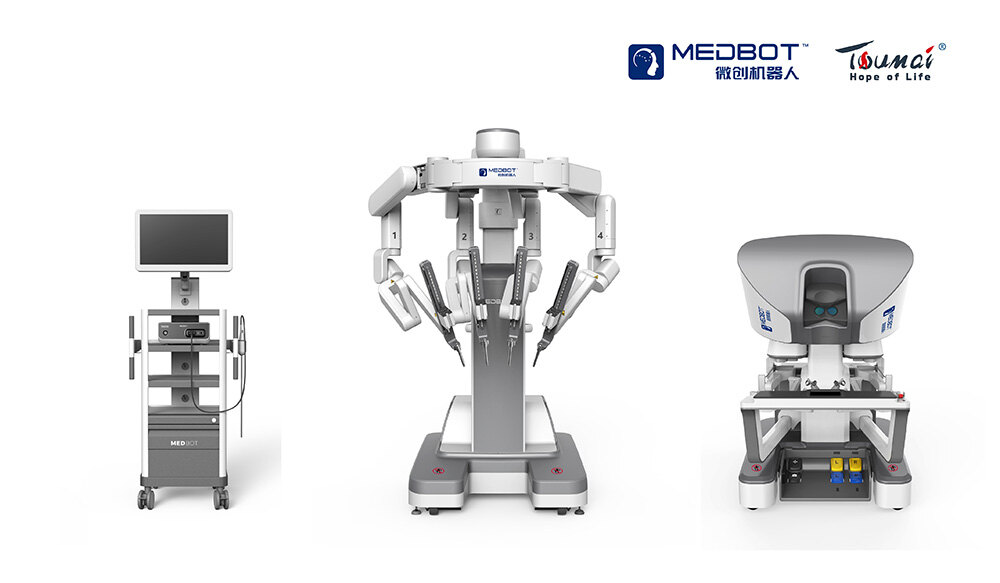
Laparoscopy is the standard for this operation
Gallbladder removal is among the most widely performed port-based operations. For planned cases the method is well established and results are consistent. The robot does not replace laparoscopy here — in a routine case laparoscopy is entirely sufficient.
The robotic approach is considered in particular situations: dense adhesions, anatomy altered by long-standing inflammation, or when combined with another procedure.
Whichever method is used, one safety rule governs: nothing is divided until the bile ducts are clearly identified. If there is doubt, the surgeon converts to open surgery — not a complication, but a decision in favour of safety.
Conversion to open surgery
This is what worries patients most. In reality it is a planned-for scenario: with marked inflammation or unclear anatomy, continuing through ports becomes risky. In acute cholecystitis the likelihood is higher than in planned surgery, and it is worth discussing in advance.
The operation and the first days
The procedure is performed under general anaesthesia through several ports. The gallbladder is freed, the duct and artery are secured, and the organ is removed and sent for histological examination.
Most patients are up quickly and home within a short time — your surgeon will give the expected stay. Pain in the shoulder or under the collarbone is possible: it comes from gas irritating the diaphragm, has nothing to do with the heart, and settles within a day or two.
Eating afterwards: what to expect
For the first weeks fatty, fried and spicy food is limited and meals are kept small. Most people later return to their usual diet.
Some patients notice looser stools after fatty meals in the first months — this reflects bile flowing continuously without a reservoir, and the body usually adapts with time.
If pain persists after surgery or jaundice appears, do not put it down to "adjusting". It may mean a stone left in the duct and requires investigation.
What to clarify with your doctor
Whether surgery is needed now or observation is possible; whether the duct has been checked for stones; the likelihood of conversion to open surgery; how many days in hospital; how long to follow a modified diet. More detail in the articles on pre-operative assessment and the recovery plan.
Frequently asked questions
Can the stones be removed and the gallbladder left?
No. Stones form because of the gallbladder itself, so with the organ in place they return. That is why the whole gallbladder is removed.
Will digestion suffer without a gallbladder?
Bile is produced by the liver; the gallbladder is only a reservoir. Digestion continues, though the first months may involve adapting to fatty food.
Does it have to be done with a robot?
No. For planned operations laparoscopy is the standard and is sufficient. The robot is considered where anatomy is complex or adhesions are dense.
Is conversion to open surgery possible?
Yes, and it is anticipated in advance. The likelihood is higher in acute inflammation. It is not a complication but a decision for safety.
How long must I follow a diet?
Restrictions usually apply for the first weeks, after which eating is gradually widened. Your doctor will give the exact period.
What if pain persists after the operation?
Persisting pain or jaundice may indicate a stone left in the duct, and calls for investigation.
More about robotic surgery:
- Robotic Surgery in Tashkent — all directions
- Robotic Surgery in Tashkent: the MedBot Toumai System
- Is Robotic Surgery Safe? 10 Questions
- Robotic Surgery vs Laparoscopy: What Is the Difference
- Preparing for Robotic Surgery: Step by Step
- Recovery After Robotic Surgery
- Bladder Cancer: Robotic Cystectomy
- Hernia: Robotic Repair
- Who Is Not Suitable for Robotic Surgery
- Uterine and Cervical Cancer: Robotic Surgery
- Large Prostate Adenoma: TURP or Robotic Surgery
- Varicocele Surgery: Marmar or Robotic
- Kidney Removal: Robotic Nephrectomy
- Ectopic Pregnancy: Tube-Sparing Robotic Surgery
- Female Urinary Incontinence: TVT or Robotic Surgery
- Uterus Removal: Robotic Hysterectomy
- Hiatal Hernia and Reflux: Robotic Fundoplication
- Liver Tumour: Robotic Liver Resection
- Pancreatic Tumour: Robotic Resection
- Obesity Surgery: Robotic Sleeve Gastrectomy
- Diastasis Recti: Robotic Repair
- Colon Cancer: Robotic Hemicolectomy
- Anaesthesia and Pain Control in Robotic Surgery
- Pregnancy After Robotic Myomectomy
- Robotic Prostatectomy
- Kidney Tumour: Robotic Partial Nephrectomy
- Colorectal Cancer: Robotic Surgery
- Uterine Fibroids: Robotic Surgery
- Endometriosis and Ovarian Cysts: Robotic Surgery
- What Is Telesurgery?
- Robotic Surgery in Older Adults
- Stomach Cancer: Robotic Gastrectomy
- Hydronephrosis: Robotic Pyeloplasty
- Pelvic Organ Prolapse: Robotic Sacrocolpopexy
- Adrenal Tumour: Robotic Adrenalectomy
Doctors for consultation
Gallbladder operations are performed by our clinic's surgeons. Our doctors in this field:




Is robotic surgery right for you?
Book an appointment with a surgeon and bring your test results: the doctor will compare the options and recommend the safest one for you.
Call now — +998 71 210-30-30Contacts
Address: 7A/3 Nurafshon street, Tashkent
Phone: +998 71 210-30-30 · WhatsApp: +998 95 662-30-30
Opening hours: Monday–Saturday, 09:00–18:00
E-mail: