


Useful articles

Colorectal Cancer: Robotic Surgery and Sphincter-Preserving Treatment in Tashkent
Doctor's blog
sbdrmn
Direction: Robotic surgery · All services
Colon and rectal cancer responds well to treatment when it is found early. The question patients worry about most is: “Will I be left with a stoma after the operation?” Modern surgery, including robotic surgery, allows most patients to keep the sphincter and normal bowel movements. Below we explain the diagnosis, the treatment plan, the role of the robot and recovery in detail.
Contents
Signs that may point to bowel cancer
Colorectal cancer, meaning cancer of the colon and rectum, is one of the most common cancers in the world. In most cases it develops slowly over years from an ordinary polyp. That is why finding and removing polyps in time is the most reliable way to prevent it. More on this: “Stomach and bowel polyps: why they are found and what is done”.
The following symptoms are a reason to see a doctor:
- blood or mucus in the stool, or black stools;
- a lasting change in bowel habits, such as alternating constipation and diarrhoea;
- a feeling of incomplete emptying or false urges to go;
- unexplained anaemia, weakness or weight loss;
- persistent abdominal pain or bloating.
Blood in the stool is often blamed on haemorrhoids and ignored. If this symptom appears in someone over 40, a colonoscopy should be done before concluding that it is “just haemorrhoids”.
Diagnosis and staging
The key test is a colonoscopy with a biopsy. Once the diagnosis is confirmed, doctors assess how far the tumour has spread:
- a CT scan of the chest and abdomen to rule out spread to the liver and lungs (more about CT scans);
- a pelvic MRI, which in rectal cancer shows how deeply the tumour has grown into the bowel wall and the state of the lymph nodes;
- the CEA tumour marker, whose baseline level is needed for later follow-up;
- routine blood tests, a coagulation profile and an ECG.
Based on the results, a multidisciplinary team decides on the order of treatment: surgery first, or chemoradiotherapy first.
The treatment plan: surgery and additional therapy
For colon cancer the main treatment is removing the affected segment of bowel together with its lymph nodes (right or left hemicolectomy, or sigmoid resection). Depending on the histology, chemotherapy may follow.
For rectal cancer the approach is more complex. When the tumour is locally advanced, chemoradiotherapy is often given first. It shrinks the tumour and lowers the risk of recurrence, and surgery follows. The gold standard operation is total mesorectal excision (TME), in which the fatty tissue around the rectum is removed with its lymph nodes as one intact “envelope”.
On these operations performed laparoscopically: “Laparoscopic hemicolectomy and rectal resection in Tashkent”.
Why the robot matters in rectal surgery
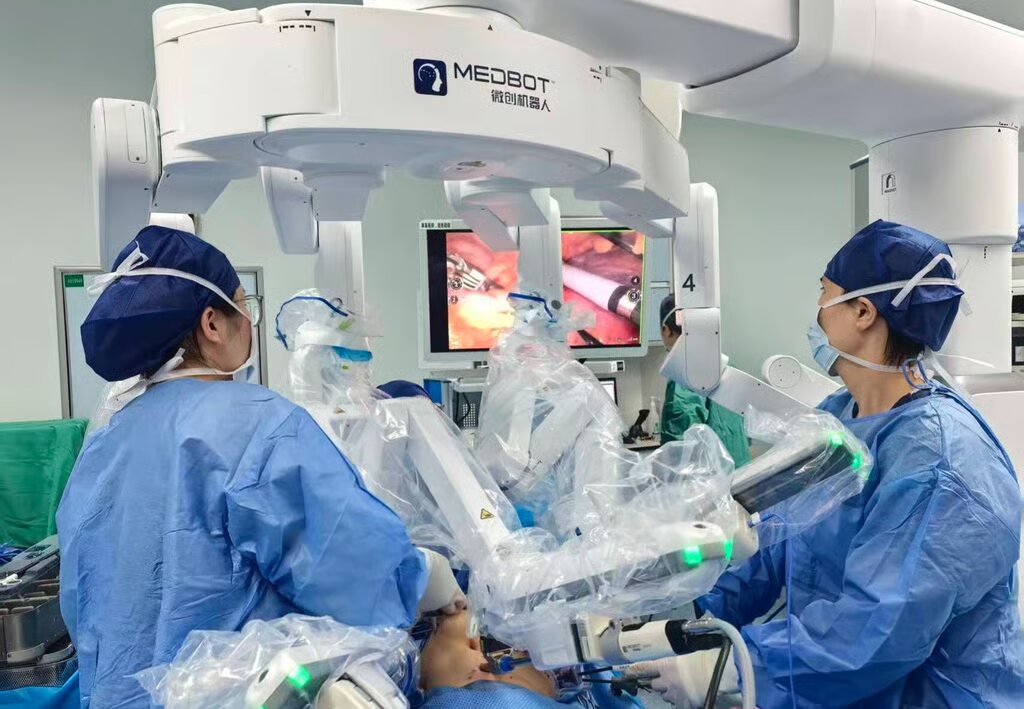
The rectum lies in the narrowest and deepest part of the pelvis, next to fine nerves that control the bladder and sexual function. In open or conventional laparoscopic surgery this area is hard to see and hard to work in, especially in men with a narrow pelvis and in overweight patients. This is where the robot helps:
- a stable 3D view, because the surgeon controls the camera and the image does not shake;
- wristed instruments that reach the floor of the pelvis and work at angles;
- nerve preservation, as precise dissection along the mesorectal plane helps preserve urinary control and sexual function;
- a low anastomosis: if the tumour is not too close to the anus, the bowel ends are joined, the sphincter is preserved and bowel movements continue the natural way.
In international studies the cancer outcomes of robotic and laparoscopic surgery have been similar. The robot’s advantages show most clearly in difficult cases, such as a narrow pelvis, excess weight or a low tumour. The surgeon chooses the approach for each patient individually. On the differences between the methods: “Robotic surgery vs laparoscopy”.
Saving the sphincter and stomas: what to know
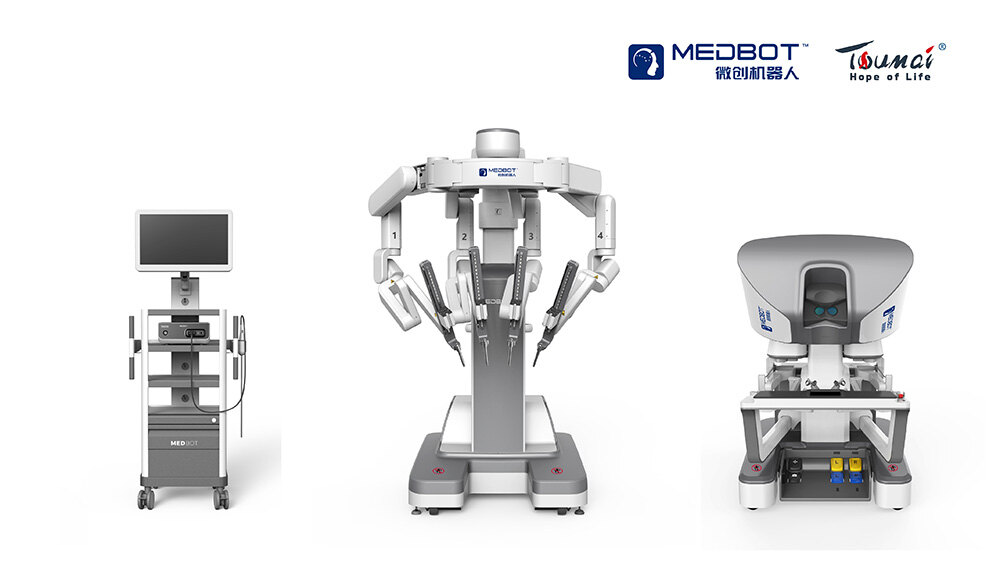
Patients’ biggest fear is a permanent stoma, where the bowel is brought out onto the abdomen. Today most patients with rectal cancer have sphincter-preserving surgery. Whether this is possible depends on how far the tumour is from the anus, whether it has grown into the sphincter and how it responded to chemoradiotherapy.
| Situation | Usual solution |
|---|---|
| Tumour in the upper or middle rectum | Resection with the bowel rejoined; the sphincter is preserved |
| Low tumour, sphincter not involved | Low anterior resection, often with a temporary protective stoma |
| Tumour growing into the sphincter | Removal of the rectum with the sphincter; permanent stoma |
A temporary (protective) ileostomy keeps stool away from the new join while it heals. It is usually closed after 2–3 months with a small operation, and bowel movements return to the natural route.
After surgery: in hospital and at home
Under a modern enhanced recovery (ERAS) programme, patients start drinking on the day of surgery or the next day and are walking by day 1–2. The hospital stay is usually 4–7 days, during which doctors check that bowel function returns and that the join is healing.
- in the first weeks, eat light, small meals and drink enough fluids;
- avoid heavy lifting for 4–6 weeks;
- after a low resection, bowel movements may be frequent for several months before gradually settling;
- if you develop a fever, severe abdominal pain or vomiting, see a doctor straight away.
More details: “Recovery after robotic surgery” and “Pain after surgery and fast recovery”.
Follow-up and cancer prevention
Depending on the histology, the oncologist decides whether further chemotherapy is needed. In the following years, regular CEA tests, CT scans and colonoscopies are carried out. The first colonoscopy is usually done one year after surgery.
This matters for your family too: people whose close relatives had colorectal cancer are advised to start screening colonoscopy earlier. For everyone else, screening usually begins at age 45–50.
Frequently asked questions
Will I have a stoma after robotic surgery?
In most cases a permanent stoma is not needed. After a low resection a temporary ileostomy is often made to protect the join, and it is closed after 2–3 months. A permanent stoma is only needed when the tumour has grown into the sphincter.
Is robotic surgery better than laparoscopy?
In terms of cancer outcomes the two approaches are similar. The robot’s advantages are most noticeable in difficult cases, such as a narrow pelvis, excess weight or a low tumour, and in preserving nerves. The surgeon chooses the method based on your test results.
Do I need chemotherapy before the operation?
For colon cancer, surgery usually comes first. For locally advanced rectal cancer, chemoradiotherapy is often given first. The decision is made by a multidisciplinary team based on MRI and CT results.
When can I eat normally after surgery?
In an enhanced recovery programme, drinking starts on the day of surgery or the next day, and soft food within a few days. For several weeks it is advisable to limit fatty, spicy and high-fibre foods.
How is the cost of the operation determined?
The cost depends on the type and length of the operation, the consumables used and the length of the hospital stay. You can find out the exact price after the surgical oncologist has reviewed your results by calling +998 71 210-30-30.
More about robotic surgery:
- Robotic Surgery in Tashkent — all directions
- Robotic Surgery in Tashkent: the MedBot Toumai System
- Is Robotic Surgery Safe? 10 Questions
- Robotic Surgery vs Laparoscopy: What Is the Difference
- Preparing for Robotic Surgery: Step by Step
- Recovery After Robotic Surgery
- Bladder Cancer: Robotic Cystectomy
- Hernia: Robotic Repair
- Gallbladder: Robotic Cholecystectomy
- Who Is Not Suitable for Robotic Surgery
- Uterine and Cervical Cancer: Robotic Surgery
- Large Prostate Adenoma: TURP or Robotic Surgery
- Varicocele Surgery: Marmar or Robotic
- Kidney Removal: Robotic Nephrectomy
- Ectopic Pregnancy: Tube-Sparing Robotic Surgery
- Female Urinary Incontinence: TVT or Robotic Surgery
- Uterus Removal: Robotic Hysterectomy
- Hiatal Hernia and Reflux: Robotic Fundoplication
- Liver Tumour: Robotic Liver Resection
- Pancreatic Tumour: Robotic Resection
- Obesity Surgery: Robotic Sleeve Gastrectomy
- Diastasis Recti: Robotic Repair
- Colon Cancer: Robotic Hemicolectomy
- Anaesthesia and Pain Control in Robotic Surgery
- Pregnancy After Robotic Myomectomy
- Robotic Prostatectomy
- Kidney Tumour: Robotic Partial Nephrectomy
- Uterine Fibroids: Robotic Surgery
- Endometriosis and Ovarian Cysts: Robotic Surgery
- What Is Telesurgery?
- Robotic Surgery in Older Adults
- Stomach Cancer: Robotic Gastrectomy
- Hydronephrosis: Robotic Pyeloplasty
- Pelvic Organ Prolapse: Robotic Sacrocolpopexy
- Adrenal Tumour: Robotic Adrenalectomy
Doctors for consultation
For bowel cancer, the treatment plan is drawn up jointly by the surgical oncologist, the proctologist and the oncologist. Our doctors for consultation:




Is robotic surgery right for you?
Book an appointment with a surgeon and bring your test results: the doctor will compare the options and recommend the safest one for you.
Call now — +998 71 210-30-30Contacts
Address: 7A/3 Nurafshon street, Tashkent
Phone: +998 71 210-30-30 · WhatsApp: +998 95 662-30-30
Opening hours: Monday–Saturday, 09:00–18:00
E-mail: