


Useful articles

Robotic Diastasis Recti Repair: Signs, Exercises and When Surgery Is Needed
Doctor's blog
sbdrmn
Direction: Robotic surgery · All services
Diastasis recti is a separation of the two rectus abdominal muscles along the midline of the tummy; it most often appears after pregnancy and, in men, alongside excess weight. Many people mistake it for an ordinary “belly that sticks out”. Below, in plain language: the signs, a self-check at home, ultrasound measurement, when exercises help, how open, laparoscopic and robotic repair differ, and when to plan surgery after childbirth.
Contents
- What diastasis recti is and why it happens
- Signs of diastasis recti and how to check yourself at home
- Ultrasound measurement: how wide is the gap?
- When exercises help and when surgery is needed
- Types of diastasis surgery: open, laparoscopic and robotic
- When to plan diastasis repair after childbirth
- Recovery after surgery and lifting
- Frequently asked questions
What diastasis recti is and why it happens
The front wall of the abdomen contains two rectus muscles, running vertically from the ribs down to the pubic bone. In the middle they are joined by a band of connective tissue — the linea alba. In diastasis recti this band stretches and widens, and the muscles drift apart. The muscle itself does not tear, but the abdominal wall becomes weak and supports the internal organs less well.
The most common cause is pregnancy: the growing womb and pregnancy hormones stretch the linea alba. In many women the muscles come back together on their own in the months after birth, but in some — especially after several pregnancies, twins or a large baby — the diastasis persists. It also occurs in men, most often linked to fat inside the abdomen, excess weight and heavy exercise done with poor technique.
Signs of diastasis recti and how to check yourself at home
- a bulge along the midline of the abdomen, above or around the belly button — often a “ridge” when sitting up from lying down;
- a tummy that sticks out despite diet and exercise;
- lower back pain, poor posture and a feeling of “emptiness” or weakness in the abdomen;
- sometimes digestive discomfort, or urinary leakage when the pelvic floor muscles are also weak.
A simple self-check: lie on your back with your knees bent and feet flat on the floor. Place the fingers of one hand across your midline just above the belly button and gently lift your head and shoulders. If you feel a gap between the muscles into which your fingers sink, and it is wider than two fingers, it is worth seeing a doctor. This is not a diagnosis — only a rough guide.
Ultrasound measurement: how wide is the gap?
For an accurate measurement an ultrasound scan of the abdominal wall is performed: the distance between the muscles is measured at several points, at rest and while tensing. At the same time the scan shows whether there is an umbilical hernia or an epigastric hernia. The thresholds below are approximate and vary slightly between sources:
| Width (approximately) | Assessment | Usual approach |
|---|---|---|
| Up to 2 cm | Often a variant of normal | Observation, general activity |
| 2–5 cm | Mild to moderate diastasis | Targeted exercises and physiotherapy first |
| Over 5 cm, or with a hernia | Marked diastasis | Exercises help less; surgery is discussed |
When exercises help and when surgery is needed
For most people the first step is working with a physiotherapist: strengthening the deep transverse abdominal muscle, correct breathing, pelvic floor exercises and posture work. Usually several months of regular practice are needed. With diastasis, classic sit-ups and crunches that make the abdomen “dome”, as well as heavy lifting, are limited at first.
Surgery is usually discussed when:
- the gap and symptoms remain after several months of correctly performed exercises;
- there is an umbilical or epigastric hernia alongside the diastasis;
- back pain, discomfort and reduced quality of life are significant;
- a wide diastasis comes with excess skin (in which case an abdominoplasty is often considered).
General information on when a hernia needs an operation is given in a separate article.
If a bulge at the belly button or along the midline suddenly becomes painful and hard and will not go back in, especially with nausea, vomiting or inability to pass stool or wind, this may be a strangulated hernia. Call 103 immediately.
Types of diastasis surgery: open, laparoscopic and robotic
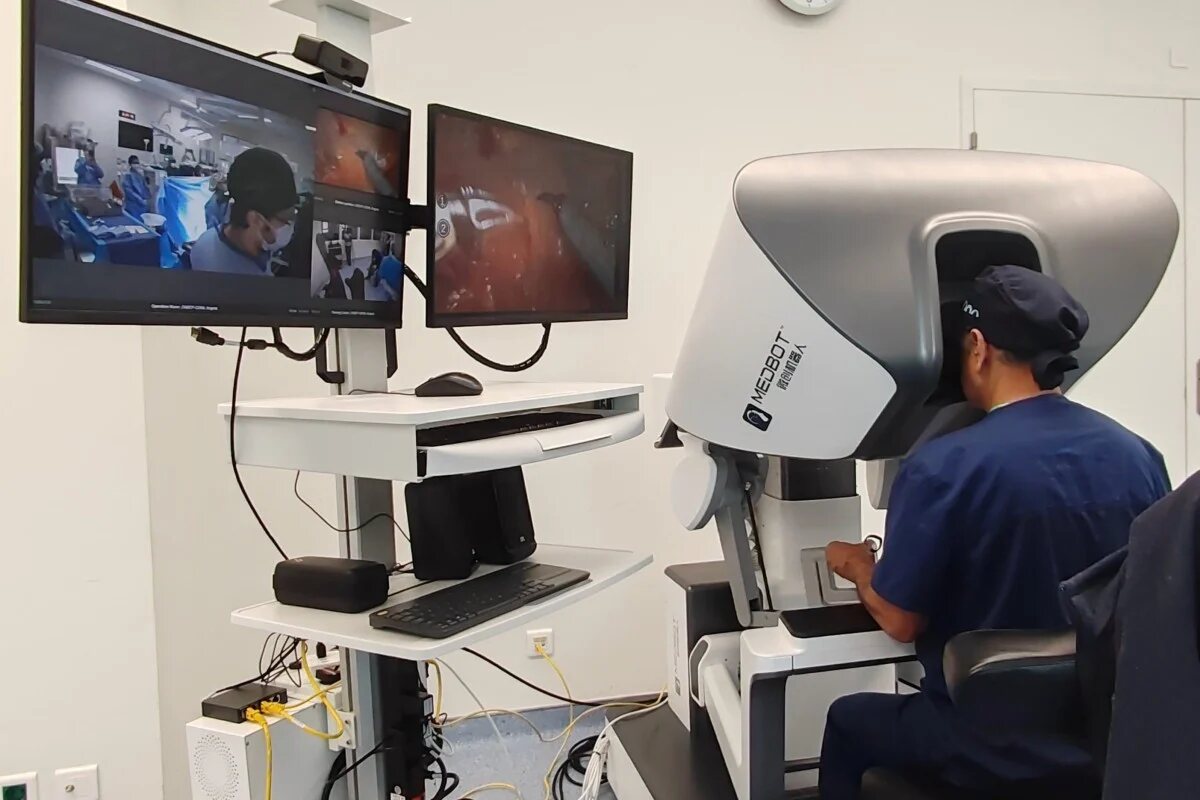
Saba Darmon clinic has the MedBot Toumai robotic system, and diastasis repair can be performed with robotic assistance — the surgeon chooses the method after assessment. Each approach has its place:
| Method | When it suits | Key feature |
|---|---|---|
| Open abdominoplasty with plication | A wide diastasis together with excess skin and fat | The muscles are stitched together (plication) and excess skin is removed; a long scar low on the abdomen and a longer recovery |
| Laparoscopic or endoscopic | Little excess skin; diastasis with or without a hernia | Through small ports; the linea alba is sutured and a mesh is often placed |
| Robotic | Diastasis combined with a hernia, mesh placement behind the muscles, complex suturing | The magnified 3D view and articulated instruments make suturing inside the abdominal wall easier; the operation may take longer |
To be honest: laparoscopic and robotic techniques do not remove excess skin — if the main problem is loose, overhanging skin, an abdominoplasty may be more effective. The robot is not for everyone: with a small diastasis and a straightforward situation, laparoscopic repair gives good results. Robotic hernia surgery is described in our article on robotic hernia repair, and the general difference between the two approaches is explained here. In any minimally invasive operation there remains a chance of switching to open surgery if safety requires it.
When to plan diastasis repair after childbirth
- once your family is complete — another pregnancy can stretch the diastasis again, so many surgeons advise waiting until then;
- about 6–12 months after giving birth — the muscles and tissues have time to recover naturally, and the effect of physiotherapy can be judged;
- after breastfeeding has finished — hormone levels settle, and there are fewer questions about anaesthesia and medicines;
- when your weight is stable — if significant weight loss is planned, it is better achieved before surgery.
If the diastasis comes with a painful or enlarging hernia, the doctor may advise operating sooner.
Recovery after surgery and lifting
After minimally invasive surgery, walking usually starts the same day or the next, and the hospital stay is short. An abdominal binder may be recommended for a few weeks. Most people can return to desk work after one to two weeks. Heavy lifting — including lifting a child — and strenuous abdominal exercise are usually restricted for at least 4–6 weeks; a full return to sport often takes several months. When lifting a child, hold them close to your body, bend your knees and do not hold your breath. Continuing exercises with a physiotherapist afterwards helps to maintain the result. All areas of robotic surgery are listed on this page.
Frequently asked questions
Does diastasis recti go away on its own after pregnancy?
In many women the muscles come noticeably closer together in the first months after birth. If the gap is still wide after about six months, it is worth having an ultrasound and starting targeted exercises with a physiotherapist.
Can I do sit-ups with diastasis recti?
Classic sit-ups and crunches that make the abdomen bulge are not recommended at first. Exercises for the deep transverse abdominal muscle and the pelvic floor are used instead; a physiotherapist designs the programme.
Is mesh used in diastasis recti surgery?
Often yes, especially if the diastasis is wide or combined with a hernia — the mesh reinforces the repair. With a small diastasis, stitching alone may be enough; the surgeon makes the decision.
Can I get pregnant after diastasis repair?
Yes, but pregnancy stretches the abdominal wall again and may undo part of the result. This is why surgery is usually advised once family planning is complete.
How is diastasis recti treated in men?
In men the first steps are losing weight, reducing fat inside the abdomen and correcting exercise technique. With a wide diastasis or a hernia, surgery is discussed in the same way as for women.
Can an incisional hernia develop after the operation?
This risk exists after any abdominal operation, but it is lower with minimally invasive techniques. More on this is in our article on incisional hernia.
What is done if there is both an umbilical hernia and a diastasis?
Often both are repaired in one operation, because closing only the hernia while the diastasis remains increases the risk of recurrence. The techniques are described in our article on laparoscopic hernia repair.
More about robotic surgery:
- Robotic Surgery in Tashkent — all directions
- Robotic Surgery in Tashkent: the MedBot Toumai System
- Is Robotic Surgery Safe? 10 Questions
- Robotic Surgery vs Laparoscopy: What Is the Difference
- Preparing for Robotic Surgery: Step by Step
- Recovery After Robotic Surgery
- Bladder Cancer: Robotic Cystectomy
- Hernia: Robotic Repair
- Gallbladder: Robotic Cholecystectomy
- Who Is Not Suitable for Robotic Surgery
- Uterine and Cervical Cancer: Robotic Surgery
- Large Prostate Adenoma: TURP or Robotic Surgery
- Varicocele Surgery: Marmar or Robotic
- Kidney Removal: Robotic Nephrectomy
- Ectopic Pregnancy: Tube-Sparing Robotic Surgery
- Female Urinary Incontinence: TVT or Robotic Surgery
- Uterus Removal: Robotic Hysterectomy
- Hiatal Hernia and Reflux: Robotic Fundoplication
- Liver Tumour: Robotic Liver Resection
- Pancreatic Tumour: Robotic Resection
- Obesity Surgery: Robotic Sleeve Gastrectomy
- Colon Cancer: Robotic Hemicolectomy
- Anaesthesia and Pain Control in Robotic Surgery
- Pregnancy After Robotic Myomectomy
- Robotic Prostatectomy
- Kidney Tumour: Robotic Partial Nephrectomy
- Colorectal Cancer: Robotic Surgery
- Uterine Fibroids: Robotic Surgery
- Endometriosis and Ovarian Cysts: Robotic Surgery
- What Is Telesurgery?
- Robotic Surgery in Older Adults
- Stomach Cancer: Robotic Gastrectomy
- Hydronephrosis: Robotic Pyeloplasty
- Pelvic Organ Prolapse: Robotic Sacrocolpopexy
- Adrenal Tumour: Robotic Adrenalectomy
Doctors for consultation
Consultations and operations for diastasis and abdominal wall hernias are carried out by our general surgeons. Our doctors in this field:




Book a consultation with a surgeon
Whether exercises are enough or surgery is needed, the doctor will explain every option after assessment.
Call now — +998 71 210-30-30Contacts
Address: 7A/3 Nurafshon street, Tashkent
Phone: +998 71 210-30-30 · WhatsApp: +998 95 662-30-30
Opening hours: Monday–Saturday, 09:00–18:00
E-mail: