


Useful articles

Robotic Pancreatic Resection: Pancreatic Tumours and Cysts — When Surgery Is Needed
Doctor's blog
sbdrmn
Direction: Robotic surgery · All services
Robotic pancreatic resection is an operation to remove the part of the pancreas containing a tumour or cyst through small ports with the help of a robotic system. Yet not every cyst found in the pancreas needs surgery: many are simply monitored. Below we explain the types of cysts and tumours, which tests are needed, how distal pancreatectomy, enucleation and the Whipple procedure differ, what the risks are and how recovery goes.
Contents
- Pancreatic cysts and tumours: what types exist
- Which tests are needed for a pancreatic tumour
- Which operations are performed
- Robotic, laparoscopic or open surgery: an honest comparison
- Risks of pancreatic surgery
- Recovery and diet after pancreatic surgery
- Follow-up after surgery
- What to agree with your doctor
- Frequently asked questions
Pancreatic cysts and tumours: what types exist
The pancreas sits behind the stomach and produces digestive enzymes and insulin. What is found in it varies enormously: some changes stay harmless for life, while others need serious treatment. That is why a report saying "cyst" or "lesion" does not automatically mean an operation.
| Type | What it is | Usual approach |
|---|---|---|
| Serous cystadenoma | A cystic tumour that is almost always benign | Most often observation only; surgery is discussed if it causes symptoms or grows quickly |
| IPMN (intraductal papillary mucinous neoplasm) | A mucus-producing tumour connected to the pancreatic duct; some may become malignant over the years | Branch-duct types are often monitored; main-duct involvement or "worrying features" mean surgery |
| Mucinous cystic neoplasm | Mostly in women, in the body and tail of the gland | Removal is usually recommended |
| Neuroendocrine tumour | Grows from hormone-producing cells | Small non-functioning ones are sometimes watched; functioning ones (such as insulinoma) and larger ones are removed |
| Adenocarcinoma | The most common pancreatic cancer | A serious disease; if surgery is possible, it is combined with chemotherapy |
A pseudocyst that appears after acute pancreatitis is not a tumour: it is a consequence of inflammation and is treated differently. Read more in our article on pancreatitis.
About adenocarcinoma we need to be honest: it is a severe disease and it is often found late. Surgery is possible only when the tumour has not grown into major blood vessels or spread to other organs, and even then it is only one part of treatment. The plan is drawn up jointly by the surgeon, the oncologist and the radiologist.
Which tests are needed for a pancreatic tumour
- Contrast-enhanced CT (using a pancreatic protocol) — the size and location of the tumour and its relation to major vessels; see when a CT scan is needed and how it is done;
- MRI and MRCP — the best way to assess cysts and whether they connect to the pancreatic duct;
- the CA 19-9 tumour marker — a supporting value; it can be falsely raised in jaundice, so it does not make the diagnosis on its own;
- endoscopic ultrasound — when needed: it allows fluid to be sampled from a cyst or a biopsy to be taken from a tumour;
- blood glucose and HbA1c, liver tests; for a neuroendocrine tumour, hormones and chromogranin A.
Which operations are performed
- Distal pancreatectomy — removal of the body and tail of the gland. This is the operation best suited to a minimally invasive (laparoscopic or robotic) approach. The key question is whether the spleen can be preserved: with a benign tumour it is often kept, while in cancer it is removed together with the lymph nodes. People can live without a spleen, but vaccinations are needed in advance.
- Enucleation — removing only the tumour itself while keeping the gland. It is used for small neuroendocrine tumours located away from the main duct (for example, an insulinoma).
- Pancreatoduodenectomy (the Whipple procedure) — the head of the pancreas, the duodenum, the gallbladder and part of the bile duct are removed, and then three new connections are made. It is one of the most complex operations in abdominal surgery. Robotic Whipple procedures are carried out only in centres with very large experience, and in many cases open surgery remains the standard.
Laparoscopic pancreatic resection is also performed at the clinic — see the dedicated page.
Robotic, laparoscopic or open surgery: an honest comparison
| Method | When it fits best | Key feature |
|---|---|---|
| Open | Whipple procedure, tumour close to or growing into major vessels, dense adhesions | Full view and manual control; large incision, longer recovery |
| Laparoscopic | Distal pancreatectomy, enucleation of peripheral tumours | Small ports, less pain, quicker mobilisation; limited instrument movement for fine suturing |
| Robotic | Distal pancreatectomy preserving the spleen and its vessels, delicate enucleation | Magnified 3D view, articulated instrument; more time for set-up and the operation itself |
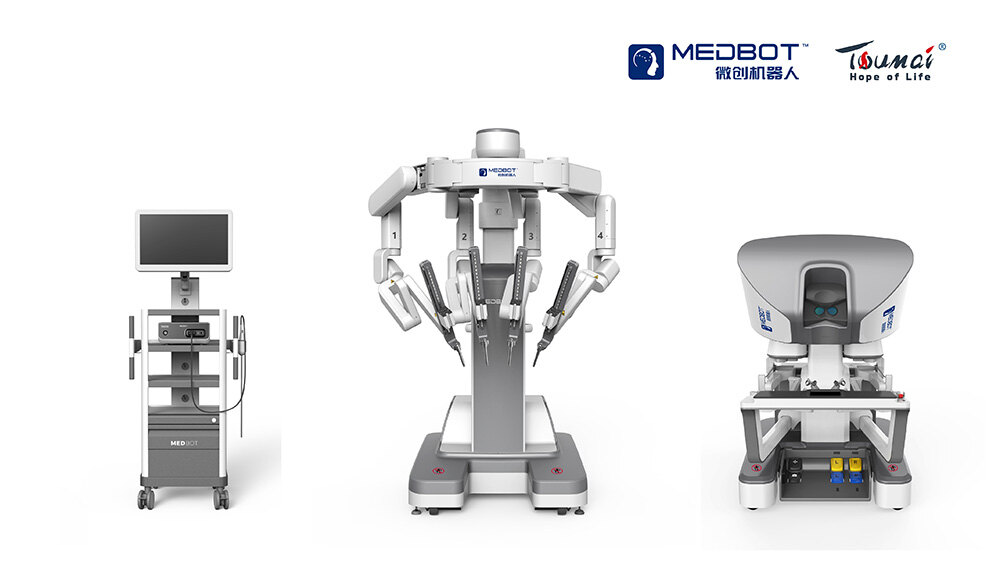
Saba Darmon clinic has the MedBot Toumai robotic system. Pancreatic resection, above all distal pancreatectomy and enucleation, may be carried out with robotic assistance, but the method is chosen by the surgeon after a full assessment. The articulated robotic instruments can help when separating the splenic vessels from the gland and when carefully closing its cut edge. To be plain: the experience of the surgeon and the right choice of patient matter more than the robot itself. All of our robotic services are gathered on the robotic surgery page.
Risks of pancreatic surgery
- Pancreatic fistula — the most common complication: pancreatic juice leaks from the cut edge of the gland. It shows up in the drain; most fistulas close on their own, though some need additional procedures.
- Risk of diabetes — depends on how much tissue is removed and on the previous state of the gland; blood sugar is monitored after surgery.
- Enzyme insufficiency — fatty stools, bloating and weight loss; enzyme capsules are taken with meals.
- bleeding, infection and, after a Whipple procedure, slow emptying of the stomach.
The general safety of robotic surgery is covered in our article answering 10 common questions.
Recovery and diet after pancreatic surgery
- walking from the next day, with a drain and pain relief in the first days;
- a hospital stay of usually about a week, longer after a Whipple procedure;
- food is reintroduced gradually: small portions 5–6 times a day, avoiding fatty, fried and spicy dishes;
- no alcohol; enzymes and blood-sugar checks as prescribed by your doctor;
- 4–6 weeks without heavy lifting or strenuous exercise.
If at home you develop a high fever, severe or worsening abdominal pain, heavy discharge from the drain site, vomiting blood, jaundice or fainting, call an ambulance immediately (103).
Follow-up after surgery
The removed tissue is sent for histology, and further treatment depends on its result. For a benign tumour a few follow-up checks are usually enough; in cancer, oncology follow-up, chemotherapy and regular CT scans are needed. Blood sugar and digestion are also checked during follow-up. You can also read about other robotic cancer operations in the abdomen, for example robotic gastrectomy for stomach cancer.
What to agree with your doctor
What type of cyst or tumour it is and whether monitoring is enough; which operation and why that particular approach; whether the spleen can be preserved; what the risk of fistula and diabetes is; when the histology will be ready; and what the follow-up schedule will look like.
Frequently asked questions
Is a pancreatic cyst dangerous?
Not always. A serous cystadenoma is almost always benign, and many IPMNs are simply monitored. The type of cyst is clarified by MRI and, if needed, endoscopic ultrasound, and the doctor decides on the approach.
How long is a pancreatic cyst monitored?
Usually for years, with regular MRI or CT; the interval depends on the type and size of the cyst. If the cyst grows or new features appear, the question of surgery is reconsidered.
Will I get diabetes after part of the pancreas is removed?
Not necessarily. The risk depends on how much tissue is removed and the previous state of the gland; after distal pancreatectomy many people keep normal blood sugar, but monitoring is essential.
Can the Whipple procedure be done robotically?
Such operations are performed only in centres with very large experience, and in many cases open surgery remains the standard. Which method is right in your situation the surgeon will tell you after assessment.
Is robotic surgery better than laparoscopy for the pancreas?
Not always. The robot may be more convenient for spleen-preserving distal pancreatectomy and fine suturing, while in a straightforward case the results are comparable. More details in this article.
Do I need to take enzymes after surgery?
Some patients do, especially after a large resection or a Whipple procedure. Fatty stools, bloating and weight loss point to this; the dose is chosen by the doctor.
How long does recovery after pancreatic surgery take?
Usually about a week in hospital and a return to everyday life within 4–6 weeks. Recovery after a Whipple procedure takes longer.
More about robotic surgery:
- Robotic Surgery in Tashkent — all directions
- Robotic Surgery in Tashkent: the MedBot Toumai System
- Is Robotic Surgery Safe? 10 Questions
- Robotic Surgery vs Laparoscopy: What Is the Difference
- Preparing for Robotic Surgery: Step by Step
- Recovery After Robotic Surgery
- Bladder Cancer: Robotic Cystectomy
- Hernia: Robotic Repair
- Gallbladder: Robotic Cholecystectomy
- Who Is Not Suitable for Robotic Surgery
- Uterine and Cervical Cancer: Robotic Surgery
- Large Prostate Adenoma: TURP or Robotic Surgery
- Varicocele Surgery: Marmar or Robotic
- Kidney Removal: Robotic Nephrectomy
- Ectopic Pregnancy: Tube-Sparing Robotic Surgery
- Female Urinary Incontinence: TVT or Robotic Surgery
- Uterus Removal: Robotic Hysterectomy
- Hiatal Hernia and Reflux: Robotic Fundoplication
- Liver Tumour: Robotic Liver Resection
- Obesity Surgery: Robotic Sleeve Gastrectomy
- Diastasis Recti: Robotic Repair
- Colon Cancer: Robotic Hemicolectomy
- Anaesthesia and Pain Control in Robotic Surgery
- Pregnancy After Robotic Myomectomy
- Robotic Prostatectomy
- Kidney Tumour: Robotic Partial Nephrectomy
- Colorectal Cancer: Robotic Surgery
- Uterine Fibroids: Robotic Surgery
- Endometriosis and Ovarian Cysts: Robotic Surgery
- What Is Telesurgery?
- Robotic Surgery in Older Adults
- Stomach Cancer: Robotic Gastrectomy
- Hydronephrosis: Robotic Pyeloplasty
- Pelvic Organ Prolapse: Robotic Sacrocolpopexy
- Adrenal Tumour: Robotic Adrenalectomy
Doctors for consultation
Operations for pancreatic tumours and cysts are performed by oncological and general surgeons. Our doctors in this field:




Book a consultation with a surgeon
Has a cyst or lesion been found in your pancreas? Bring your CT or MRI results — the surgeon will explain whether monitoring is enough or surgery is needed.
Call now — +998 71 210-30-30Contacts
Address: 7A/3 Nurafshon street, Tashkent
Phone: +998 71 210-30-30 · WhatsApp: +998 95 662-30-30
Opening hours: Monday–Saturday, 09:00–18:00
E-mail: