


Useful articles

Pregnancy After Robotic Myomectomy: When to Try, Risks and Giving Birth
Doctor's blog
sbdrmn
Direction: Robotic surgery · All services
Pregnancy after myomectomy is the main concern for women who have had surgery for uterine fibroids. Many choose this operation precisely because they want children, and afterwards the questions follow: "when can I try?", "will the scar hold?", "can I give birth naturally?". Below, in plain language: how the wall of the uterus is repaired, how long to wait, the risk of uterine rupture, how the pregnancy is monitored and how the mode of birth is chosen.
Contents
- What a myomectomy is and why it is done for women planning a pregnancy
- How the wall of the uterus is repaired, and why it matters
- Robotic, laparoscopic or open myomectomy: an honest comparison
- How soon can you get pregnant after a myomectomy?
- The risk of uterine rupture: how real is it?
- How the pregnancy is monitored
- Giving birth: is a caesarean section always needed?
- Chances of pregnancy and fibroid recurrence
- What to agree with your doctor
- Frequently asked questions
What a myomectomy is and why it is done for women planning a pregnancy
A myomectomy is an operation that removes only the fibroids (myomas) and keeps the uterus. Unlike a hysterectomy, it preserves the possibility of pregnancy, which is why it is the main surgical option for women who want children. General information about fibroids is given in a separate article.
Not every fibroid gets in the way of pregnancy. Small fibroids on the outer surface of the uterus (subserosal) often have no effect on conception and are not always removed. Large fibroids deep within the wall, or those that distort the cavity of the uterus, may be linked to miscarriage, failed implantation of the embryo, heavy bleeding and pain. Whether surgery will help is decided by a gynaecologist on the basis of ultrasound, MRI if needed, and your general health.
Fibroids that bulge into the cavity of the uterus (submucosal) can often be removed without any abdominal incision, through hysteroscopy. The wall of the uterus stays intact, and pregnancy can usually be planned much sooner.
How the wall of the uterus is repaired, and why it matters
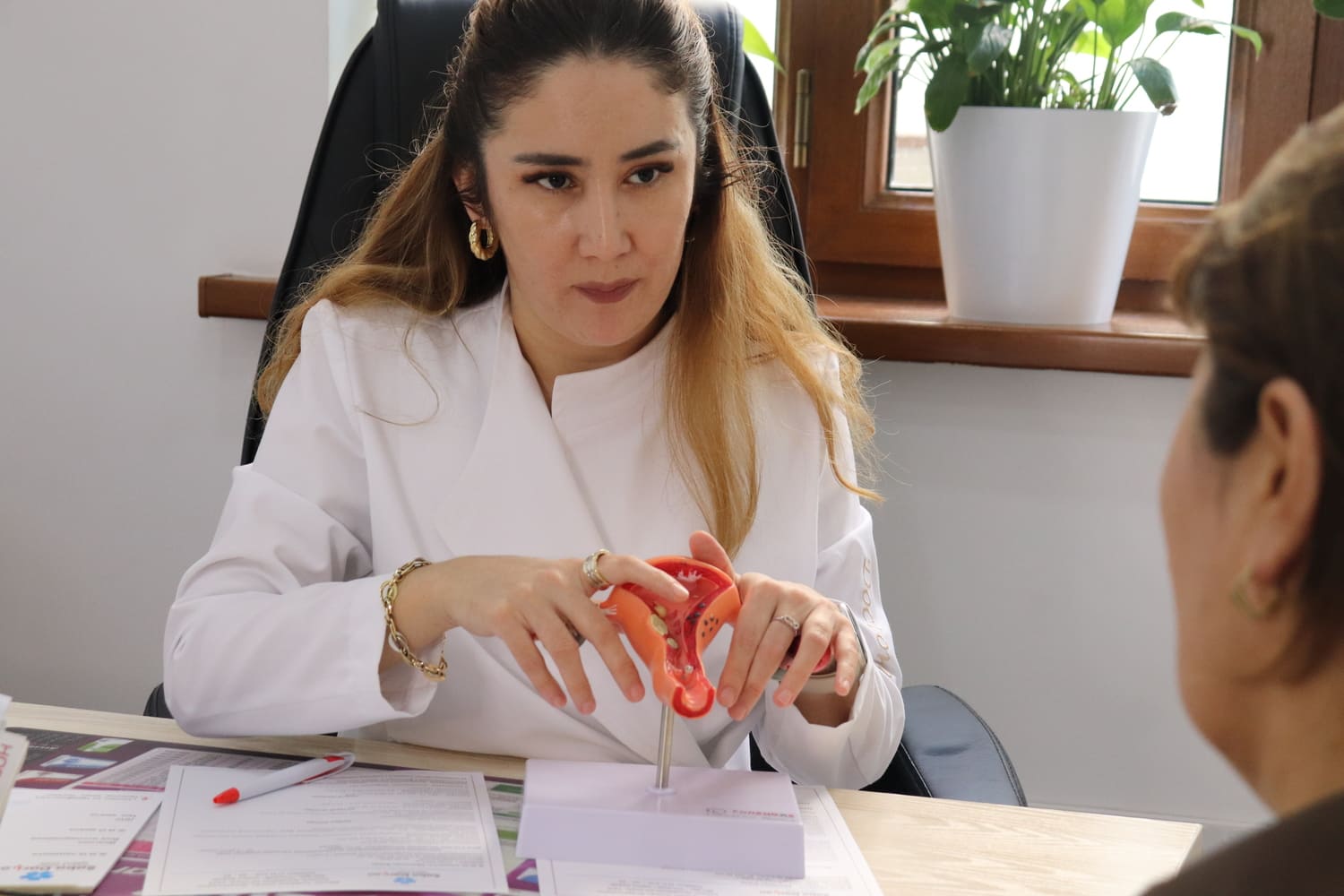
When a fibroid is removed from within the wall (an intramural fibroid), a defect is left in the muscle of the uterus. For a future pregnancy, the key is to repair it properly. The surgeon closes the wall in several layers: the deep layers separately and the surface layer separately. The aim is to leave no hollow spaces, prevent blood from collecting and create a strong scar.
This is exactly the stage where a robotic system helps the surgeon: a magnified three-dimensional view and instruments that bend like a wrist make it easier to place stitches precisely, even in deep and awkward areas. But the quality of the repair depends above all on the surgeon’s experience: the robot by itself does not ensure a good result, it only adds extra capabilities.
Robotic, laparoscopic or open myomectomy: an honest comparison
Saba Darmon clinic has the MedBot Toumai robotic system, and a myomectomy can be performed with robotic assistance. But the robot is not for everyone — the surgeon chooses the method after assessment, based on the number, size and position of the fibroids.
| Method | When it suits | Repairing the wall | Recovery |
|---|---|---|---|
| Hysteroscopic | A fibroid bulging into the cavity (submucosal) | No incision in the wall | Fastest |
| Laparoscopic | A few fibroids that are not very large | Good in experienced hands; deep stitching with straight instruments is technically harder | Quick |
| Robotic | Deep intramural, awkwardly placed or several fibroids | Wristed instruments make layered closure easier | Quick |
| Open | Very large or very numerous fibroids | The surgeon can feel the tissue by hand | Longer, with a large incision |
In a straightforward case, laparoscopic myomectomy gives results no worse than the robotic approach. The difference between the two is explained in this article, and myomectomy in Tashkent is described in detail on a separate page.
How soon can you get pregnant after a myomectomy?
The scar needs time to become strong. In many cases women are advised to wait several months before trying to conceive; if the fibroid was small and superficial the wait is shorter, and if it was deep and large or the cavity of the uterus was opened, it is longer. The exact interval is set by the surgeon who performed the operation, taking into account the depth and number of fibroids and the extent of the repair. During this time, agree on reliable contraception with your doctor.
Use the waiting period well: treat any anaemia, start folic acid, have a general check-up and bring your weight into a healthy range. More detail is in the article on preparing for pregnancy. If you are over 35, the waiting time and the next steps are discussed together with a fertility specialist.
The risk of uterine rupture: how real is it?
The most common question about pregnancy after a myomectomy is whether the uterus could tear along the scar. Uterine rupture is rare, but it is serious for both mother and baby. It most often happens in the last months of pregnancy or during labour, and occasionally earlier. The risk depends on how deep the fibroid was, whether the cavity was opened, the quality of the repair and how much time has passed since surgery. That is why you should keep your operation note (which fibroid, how deep, whether the cavity was opened) and show it to the doctor who looks after your pregnancy.
If during pregnancy you have sudden severe abdominal pain, vaginal bleeding, dizziness or fainting, or a sharp reduction in your baby’s movements, do not wait — call 103 immediately.
How the pregnancy is monitored
A pregnancy after myomectomy is usually looked after by an experienced obstetrician who takes the scar on the uterus into account. Ultrasound scans assess the baby’s growth, the position of the placenta and, when needed, the area of the scar. If the placenta lies over the scar, extra care is required. New or remaining fibroids can grow during pregnancy, and this is monitored too. If you develop persistent pain in the abdomen or over the scar, tell your doctor without waiting for the next routine visit.
Giving birth: is a caesarean section always needed?
There is no single answer — the decision is made for each woman individually. If the cavity of the uterus was opened, or large, deep fibroids were removed from within the wall, a planned caesarean section is often advised, usually before labour starts. If only small surface fibroids were removed, a vaginal birth is sometimes discussed. The obstetrician decides on the basis of the operation note, the course of the pregnancy and the ultrasound findings, so it is wise to raise this question early, around the middle of the pregnancy.
Chances of pregnancy and fibroid recurrence
Many women become pregnant after a myomectomy, especially when the fibroids had been distorting the cavity of the uterus. But the outcome does not depend on the fibroids alone: age, ovarian reserve, the state of the fallopian tubes and the partner’s health all matter. If pregnancy has not happened within a year of trying (or six months if you are over 35), do not delay further tests. Fibroids can come back over time as new nodes, so after surgery it may be sensible not to put off pregnancy for many years.
What to agree with your doctor
Whether surgery is needed or you can try to conceive first; which method and why; whether the cavity of the uterus is likely to be opened; when you can plan a pregnancy; what kind of birth is expected; when to have a follow-up scan. All areas of robotic surgery are listed on this page.
Frequently asked questions
How long after a myomectomy can I get pregnant?
In many cases a wait of several months is advised; if the fibroid was deep or the cavity of the uterus was opened, the wait is longer. The surgeon who performed the operation will give you the exact timing.
Can I have a vaginal birth after a myomectomy?
Sometimes — especially if only small surface fibroids were removed. If the cavity was opened or deep fibroids were removed, a planned caesarean section is often advised. The obstetrician decides using the operation note.
How dangerous is uterine rupture after a myomectomy?
It is rare but serious. To lower the risk, keep to the advised waiting time, have your pregnancy looked after by an experienced doctor and call 103 straight away if warning signs appear.
Is robotic myomectomy better than laparoscopic for future pregnancy?
Not always. The robot makes layered closure easier for deep or awkwardly placed fibroids, while in straightforward cases results are similar. The surgeon chooses the method after assessment.
Do fibroids stop you getting pregnant?
Large fibroids within the wall or those distorting the cavity can interfere, while small fibroids on the outer surface often do not. Other causes should be checked too — see the article on female infertility.
Can fibroids grow back after a myomectomy?
New fibroids can appear over time. That is why regular ultrasound after surgery is advised and it may be sensible not to postpone pregnancy for many years.
Are fibroids found during pregnancy removed?
Usually not: fibroids found in pregnancy are generally just monitored, and surgery is needed only very rarely. The decision is made by the obstetrician.
More about robotic surgery:
- Robotic Surgery in Tashkent — all directions
- Robotic Surgery in Tashkent: the MedBot Toumai System
- Is Robotic Surgery Safe? 10 Questions
- Robotic Surgery vs Laparoscopy: What Is the Difference
- Preparing for Robotic Surgery: Step by Step
- Recovery After Robotic Surgery
- Bladder Cancer: Robotic Cystectomy
- Hernia: Robotic Repair
- Gallbladder: Robotic Cholecystectomy
- Who Is Not Suitable for Robotic Surgery
- Uterine and Cervical Cancer: Robotic Surgery
- Large Prostate Adenoma: TURP or Robotic Surgery
- Varicocele Surgery: Marmar or Robotic
- Kidney Removal: Robotic Nephrectomy
- Ectopic Pregnancy: Tube-Sparing Robotic Surgery
- Female Urinary Incontinence: TVT or Robotic Surgery
- Uterus Removal: Robotic Hysterectomy
- Hiatal Hernia and Reflux: Robotic Fundoplication
- Liver Tumour: Robotic Liver Resection
- Pancreatic Tumour: Robotic Resection
- Obesity Surgery: Robotic Sleeve Gastrectomy
- Diastasis Recti: Robotic Repair
- Colon Cancer: Robotic Hemicolectomy
- Anaesthesia and Pain Control in Robotic Surgery
- Robotic Prostatectomy
- Kidney Tumour: Robotic Partial Nephrectomy
- Colorectal Cancer: Robotic Surgery
- Uterine Fibroids: Robotic Surgery
- Endometriosis and Ovarian Cysts: Robotic Surgery
- What Is Telesurgery?
- Robotic Surgery in Older Adults
- Stomach Cancer: Robotic Gastrectomy
- Hydronephrosis: Robotic Pyeloplasty
- Pelvic Organ Prolapse: Robotic Sacrocolpopexy
- Adrenal Tumour: Robotic Adrenalectomy
Doctors for consultation
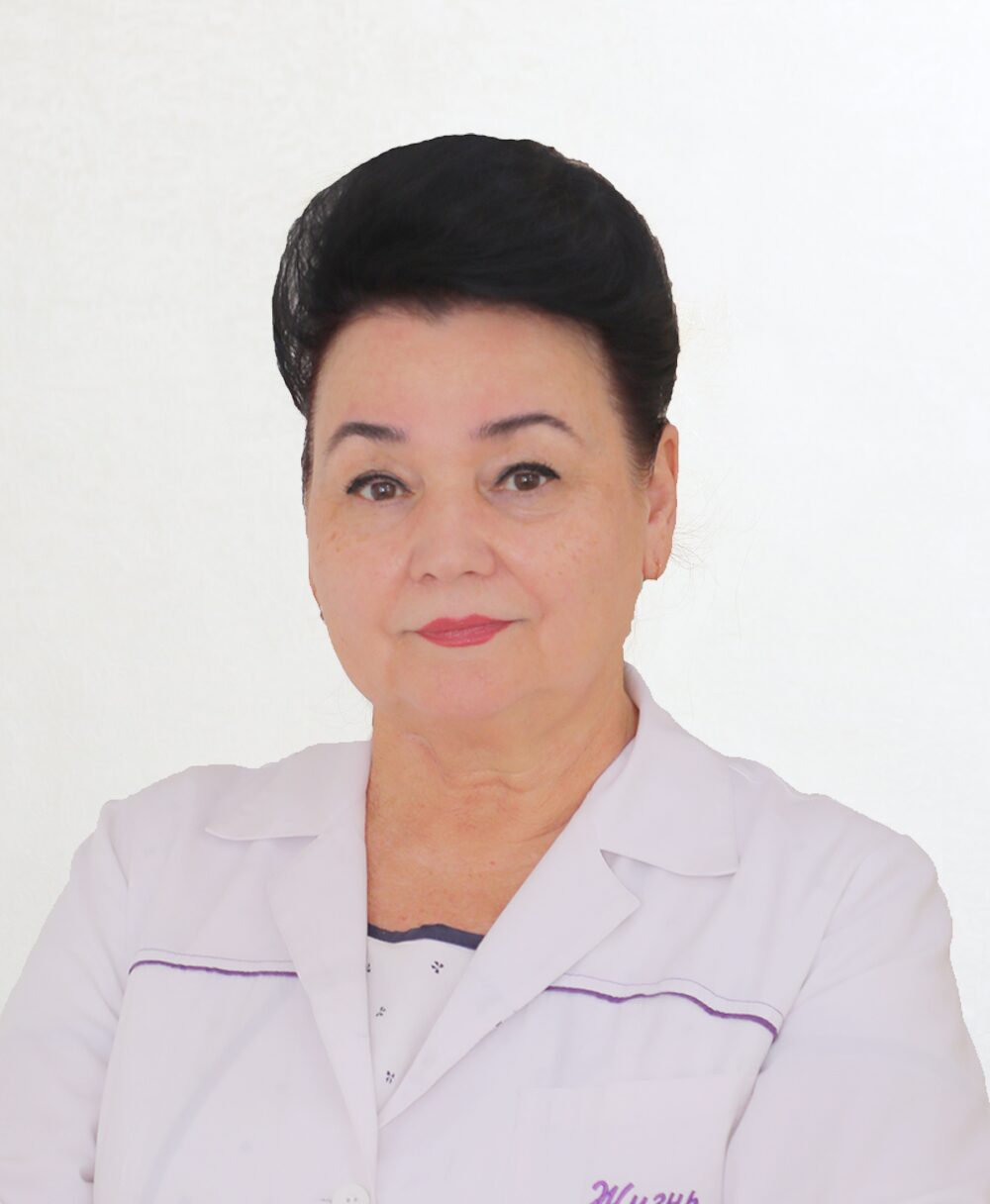
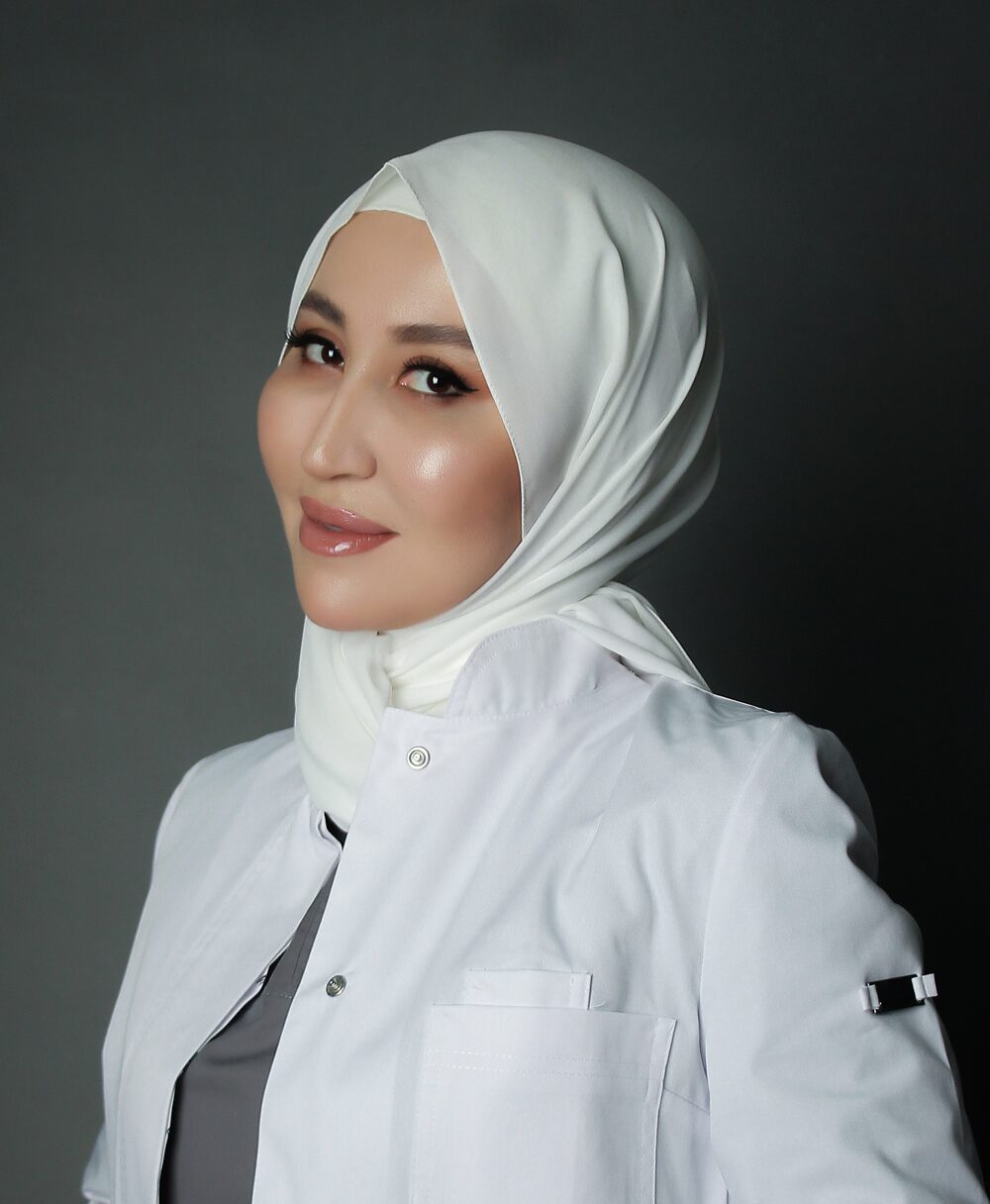
Our gynaecologists perform myomectomy and help plan pregnancy afterwards. Our doctors in this field:

Book an appointment with a gynaecologist
Planning a pregnancy with fibroids? After assessment the doctor will explain whether surgery is needed and what comes next.
Call now — +998 71 210-30-30Contacts
Address: 7A/3 Nurafshon street, Tashkent
Phone: +998 71 210-30-30 · WhatsApp: +998 95 662-30-30
Opening hours: Monday–Saturday, 09:00–18:00
E-mail: