


Useful articles

Kidney Tumour: Robotic Partial Nephrectomy That Saves the Kidney — Tashkent
Doctor's blog
sbdrmn
Direction: Robotic surgery · All services
A kidney tumour is often found by chance, with no symptoms at all, during an ultrasound or CT scan. When it is detected early, the whole kidney usually does not need to be removed: the surgeon can cut out just the tumour and keep the organ. This operation is called partial nephrectomy, and around the world it is now increasingly performed with a surgical robot. Below we explain who this operation suits, how it is carried out and what to expect afterwards.
Contents
- How a kidney tumour is found
- Diagnosis: CT, MRI and other tests
- What partial nephrectomy is and when it is chosen
- Why the robot is particularly useful in partial nephrectomy
- Open, laparoscopic and robotic partial nephrectomy compared
- How the operation is performed
- Risks and how they are reduced
- After the operation: recovery and follow-up
- Frequently asked questions
How a kidney tumour is found
Most kidney tumours cause no symptoms for a long time. They are usually found by chance: a person has an abdominal ultrasound or CT scan for another reason, and a “mass” is seen in the kidney. This is actually good news, because a tumour found while it is still small can very often be removed while keeping the kidney.
At later stages the following may appear:
- blood in the urine (pink or reddish-brown urine);
- a persistent dull pain in the lower back or side without an obvious cause;
- unexplained weight loss, fatigue or a long-lasting low-grade fever;
- raised blood pressure or anaemia.
If you notice any of these signs, do not wait: the first step is a visit to a urologist and a kidney ultrasound.
Diagnosis: CT, MRI and other tests
Ultrasound detects the mass, but the main test for understanding what it is is a contrast-enhanced CT scan. It shows the size and position of the tumour and how close it is to the renal blood vessels and the urine-collecting system. This information tells the surgeon whether the kidney can be preserved. More about CT scanning: “CT scan (MSCT): what it is and when it is needed”.
- MRI is used if you are allergic to contrast dye or the CT result is unclear;
- blood tests, namely creatinine and the estimated glomerular filtration rate (eGFR), show how well the kidneys work;
- a chest CT checks that the tumour has not spread;
- a biopsy is not always needed and is done only when its result would change the treatment plan.
A share of small kidney masses (roughly one in five) turn out to be benign, for example an angiomyolipoma or an oncocytoma. So a report saying “kidney tumour” does not automatically mean cancer. The final answer comes from the histology of the removed tissue.
What partial nephrectomy is and when it is chosen
Partial nephrectomy, also called kidney resection, is an operation in which the tumour is removed together with a thin rim of healthy tissue while the rest of the kidney is kept. The alternative is radical nephrectomy, the removal of the whole kidney.
According to international urology guidelines, kidney-sparing surgery is the standard treatment for tumours up to 4 cm (stage T1a). For tumours of 4–7 cm (T1b) partial nephrectomy is also preferred whenever it is technically feasible. The reason is simple: keeping both kidneys lowers the long-term risk of chronic kidney disease. This matters especially for people with diabetes, high blood pressure or a single kidney. More on this: “Chronic kidney disease: early signs and screening”.
Removal of the whole kidney is chosen when the tumour is very large, grows deep into the centre of the kidney or extends into the renal vein. This operation can also be performed laparoscopically: “Laparoscopic nephrectomy in Tashkent”.
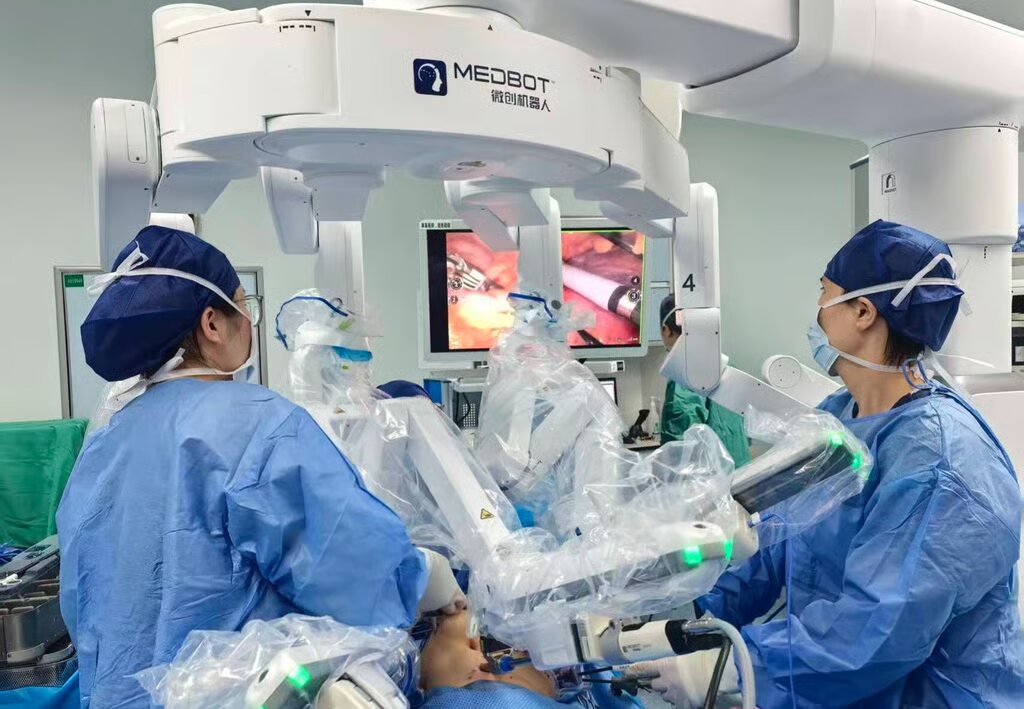
Why the robot is particularly useful in partial nephrectomy
Partial nephrectomy is a technically demanding operation. After the tumour is removed, the defect in the kidney has to be stitched quickly and securely. During this time the renal artery is often clamped temporarily. Every minute without blood flow matters to the kidney, so this period should be as short as possible.
This is exactly where a robotic system helps:
- wristed instruments make it faster and more precise to stitch kidney tissue than with conventional laparoscopy;
- a magnified 3D view clearly shows the tumour margin, small vessels and the urinary tract;
- tremor filtering helps the surgeon separate the tumour from healthy tissue gently;
- there is no large incision, so compared with open surgery there is less blood loss and less pain, and a shorter hospital stay.
For these reasons, in many hospitals around the world partial nephrectomy has become one of the most common robotic urological operations after prostatectomy. Saba Darmon Clinic has a MedBot Toumai robotic system. Read more about it: “Robotic Surgery in Tashkent: the MedBot Toumai System”.
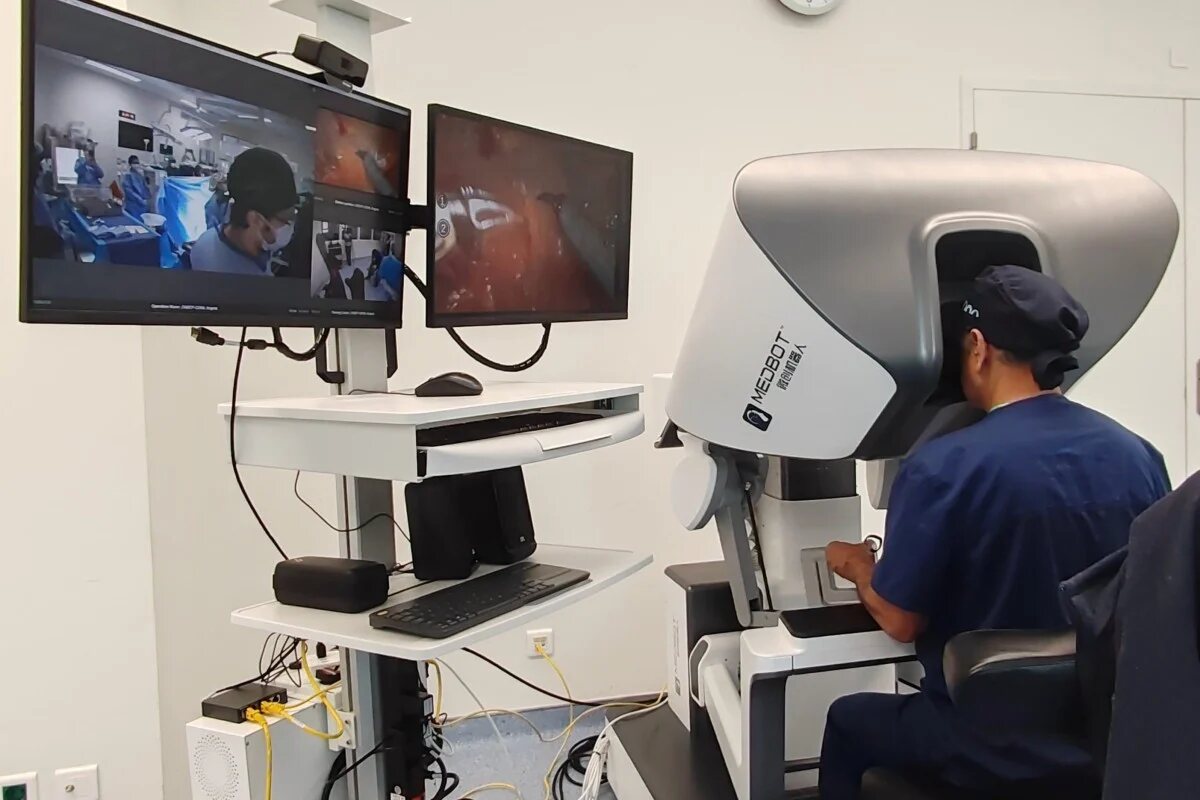
Open, laparoscopic and robotic partial nephrectomy compared
| Feature | Open surgery | Laparoscopic | Robotic |
|---|---|---|---|
| Access | 15–20 cm incision between the ribs | 3–5 small ports | 4–6 small ports |
| Stitching the kidney | Convenient | The hardest step | Convenient, wristed instruments |
| Tumours in difficult positions | Possible | Limited | Often possible |
| Pain and recovery | Longer | Faster | Faster |
| Hospital stay | Usually 5–7 days | 2–4 days | 2–4 days |
The figures in the table are a general guide only. The surgeon sets the exact plan according to the position of the tumour and your overall health. For a general comparison of the approaches see: “Robotic surgery vs laparoscopy”.
How the operation is performed
- Anaesthesia. The operation is done under general anaesthesia with the patient lying on their side.
- Access. Several small ports are made in the abdominal wall and the camera and robotic instruments are introduced.
- Exposing the kidney. The surgeon frees the kidney and its vessels and locates the tumour. If necessary, its margin is mapped with a dedicated ultrasound probe.
- Removing the tumour. The artery is clamped for a short time and the tumour is cut out with a margin of healthy tissue.
- Repair. The kidney tissue and, if needed, the collecting system are stitched and blood flow is restored.
- Finishing. The tumour is taken out in a special bag and a drain is usually left in place.
The operation takes about 2–4 hours on average. The removed tissue is sent for histological examination, which determines the tumour type and the follow-up plan.
Risks and how they are reduced
Like any operation, partial nephrectomy carries risks, and it is right to know about them in advance:
- bleeding, because the kidney has a rich blood supply, which is why the quality of the repair is so important;
- urine leakage from the repaired collecting system, which is usually monitored through the drain and most often stops on its own;
- conversion to radical nephrectomy, which in rare cases is needed when the tumour turns out to be more complex than expected;
- general risks such as infection, blood clots or a reaction to anaesthesia.
The key ways to reduce risk are a complete work-up before surgery, an experienced team and close monitoring afterwards. On the overall safety of robotic surgery: “Is robotic surgery safe? 10 questions”.
After the operation: recovery and follow-up
Most patients get up and walk the day after surgery. The urinary catheter and the drain are usually removed within 1–3 days. After discharge you should avoid heavy lifting and strenuous exercise for 4–6 weeks. Most people return to light work within 2–3 weeks.
Further follow-up depends on the histology result. It usually involves periodic CT or MRI scans and creatinine blood tests, more often in the first years. More about recovery: “Recovery after robotic surgery”.
Frequently asked questions
Does a kidney tumour always have to be removed?
Not always. For small masses up to 2–3 cm, especially in older patients or people with serious other illnesses, active surveillance with regular CT or MRI scans, or ablation, may be considered. Your urologist will decide based on the features of the tumour and your general health.
Can you live with one kidney?
Yes, a person can live a full life with one healthy kidney. However, keeping both kidneys lowers the future risk of kidney failure, which is why partial nephrectomy is preferred whenever possible.
Is robotic surgery used for kidney cysts?
Simple cysts usually need no surgery. Cysts with a complex structure on CT (Bosniak categories III–IV) carry a risk of cancer and are often removed in the same way as a tumour, which can be done robotically.
How painful is robotic kidney surgery?
Because the incisions are small, pain is usually moderate and controlled with standard painkillers. Most patients no longer need strong pain relief by the second or third day.
What does the cost of the operation depend on?
The cost depends on the extent and length of the operation, the consumables used and the length of the hospital stay. You can find out the exact price after a urology consultation and a review of your CT scan by calling +998 71 210-30-30.
More about robotic surgery:
- Robotic Surgery in Tashkent — all directions
- Robotic Surgery in Tashkent: the MedBot Toumai System
- Is Robotic Surgery Safe? 10 Questions
- Robotic Surgery vs Laparoscopy: What Is the Difference
- Preparing for Robotic Surgery: Step by Step
- Recovery After Robotic Surgery
- Bladder Cancer: Robotic Cystectomy
- Hernia: Robotic Repair
- Gallbladder: Robotic Cholecystectomy
- Who Is Not Suitable for Robotic Surgery
- Uterine and Cervical Cancer: Robotic Surgery
- Large Prostate Adenoma: TURP or Robotic Surgery
- Varicocele Surgery: Marmar or Robotic
- Kidney Removal: Robotic Nephrectomy
- Ectopic Pregnancy: Tube-Sparing Robotic Surgery
- Female Urinary Incontinence: TVT or Robotic Surgery
- Uterus Removal: Robotic Hysterectomy
- Hiatal Hernia and Reflux: Robotic Fundoplication
- Liver Tumour: Robotic Liver Resection
- Pancreatic Tumour: Robotic Resection
- Obesity Surgery: Robotic Sleeve Gastrectomy
- Diastasis Recti: Robotic Repair
- Colon Cancer: Robotic Hemicolectomy
- Anaesthesia and Pain Control in Robotic Surgery
- Pregnancy After Robotic Myomectomy
- Robotic Prostatectomy
- Colorectal Cancer: Robotic Surgery
- Uterine Fibroids: Robotic Surgery
- Endometriosis and Ovarian Cysts: Robotic Surgery
- What Is Telesurgery?
- Robotic Surgery in Older Adults
- Stomach Cancer: Robotic Gastrectomy
- Hydronephrosis: Robotic Pyeloplasty
- Pelvic Organ Prolapse: Robotic Sacrocolpopexy
- Adrenal Tumour: Robotic Adrenalectomy
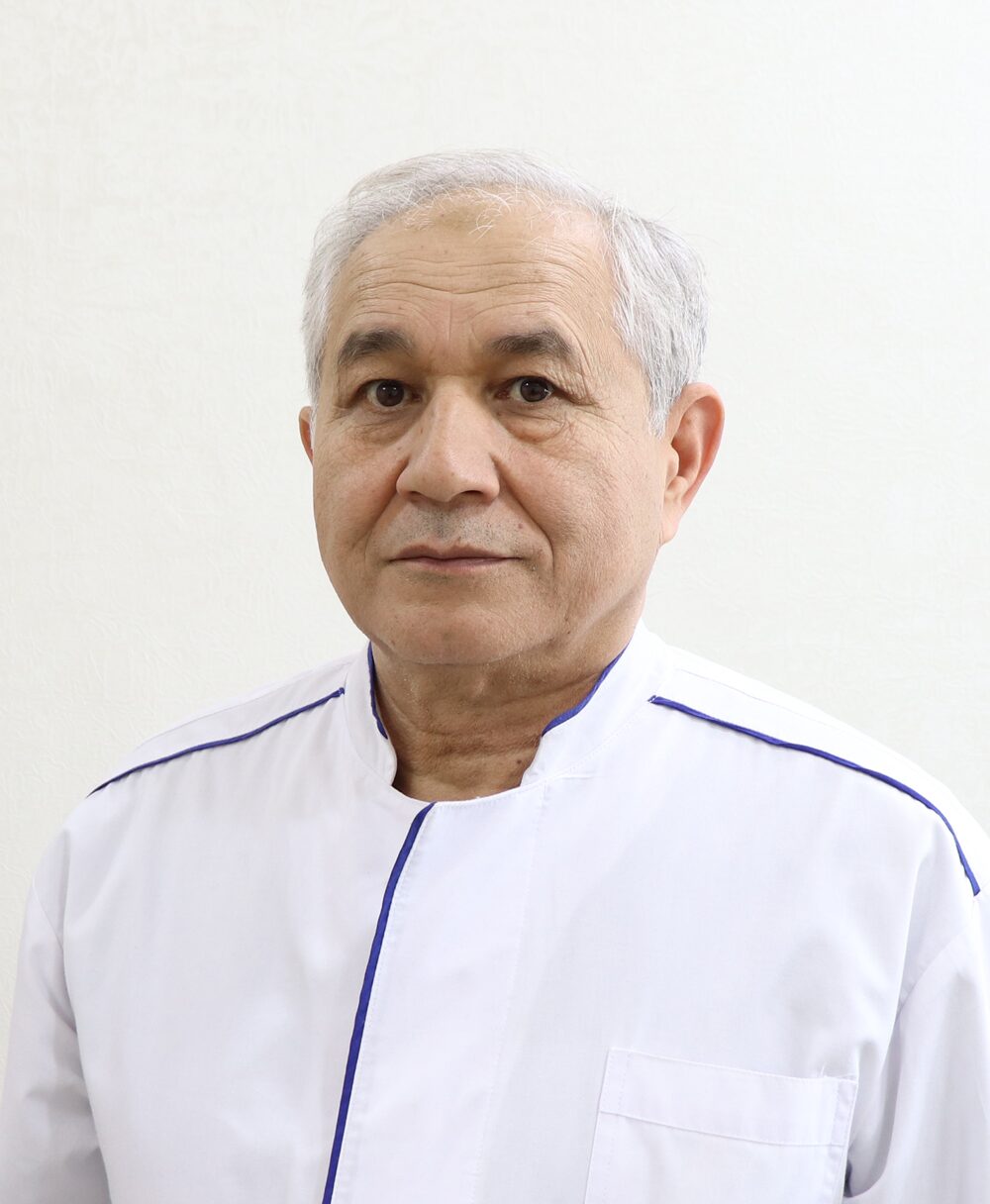
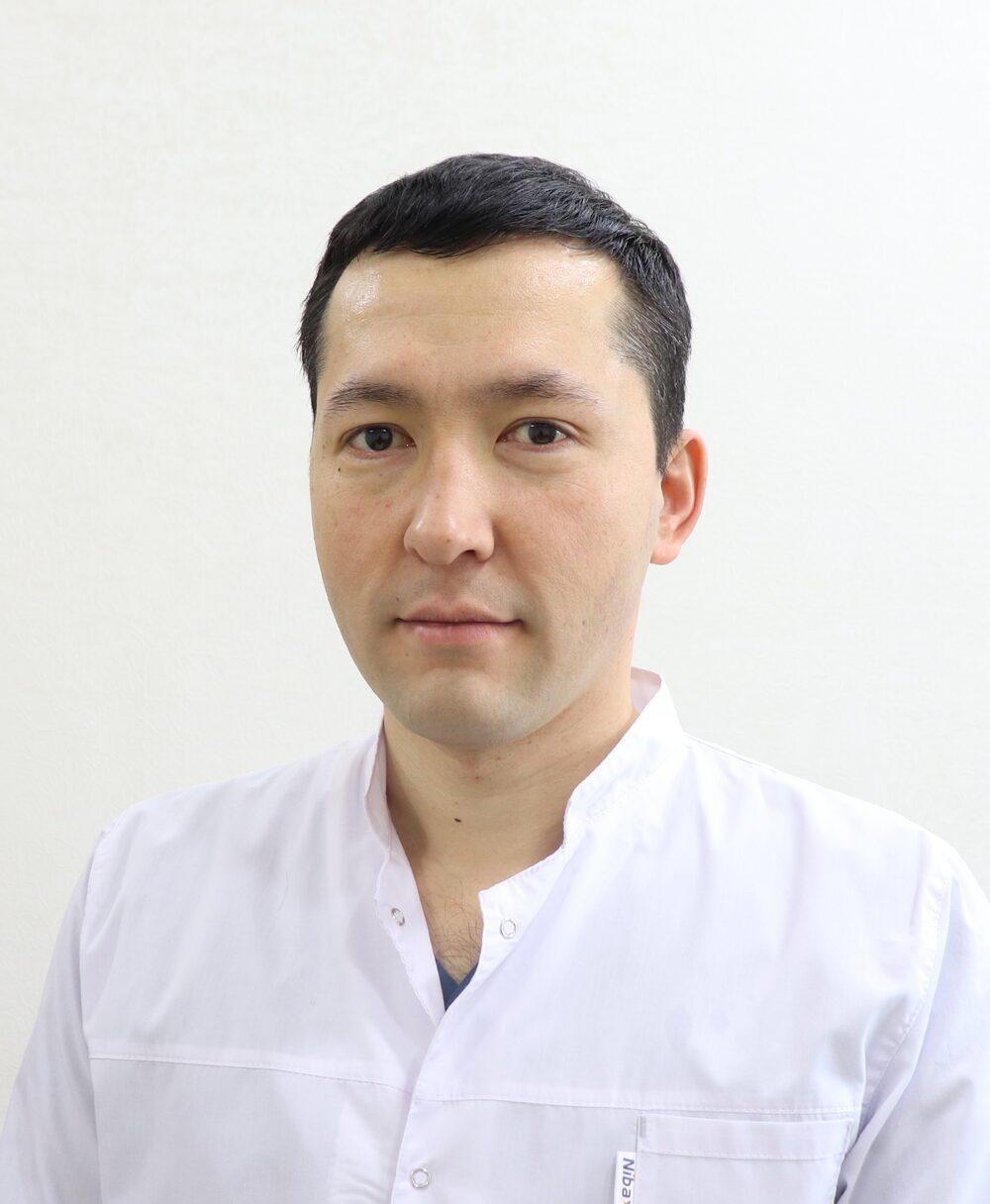
Doctors for consultation
For a kidney tumour, the urologist and the surgical oncologist choose the type of operation together based on the CT scan. Our doctors for consultation:


Is robotic surgery right for you?
Book an appointment with a surgeon and bring your test results: the doctor will compare the options and recommend the safest one for you.
Call now — +998 71 210-30-30Contacts
Address: 7A/3 Nurafshon street, Tashkent
Phone: +998 71 210-30-30 · WhatsApp: +998 95 662-30-30
Opening hours: Monday–Saturday, 09:00–18:00
E-mail: