Useful articles
Varicocele Surgery: Marmar Microsurgery or the Robotic Method — Which for Whom
Doctor's blog
sbdrmn
Direction: Robotic surgery · All services
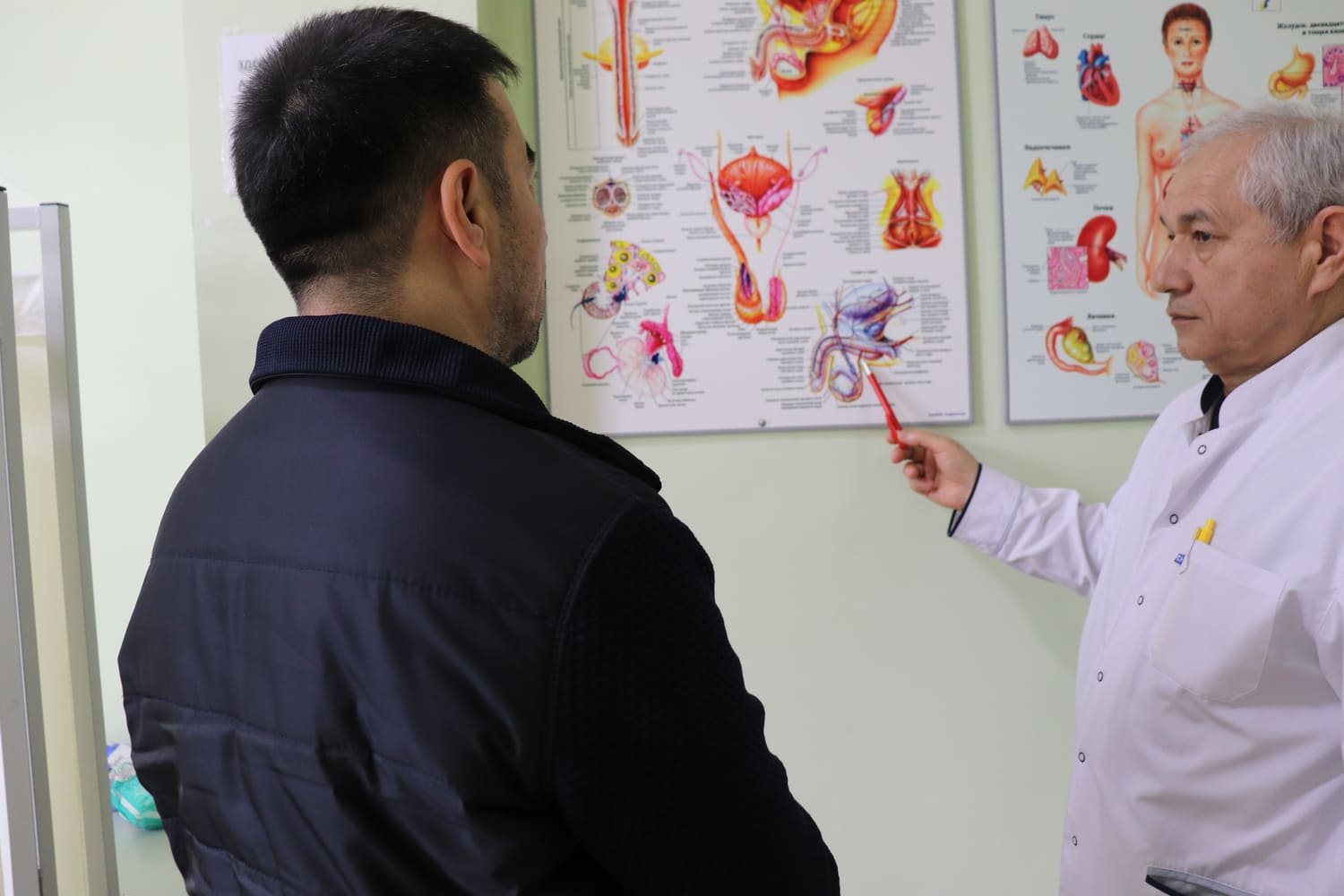
A varicocele is one of the most common correctable causes of male infertility. There are several surgical methods: microsurgery (Marmar) through a small groin incision, laparoscopic and robotic. Below: which is chosen when, and why the method under the microscope is the mainstay.
Contents
What a varicocele is and why it leads to infertility
A varicocele is varicose enlargement of the veins of the spermatic cord, usually on the left. Blood pools in the enlarged veins, the temperature of the testicle rises, and sperm quality falls. Many men have no symptoms at all, and the condition is found only during infertility work-up or on ultrasound.
Not every varicocele needs surgery. It is discussed when: the semen analysis is abnormal and the couple is planning a child; there is pain or heaviness in the testicle; in an adolescent the testicle lags in growth.
With no symptoms, a normal semen analysis and no plans for children, observation is often enough. The decision is made by a urologist-andrologist on the basis of semen analysis and Doppler ultrasound.
Surgical methods: what differs
All methods share one goal — tie off the enlarged veins while preserving the artery and lymphatic vessels. The difference lies in the access and the magnification the surgeon works under.
| Method | How it is done | Key feature |
|---|---|---|
| Marmar (microsurgery) | A small groin incision; veins are tied one by one under an operating microscope | Artery and lymphatics clearly seen; lowest risk of recurrence and hydrocele; the clinic's main method |
| Laparoscopic | Through the abdomen via ports; veins are tied higher up | One access for bilateral varicocele; needs general anaesthesia |
| Robotic | The laparoscopic route, with robotic instruments and a 3D view | More precise in recurrent or complex bilateral cases |
Why the Marmar method is the mainstay
Under the microscope the surgeon sees every vessel individually: ties the veins and spares the artery and lymphatics. That is why fluid collecting around the testicle (hydrocele) and recurrence of the varicocele happen less often than with other methods. The incision is small, general anaesthesia is not essential, and patients often go home the same day.
When the robotic or laparoscopic route wins
- bilateral varicocele — both sides through a single access;
- recurrence after earlier surgery — working within groin scar is hard, approaching from above is easier;
- another abdominal procedure is planned at the same time.
Here the robotic system is the "more precise" form of laparoscopy: a 3D view and a tremor-free, articulated instrument make separating the vein while sparing the artery easier. But for an ordinary one-sided varicocele it offers no advantage over the Marmar method.
Important: the method is chosen by the situation, not by how "modern" it sounds. For a primary one-sided varicocele the answer is microsurgery — that is the practice at our clinic.
After the operation
Mild pain and swelling are possible for a few days; lifting and sport are restricted for 2–4 weeks. The semen analysis does not change immediately — sperm need time to mature, so the follow-up test is scheduled some months later.
What to agree with your doctor
Whether surgery is needed at all (semen analysis, ultrasound); which method and why; the type of anaesthesia; when you can return to work; when to repeat the semen analysis. Pre-operative tests are listed here; the difference between robotic and laparoscopic access is explained here.
Frequently asked questions
Does a varicocele go away on its own?
No, enlarged veins do not recover by themselves. But with no symptoms and a normal semen analysis surgery is not essential — observation is enough.
Will infertility be cured by the operation?
In many men the semen analysis improves, but there is no guarantee — the result shows in the follow-up test some months later.
Is general anaesthesia needed for the Marmar method?
Usually not — local or spinal anaesthesia is sufficient. Laparoscopic and robotic methods require general anaesthesia.
Is the robot better?
For an ordinary one-sided varicocele, no — the Marmar method has the fewest complications. The robot may offer an advantage in bilateral or recurrent cases.
How long will I be off work?
Desk work after a few days, physical work after 2–4 weeks — your surgeon will give the exact period.
Is varicocele operated on in adolescents?
If the testicle lags in growth or there is pain — yes. Otherwise a paediatric urologist may recommend observation.
More about robotic surgery:
- Robotic Surgery in Tashkent — all directions
- Robotic Surgery in Tashkent: the MedBot Toumai System
- Is Robotic Surgery Safe? 10 Questions
- Robotic Surgery vs Laparoscopy: What Is the Difference
- Preparing for Robotic Surgery: Step by Step
- Recovery After Robotic Surgery
- Bladder Cancer: Robotic Cystectomy
- Hernia: Robotic Repair
- Gallbladder: Robotic Cholecystectomy
- Who Is Not Suitable for Robotic Surgery
- Uterine and Cervical Cancer: Robotic Surgery
- Large Prostate Adenoma: TURP or Robotic Surgery
- Kidney Removal: Robotic Nephrectomy
- Ectopic Pregnancy: Tube-Sparing Robotic Surgery
- Female Urinary Incontinence: TVT or Robotic Surgery
- Uterus Removal: Robotic Hysterectomy
- Hiatal Hernia and Reflux: Robotic Fundoplication
- Liver Tumour: Robotic Liver Resection
- Pancreatic Tumour: Robotic Resection
- Obesity Surgery: Robotic Sleeve Gastrectomy
- Diastasis Recti: Robotic Repair
- Colon Cancer: Robotic Hemicolectomy
- Anaesthesia and Pain Control in Robotic Surgery
- Pregnancy After Robotic Myomectomy
- Robotic Prostatectomy
- Kidney Tumour: Robotic Partial Nephrectomy
- Colorectal Cancer: Robotic Surgery
- Uterine Fibroids: Robotic Surgery
- Endometriosis and Ovarian Cysts: Robotic Surgery
- What Is Telesurgery?
- Robotic Surgery in Older Adults
- Stomach Cancer: Robotic Gastrectomy
- Hydronephrosis: Robotic Pyeloplasty
- Pelvic Organ Prolapse: Robotic Sacrocolpopexy
- Adrenal Tumour: Robotic Adrenalectomy
Doctors for consultation
Varicocele and male infertility are handled by our urologist-andrologists. Our doctors in this field:
Is robotic surgery right for you?
Book an appointment with a surgeon and bring your test results: the doctor will compare the options and recommend the safest one for you.
Call now — +998 71 210-30-30Contacts
Address: 7A/3 Nurafshon street, Tashkent
Phone: +998 71 210-30-30 · WhatsApp: +998 95 662-30-30
Opening hours: Monday–Saturday, 09:00–18:00
E-mail: