


Useful articles

Blocked Fallopian Tubes: Tests and Diagnostic Laparoscopy
Doctor's blog
sbdrmn
Direction: Robotic surgery · All services
Blocked fallopian tubes are one of the most common causes of female infertility and a factor that raises the risk of ectopic pregnancy. Most often they cause no symptoms at all. Below we explain honestly why the tubes become blocked, how HSG, sono-HSG and diagnostic laparoscopy differ, what a hydrosalpinx is, and when surgery or IVF is the better route.
Contents
- What the fallopian tubes do
- Why the tubes become blocked: the main causes
- How tubal patency is tested
- What a hydrosalpinx is and why it may be removed before IVF
- What laparoscopy can repair — and when IVF is the better route
- How diagnostic laparoscopy goes and recovery afterwards
- Frequently asked questions
What the fallopian tubes do
The fallopian tubes are narrow channels that pick up the egg released from the ovary and carry it to the uterus. Fertilisation happens inside the tube, and the embryo then travels towards the uterus over several days. If a tube is blocked, narrowed or damaged on the inside, the egg and sperm cannot meet — or the embryo gets stuck on the way. That is why tubal factor is one of the most common causes of female infertility.
Why the tubes become blocked: the main causes
- Past infections — especially sexually transmitted chlamydia and gonorrhoea. They often cause no symptoms but leave scarring inside the tube.
- Pelvic inflammatory disease (PID) — untreated or repeated inflammation sticks the tubes together and forms adhesions.
- Endometriosis — can cause adhesions around the tube and ovarian cysts; read more in the article on endometriosis and ovarian cysts.
- Previous surgery — adhesions after appendicitis, a caesarean section or other abdominal operations.
- A previous ectopic pregnancy — the tube may have been damaged or removed.
With a partly open tube, pregnancy is possible, but the risk that the embryo stays in the tube is higher. A late period together with one-sided lower abdominal pain, bleeding or dizziness needs urgent medical attention; if you feel seriously unwell, call 103. There is a separate article on ectopic pregnancy.
How tubal patency is tested
In many women a tubal problem causes no symptoms at all and only comes to light when pregnancy does not happen. The main methods are:
| Method | How it is done | What it shows |
|---|---|---|
| HSG (hysterosalpingography) | Contrast is introduced into the uterus and X-ray images are taken | Whether the tubes are open, where any block is; the shape of the uterine cavity |
| Sono-HSG (HyCoSy) | Fluid is introduced and followed on ultrasound, with no radiation | Whether fluid passes through the tubes; the uterine cavity |
| Diagnostic laparoscopy with chromopertubation | Under anaesthesia a camera is inserted through small punctures; dye is passed into the uterus | Direct view of tubal patency, adhesions and endometriosis |
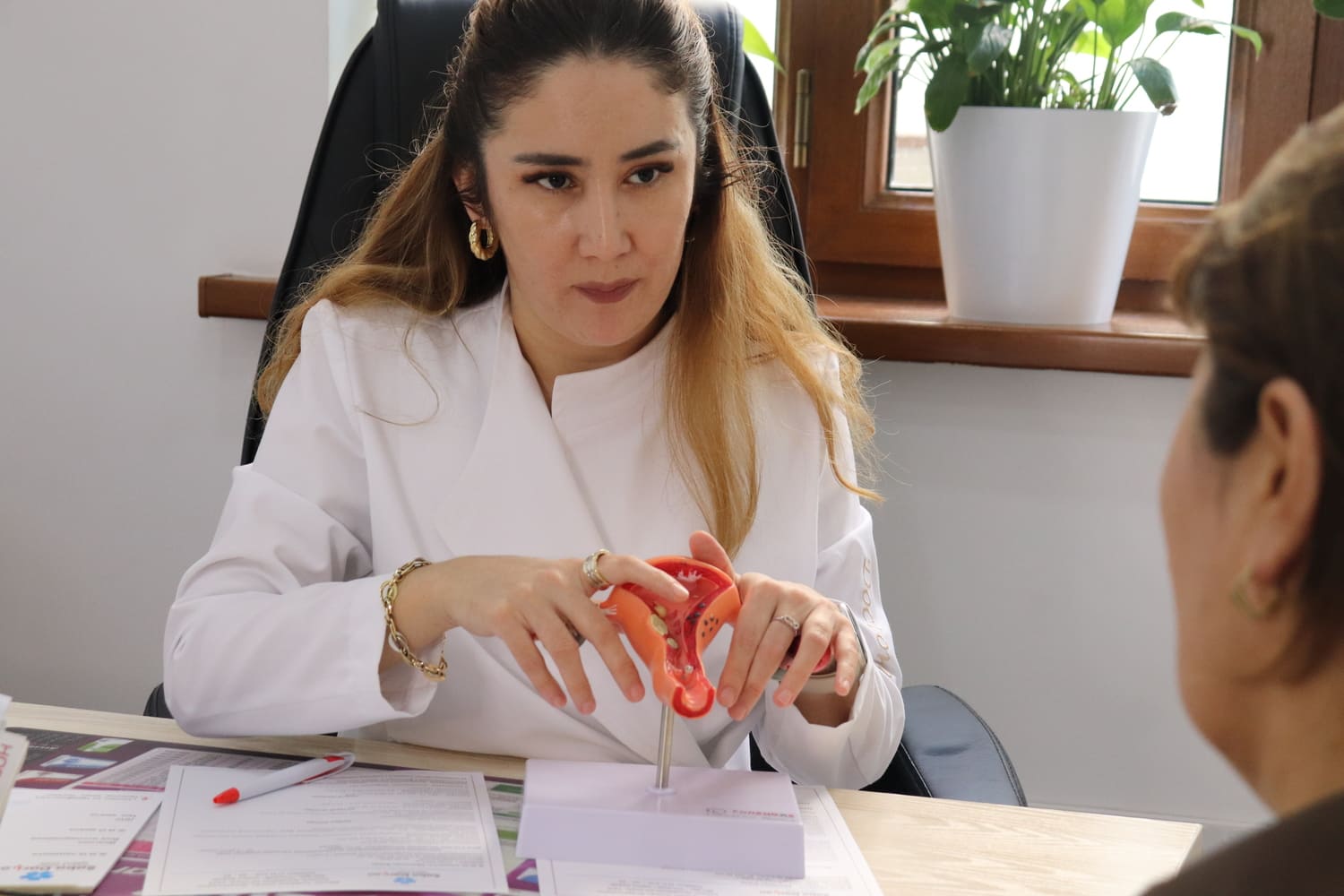
HSG and sono-HSG are outpatient tests and simpler, so they usually come first. Laparoscopy is regarded as the most accurate method: the surgeon sees the tubes, ovaries and pelvis directly — and can treat what is found in the same operation. In an infertility work-up, ovarian reserve (the AMH test) and the partner's semen analysis are assessed as well as the tubes.
What a hydrosalpinx is and why it may be removed before IVF
A hydrosalpinx is a tube whose end has sealed off, with fluid collecting inside. On ultrasound it looks like a swollen, fluid-filled tube. This fluid can leak back into the uterine cavity and interfere with embryo implantation. For that reason, international guidelines suggest that women planning IVF are often offered laparoscopic removal of such a tube or blocking it at the uterine end (clipping) — this has been shown to improve IVF outcomes. The decision is made together with the woman, taking her age and plans into account.
What laparoscopy can repair — and when IVF is the better route
A diagnostic laparoscopy often becomes a treatment at the same time. The surgeon may perform:
- adhesiolysis — freeing adhesions around the tube and ovary;
- salpingostomy — opening a sealed tube end and creating a new opening;
- removal of endometriosis deposits;
- salpingectomy or clipping — dealing with a non-functioning, fluid-filled tube before IVF.
To be honest, surgery is not the answer for everyone. If the adhesions are mild, the lining of the tube is healthy and the woman is young, the chance of a natural pregnancy after laparoscopy is good. If the tubes are badly damaged, both are blocked, the woman is older or her ovarian reserve is low, it is often wiser not to lose time and to move straight to IVF — IVF bypasses the tubes completely. In addition, a repaired tube still carries a higher risk of ectopic pregnancy. Which route is right is decided by the gynaecologist and the fertility specialist after reviewing all the test results together.
How diagnostic laparoscopy goes and recovery afterwards
Laparoscopy is done under general anaesthesia through 2–3 small punctures in the abdominal wall. It is usually planned for the first half of the cycle, after the period. Most women go home after 1–2 days and are back to normal life within about a week. In the first days there may be shoulder-tip pain (from the gas used to inflate the abdomen) and soreness around the punctures. There are separate articles on the advantages of laparoscopy and recovery and on laparoscopic gynaecological surgery.
When you can start trying for a pregnancy, how long to wait and when it makes sense to move to IVF will be explained by your doctor based on the findings at surgery. The general route of tests is described in the article on female infertility; all services are listed on the gynaecology department page.
Frequently asked questions
What are the symptoms of blocked fallopian tubes?
Often there are none; the main sign is not getting pregnant within a year of trying (six months over the age of 35). Sometimes there is chronic pelvic pain or a history of pelvic infection.
Is an HSG painful?
Most women feel brief period-like cramping that passes within a few minutes. The doctor may suggest taking a painkiller beforehand.
What is the most accurate test for tubal blockage?
Diagnostic laparoscopy with chromopertubation is regarded as the most accurate, but it needs an anaesthetic. That is why HSG or sono-HSG usually comes first.
Can I get pregnant with blocked tubes?
If both tubes are completely blocked, natural pregnancy is almost impossible, but IVF bypasses the tubes. If one tube is open or the adhesions are mild, there is still a chance of natural pregnancy.
Does a hydrosalpinx have to be removed?
If IVF is planned, removal or clipping is often recommended, because fluid from the tube can interfere with implantation. The final decision is made by your doctor together with you.
When can I try to conceive after laparoscopy?
Often from the next cycles, but this depends on what was done. Your surgeon will give exact advice based on the findings.
How long is recovery after laparoscopy?
Most women go home after 1–2 days and are back to normal activities within about a week.
Related reading:
Doctors for consultation
Tubal testing and the need for laparoscopy are assessed by our gynaecologists. Our doctors in this field:





Book an appointment with a gynaecologist
Not getting pregnant? A gynaecologist will plan in which order to check the tubes and other factors.
Call now — +998 71 210-30-30Contacts
Address: 7A/3 Nurafshon street, Tashkent
Phone: +998 71 210-30-30 · WhatsApp: +998 95 662-30-30
Opening hours: Monday–Saturday, 09:00–18:00
E-mail: