


Useful articles

Robotic Gastric Bypass: Who It Suits and How It Differs from a Sleeve
Doctor's blog
sbdrmn
Direction: Robotic surgery · All services
Robotic gastric bypass is a robot-assisted version of a long-established bariatric operation used to treat obesity and type 2 diabetes. Patients often ask: is a gastric bypass right for me, how does it differ from a sleeve, and what will life be like afterwards? Below, in plain language, we explain how the operation works, who it is recommended for, how it honestly compares with a sleeve, the risks, eating and lifelong vitamins, and planning a pregnancy.
Contents
- What robotic gastric bypass is and how a gastric bypass works
- Who is gastric bypass suitable for? Indications and limits
- How a gastric bypass differs from a sleeve
- What the robot adds in gastric bypass surgery
- Preparing for surgery: a team approach
- Risks and complications of gastric bypass
- Eating and lifelong vitamins after a gastric bypass
- Pregnancy after gastric bypass
- What to ask your surgeon, and help at Saba Darmon clinic
- Frequently asked questions
What robotic gastric bypass is and how a gastric bypass works
A gastric bypass (in full, a Roux-en-Y gastric bypass) is a bariatric operation used to treat obesity and the conditions that come with it. The surgeon creates a small pouch from the top part of the stomach and joins it directly to a loop of small bowel further down. The rest of the stomach, the duodenum and the first part of the small bowel are bypassed by food, but they are not removed: the digestive juices they produce meet the food lower down.
Three things change as a result. First, because the pouch is small, you feel full after a small portion. Second, part of the food passes through without being fully absorbed. Third, and most importantly, gut hormones change: appetite falls and blood sugar becomes easier to control. That is why a gastric bypass is seen not only as a way to lose weight but also as a treatment for type 2 diabetes, high blood pressure and obstructive sleep apnoea.
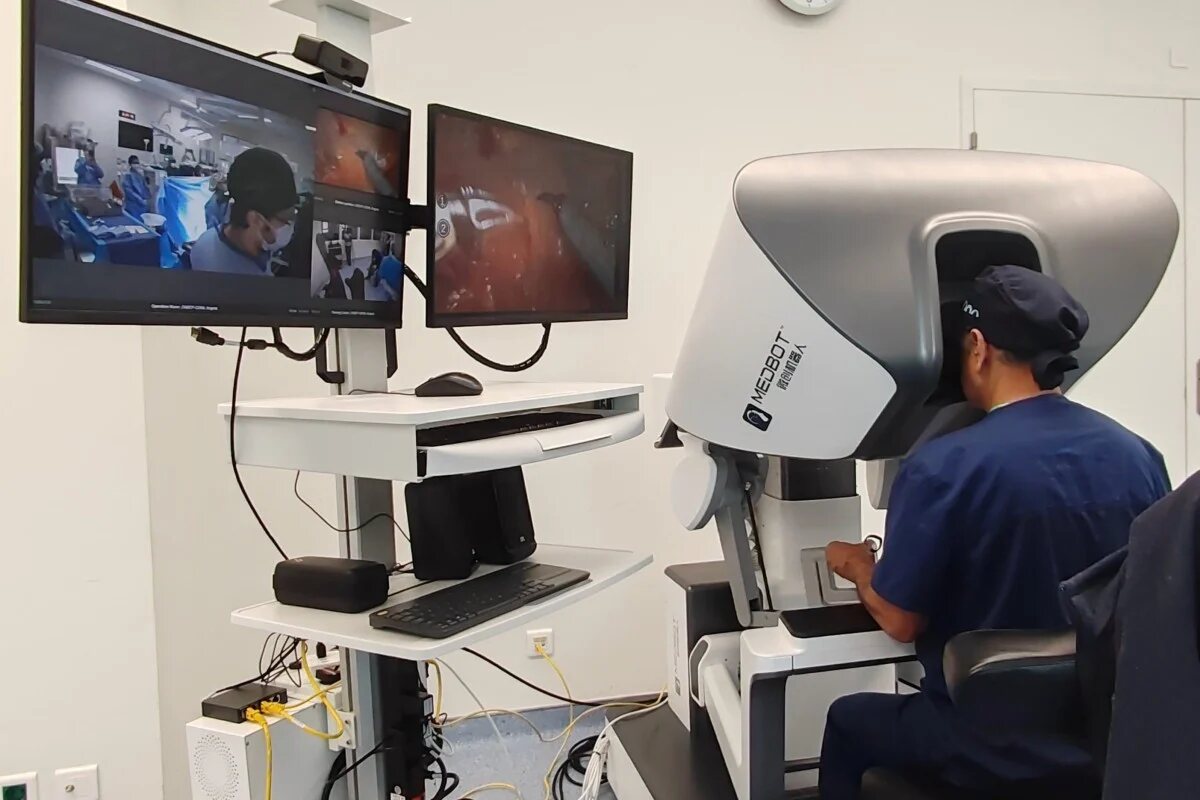
“Robotic” does not mean that a robot does the operation on its own. The surgeon sits at a console and controls the robotic arms, and the incisions are as small as in standard keyhole (laparoscopic) surgery. General information about weight-loss surgery is given on a separate page.
Who is gastric bypass suitable for? Indications and limits
Under current international guidance, bariatric surgery can be offered to adults with a body mass index (BMI) of 35 or more, and to people with a BMI above 30 who also have a metabolic condition, in particular type 2 diabetes. In people of Asian origin, the health harms of excess weight begin at a lower BMI, so somewhat lower thresholds are used; your doctor assesses this individually.
A bypass is often preferred over a sleeve when there is significant acid reflux (gastro-oesophageal reflux disease, or heartburn), long-standing diabetes or diabetes that is poorly controlled with medication, or reflux or weight regain after a previous sleeve. The operation is not for everyone. Untreated severe mental health conditions, active alcohol or drug dependence, being unready to follow the eating rules and lifelong follow-up, and illnesses that make anaesthesia very risky can all be serious obstacles.
How a gastric bypass differs from a sleeve
Both operations work well, but they act differently and make different long-term demands. The sleeve is described in detail in the article on robotic sleeve gastrectomy.
| Feature | Gastric bypass | Sleeve gastrectomy |
|---|---|---|
| What is done | Small pouch plus a route that bypasses part of the bowel; the stomach stays in the body | Most of the stomach is removed, leaving a narrow tube |
| Reflux (heartburn) | Usually improves; the preferred option when reflux is a problem | Can get worse or appear for the first time |
| Type 2 diabetes | Remission is somewhat more frequent in many studies | Also works well |
| Can it be reversed? | Possible in theory, but complex and rarely done | No — part of the stomach has been removed |
| Vitamins and minerals | Higher risk of iron, B12, calcium and vitamin D deficiency | Lifelong supplements still needed; risk somewhat lower |
| Dumping syndrome | More common, after sugary food or eating fast | Less common |
| Specific risks | Internal hernia, ulcer at the join | Leak along the long staple line, reflux |
The choice is made together with your surgeon, based on your health, reflux, diabetes, the medicines you take and your own preferences. There is no single operation that is best for everyone.
What the robot adds in gastric bypass surgery
A gastric bypass is technically more demanding than a sleeve. Several bowel connections (anastomoses) are made, some of them stitched by hand, and the surgeon works deep in the abdomen, often through a thick abdominal wall. This is where a robotic system can help: a magnified three-dimensional view, instruments that bend like a wrist, and arms that hold their position steadily despite the resistance of the abdominal wall. The surgeon also works in a comfortable position at the console, which matters during a long operation.
At the same time, laparoscopic gastric bypass remains the standard approach and gives good results in experienced hands. Research has not shown that the robot always leads to fewer complications. The robot is a tool; the outcome depends above all on the experience of the surgeon and the team. All areas of robotic surgery are listed on our robotic surgery page.
Preparing for surgery: a team approach
Bariatric surgery is not a decision made in a day. Preparation usually involves several steps: a consultation with the surgeon, blood tests (including blood sugar, iron and vitamin levels), an abdominal ultrasound, an endoscopy of the stomach if needed, an assessment of the heart and lungs, and discussions with an endocrinologist and a dietitian, plus a psychologist where helpful. Smokers are strongly advised to stop well before the operation. Sometimes a special diet is prescribed for a few weeks beforehand to shrink the liver, which makes the operation easier for the surgeon.
The general steps are explained in the article on preparing for robotic surgery, and anaesthesia and pain control are covered here.
Risks and complications of gastric bypass
Like any major operation, a gastric bypass carries risks. In the early period these include a leak from one of the bowel joins, bleeding, blood clots in the leg veins or lungs, and infection. Later on, months or even years afterwards, the following can occur:
- Internal hernia — a loop of bowel slips through one of the gaps created during surgery; it is more likely after rapid weight loss and causes cramping abdominal pain.
- Marginal ulcer (an ulcer at the join) — smoking and non-steroidal anti-inflammatory painkillers (NSAIDs) greatly increase the risk, so they should be avoided.
- Narrowing of the join — solid food will not pass and vomiting develops.
- Vitamin and mineral deficiencies — anaemia, weaker bones, nerve problems.
- Dumping syndrome and low blood sugar — palpitations, sweating and weakness after sugary food.
- Gallstones during rapid weight loss.
If after surgery (even years later) you develop severe or worsening abdominal pain, vomiting that will not stop, an inability to keep fluids down, fever, a racing heart, breathlessness or chest pain, a swollen leg, black stools or vomiting blood, or you faint, do not wait — call 103 immediately and tell them you have had bariatric surgery.
Eating and lifelong vitamins after a gastric bypass
After the operation, the diet is built up in stages: clear fluids first, then liquid and puréed food, then soft food, and after several weeks a normal texture. The key rules are to eat small amounts slowly and chew well, put protein first, drink between meals rather than with them, and avoid sugary drinks and sweets, which trigger dumping. Alcohol is absorbed faster and acts more strongly after a bypass, so great care is needed. The staged approach is similar to the one described in the article on eating after a sleeve.
Vitamin and mineral supplements are not optional: they are needed for life. A multivitamin, iron, vitamin B12, calcium and vitamin D are usually prescribed, with the type and amount set by your doctor according to your blood tests. Blood tests are done frequently at first and then every year. Regular physical activity and follow-up help prevent weight regain.
Pregnancy after gastric bypass
As weight falls, many women find their periods return and their chances of conceiving rise, sometimes unexpectedly. Pregnancy during rapid weight loss increases the risk of nutritional shortfalls for mother and baby, so waiting 12–18 months after surgery is usually advised. After a bypass, contraceptive pills may be absorbed less reliably, so choose a dependable method with your gynaecologist. When a pregnancy is planned, vitamin levels are checked in advance, and the pregnancy itself is monitored closely by doctors.
What to ask your surgeon, and help at Saba Darmon clinic
At your consultation, ask: why is a bypass or a sleeve right for me; how will it affect my reflux and diabetes; which tests do I need; what does robotic assistance add in my case; how long will I stay in hospital; which supplements should I take and for how long; how will follow-up be organised? Saba Darmon clinic performs bariatric surgery, both sleeve gastrectomy and gastric bypass, and ultrasound, laboratory tests and CT scanning are available for assessment. The clinic has the MedBot Toumai robotic system, and where appropriate the operation may be performed with robotic assistance; the surgeon chooses the method after assessment. More about our surgery department.
Frequently asked questions
Gastric bypass or sleeve: which is better?
There is no single answer for everyone. With significant reflux or long-standing diabetes a bypass is often preferred, while a sleeve is technically simpler and carries a somewhat lower risk of vitamin deficiency. Both need lifelong supplements and follow-up. Your surgeon makes the choice with you, taking into account your tests, your medicines and your preferences. There is a separate article on the sleeve.
Is robotic gastric bypass safer than laparoscopic?
It has not been shown that the robot is always safer. It makes stitching deep in the abdomen and working through a thick abdominal wall easier for the surgeon, but laparoscopic bypass is also a standard approach with good results in experienced hands. The outcome depends mainly on the experience of the surgeon and the team. The method is chosen after assessing your health, weight and previous operations.
How long do I need to take vitamins after a gastric bypass?
For life. After a bypass, part of your food is not absorbed in the bypassed section of bowel, so the risk of iron, vitamin B12, calcium and vitamin D deficiency never goes away. Do not stop your supplements even if you feel well. Your doctor sets the type and amount based on blood tests, which are repeated regularly, at least once a year.
How soon after surgery can I get pregnant?
Waiting 12–18 months after surgery is usually advised, because during rapid weight loss mother and baby may not get enough nutrients. Reliable contraception is needed during this time; pills may be poorly absorbed after a bypass, so choose a method with your gynaecologist. Before trying to conceive, have your vitamin levels checked and make a plan with your doctor.
Can I take painkillers after a gastric bypass?
Non-steroidal anti-inflammatory painkillers (NSAIDs) raise the risk of an ulcer at the bowel join, so you are usually advised to avoid them. Smoking increases this risk too. Agree with your doctor in advance which medicines for pain or fever are safe for you, and always tell other doctors that you have had bariatric surgery.
More about robotic surgery:
- Robotic Surgery in Tashkent — all directions
- Robotic Surgery in Tashkent: the MedBot Toumai System
- Is Robotic Surgery Safe? 10 Questions
- Robotic Surgery vs Laparoscopy: What Is the Difference
- Preparing for Robotic Surgery: Step by Step
- Recovery After Robotic Surgery
- Bladder Cancer: Robotic Cystectomy
- Hernia: Robotic Repair
- Gallbladder: Robotic Cholecystectomy
- Who Is Not Suitable for Robotic Surgery
- Uterine and Cervical Cancer: Robotic Surgery
- Large Prostate Adenoma: TURP or Robotic Surgery
- Varicocele Surgery: Marmar or Robotic
- Kidney Removal: Robotic Nephrectomy
- Ectopic Pregnancy: Tube-Sparing Robotic Surgery
- Female Urinary Incontinence: TVT or Robotic Surgery
- Uterus Removal: Robotic Hysterectomy
- Hiatal Hernia and Reflux: Robotic Fundoplication
- Liver Tumour: Robotic Liver Resection
- Pancreatic Tumour: Robotic Resection
- Obesity Surgery: Robotic Sleeve Gastrectomy
- Diastasis Recti: Robotic Repair
- Colon Cancer: Robotic Hemicolectomy
- Anaesthesia and Pain Control in Robotic Surgery
- Pregnancy After Robotic Myomectomy
- Abdominal Adhesions: Robotic Adhesiolysis
- Ovarian Cyst: Robotic Cystectomy
- Robotic Surgery in Gynaecology
- Robotic Prostatectomy
- Kidney Tumour: Robotic Partial Nephrectomy
- Colorectal Cancer: Robotic Surgery
- Uterine Fibroids: Robotic Surgery
- Endometriosis and Ovarian Cysts: Robotic Surgery
- What Is Telesurgery?
- Robotic Surgery in Older Adults
- Stomach Cancer: Robotic Gastrectomy
- Hydronephrosis: Robotic Pyeloplasty
- Pelvic Organ Prolapse: Robotic Sacrocolpopexy
- Adrenal Tumour: Robotic Adrenalectomy
Doctors for consultation
Our surgeons advise on weight-loss surgery, including gastric bypass and sleeve gastrectomy. Our doctors in this field:




Book a consultation with a surgeon
Considering weight-loss surgery? After assessment the surgeon will explain which operation suits you and what the next steps are.
Call now — +998 71 210-30-30Contacts
Address: 7A/3 Nurafshon street, Tashkent
Phone: +998 71 210-30-30 · WhatsApp: +998 95 662-30-30
Opening hours: Monday–Saturday, 09:00–18:00
E-mail: