


Useful articles

Abdominal Adhesions: Robotic Adhesiolysis — Symptoms and When Surgery Helps
Doctor's blog
sbdrmn
Direction: Robotic surgery · All services
Abdominal adhesions are bands of scar-like tissue that form between organs inside the abdomen, most often after surgery. In most people they cause no trouble at all, but sometimes they lead to bowel obstruction, chronic pain or difficulty getting pregnant. Below, in plain language: why adhesions form, which symptoms are dangerous, how the diagnosis is made, when watchful waiting is enough and when an operation — laparoscopic or robotic adhesiolysis — is worth considering.
Contents
- What abdominal adhesions are and how they form
- What causes adhesions: adhesions after surgery and other factors
- Symptoms of adhesions: when do they cause trouble?
- Adhesive bowel obstruction: warning signs you must not ignore
- How adhesions are diagnosed
- Treatment: watchful waiting, conservative care or surgery
- Laparoscopic, robotic or open adhesiolysis: what is the difference?
- Recovery after surgery and preventing new adhesions
- What to discuss with your doctor
- Frequently asked questions
What abdominal adhesions are and how they form
Abdominal adhesions are bands of fibrous tissue that make organs inside the abdomen stick to one another or to the abdominal wall. Normally the loops of bowel, the uterus, the ovaries and other organs are covered with a smooth lining called the peritoneum, so they can glide freely against each other. When this lining is injured, the body lays down a sticky protein called fibrin as part of healing. Usually the fibrin dissolves within a few days, but sometimes it turns into firm fibrous tissue, and an adhesion forms — anything from a thin film to a thick cord.
Adhesions are extremely common: most people who have had abdominal surgery have some degree of them. The important point is that the great majority cause no symptoms at all and need no treatment. Adhesions in themselves are not a disease; they become a problem only when they interfere with the bowel or other organs. Doctors sometimes call this situation adhesive disease.
What causes adhesions: adhesions after surgery and other factors
By far the most common cause is surgery in the abdomen or pelvis: bowel operations, appendicectomy, gallbladder removal, gynaecological procedures and caesarean section. The larger the incision, the more the tissues are handled and the more blood is left behind, the more likely adhesions are. Open operations generally lead to more adhesions than keyhole (laparoscopic) ones.
- Infection and inflammation: a burst appendix, peritonitis, or pelvic inflammatory disease in women (infection of the fallopian tubes and ovaries).
- Endometriosis: tissue similar to the lining of the womb growing outside it can cause dense adhesions.
- Other causes: abdominal injury, radiotherapy and, rarely, bands present from birth.
Symptoms of adhesions: when do they cause trouble?
Many people never find out that they have adhesions. When symptoms do appear, they are mainly linked to three problems:
| Problem | Typical signs | What is done |
|---|---|---|
| Adhesive small-bowel obstruction | Cramping pain, vomiting, bloating, no passing of wind or stool | Urgent assessment, hospital treatment, surgery if needed |
| Chronic abdominal or pelvic pain | Recurring pain in one spot, worse with movement or after meals | Ruling out other causes; surgery only in carefully selected cases |
| Female infertility | Often no symptoms; pregnancy does not happen | Checking the fallopian tubes, diagnostic laparoscopy |
The link between chronic pain and adhesions is not always clear. Many people with adhesions have no pain, and pain can equally come from the bowel, the urinary tract, the spine or the reproductive organs. So the assumption that “it hurts, therefore it must be adhesions” can be wrong. In women, adhesions around the fallopian tubes can stop the egg from travelling to the womb; this is covered in detail in the article on blocked fallopian tubes.
Adhesive bowel obstruction: warning signs you must not ignore
If an adhesion kinks or squeezes a loop of small bowel, the contents of the gut can no longer move on. This is the most dangerous complication of adhesions. In a partial obstruction the symptoms are milder and may come and go; in a complete obstruction the condition worsens over hours. If the blood supply to the trapped bowel is cut off (strangulation), the bowel wall can die, and an immediate operation is needed.
If you have severe cramping abdominal pain, repeated vomiting, a rapidly swelling abdomen, no wind or stool at all, a fever, a racing heart, or pain that becomes constant and unbearable, do not wait at home and do not take painkillers or laxatives — call 103 straight away. If you have had abdominal surgery in the past, make sure the doctors know.
How adhesions are diagnosed
Adhesions cannot be reliably seen on ultrasound, X-ray or even CT — they are too thin and barely show up on images. That is why the diagnosis is often made by looking directly, during laparoscopy. Assessment usually includes:
- a consultation and examination: previous operations, the nature of the pain, bowel habits;
- blood and urine tests and an abdominal ultrasound, to rule out other causes;
- if obstruction is suspected, a CT scan of the abdomen, which shows whether there is a blockage, where it is and whether there are worrying features;
- for infertility, tests of the fallopian tubes and, if needed, a diagnostic laparoscopy.
Saba Darmon clinic has specialist surgeons, and ultrasound, laboratory tests and CT (MSCT) are available on site.
Treatment: watchful waiting, conservative care or surgery
Adhesions that cause no symptoms are left alone. A partial bowel obstruction often settles in hospital without an operation: you are asked not to eat or drink for a while (“nil by mouth”), fluids are given through a drip, and if needed a thin tube is passed through the nose into the stomach to drain fluid and gas that have built up. Sometimes a study with a water-soluble contrast medium is done; it can help both to confirm the diagnosis and to get the bowel moving again. Throughout this time the surgeon reviews you regularly.
Surgery is needed if there is no improvement within a few days, if your condition worsens, or if there are signs that the blood supply to the bowel is compromised. Planned (elective) adhesiolysis — cutting the adhesions — is offered only to selected patients, for example those with repeated episodes of obstruction or with infertility caused by adhesions. For chronic pain, the benefit of surgery has not been shown for everyone, partly because adhesions can form again afterwards. Laparoscopic adhesiolysis is described on a separate page.
Laparoscopic, robotic or open adhesiolysis: what is the difference?
Minimally invasive surgery through small incisions causes fewer new adhesions than open surgery, with less pain and a quicker recovery. The general advantages of keyhole surgery are explained in this article.
| Approach | When it suits | Key features |
|---|---|---|
| Laparoscopic | Most planned operations and some emergencies | The standard minimally invasive approach; good results in experienced hands |
| Robotic | Dense adhesions to the bowel, deep or awkward areas, obesity | Magnified 3D view and wristed instruments that help with delicate dissection |
| Open | Severely distended bowel, dead bowel, very extensive adhesions | Larger incision, longer recovery, higher risk of new adhesions |
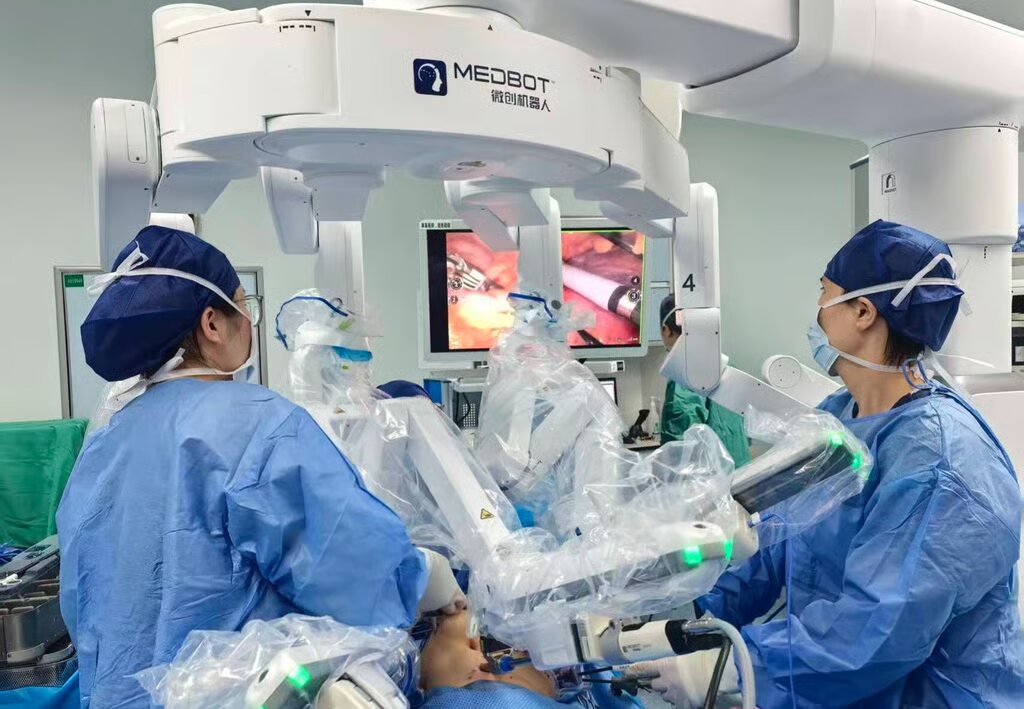
Saba Darmon clinic performs laparoscopic adhesiolysis and also has the MedBot Toumai robotic system, so when appropriate the operation may be carried out with robotic assistance. The robot is a tool in the surgeon’s hands: the three-dimensional view and instruments that bend like a wrist make it easier to separate adhesions carefully close to the bowel wall, but the outcome depends above all on the surgeon’s experience. A robot is not better than laparoscopy in every case; the difference between the two is explained in this article. In any keyhole operation there is a chance of converting to open surgery for safety — this is not a complication but a sound decision. You may also find the answers to common questions about the safety of robotic surgery helpful.
Recovery after surgery and preventing new adhesions
After minimally invasive adhesiolysis most patients go home within a few days; if there was an obstruction, eating is reintroduced step by step. Walking early, drinking enough and following the diet your doctor recommends help the bowel to recover. You may need to avoid heavy lifting for several weeks — the surgeon will tell you exactly how long.
Because adhesions can come back, prevention matters. Surgeons choose a minimally invasive approach whenever possible, handle tissues gently, control bleeding carefully and sometimes use special anti-adhesion barriers. For your part, it is important to know the signs of bowel obstruction and to seek help immediately if they appear, especially if you have had several operations in the past.
What to discuss with your doctor
At your appointment, it is worth asking: are my symptoms really caused by adhesions, or could something else be responsible; which tests do I need; can this be treated without surgery; if an operation is needed, which approach and why; how likely is conversion to open surgery; how long will I stay in hospital. Bring discharge summaries from previous operations and any test results. At Saba Darmon clinic, after an examination the surgeons will explain the treatment options and agree the next steps with you. More about the department is on the general surgery page, and all areas of robotic surgery are listed on this page.
Frequently asked questions
Does everyone get adhesions after surgery?
Most people who have had abdominal surgery develop some adhesions, but in the great majority they cause no symptoms and need no treatment. The chance is higher after open surgery and lower after keyhole procedures. A doctor will discuss tests and treatment only if adhesions interfere with the bowel or are thought to be causing infertility or repeated episodes of obstruction.
Can adhesions be seen on ultrasound or CT?
Usually not: adhesions are too thin to show up clearly on scans. Ultrasound and blood tests help rule out other causes, and if a blockage is suspected, CT shows whether one is present and whether there are worrying features. Adhesions are most often seen directly during laparoscopy, as explained on the page about laparoscopic adhesiolysis.
How do I know if adhesions are causing a bowel obstruction?
The main signs are severe cramping abdominal pain, repeated vomiting, a swollen abdomen and not passing wind or stool. A fever, a racing heart or constant severe pain may mean the blood supply to the bowel is affected. If you notice these signs, do not take laxatives or painkillers at home — call 103 straight away and mention any previous abdominal surgery.
Is robotic adhesiolysis better than laparoscopic surgery?
Not always. Laparoscopy is the standard approach and gives good results in many cases. The robot can help with dense adhesions stuck to the bowel and in deep or awkward areas, thanks to its three-dimensional view and wristed instruments. But the outcome depends mainly on the surgeon’s experience, and the approach is chosen after assessment. See robotic surgery versus laparoscopy for more detail.
Can adhesions come back after they are cut?
Yes, they can, which is why planned adhesiolysis is offered only to selected patients, such as those with repeated bowel obstruction or infertility caused by adhesions. A minimally invasive approach, gentle handling of tissue and careful control of bleeding all lower the risk of new adhesions. After surgery, learn the warning signs of obstruction and seek medical help immediately if they appear.
More about robotic surgery:
- Robotic Surgery in Tashkent — all directions
- Robotic Surgery in Tashkent: the MedBot Toumai System
- Is Robotic Surgery Safe? 10 Questions
- Robotic Surgery vs Laparoscopy: What Is the Difference
- Preparing for Robotic Surgery: Step by Step
- Recovery After Robotic Surgery
- Bladder Cancer: Robotic Cystectomy
- Hernia: Robotic Repair
- Gallbladder: Robotic Cholecystectomy
- Who Is Not Suitable for Robotic Surgery
- Uterine and Cervical Cancer: Robotic Surgery
- Large Prostate Adenoma: TURP or Robotic Surgery
- Varicocele Surgery: Marmar or Robotic
- Kidney Removal: Robotic Nephrectomy
- Ectopic Pregnancy: Tube-Sparing Robotic Surgery
- Female Urinary Incontinence: TVT or Robotic Surgery
- Uterus Removal: Robotic Hysterectomy
- Hiatal Hernia and Reflux: Robotic Fundoplication
- Liver Tumour: Robotic Liver Resection
- Pancreatic Tumour: Robotic Resection
- Obesity Surgery: Robotic Sleeve Gastrectomy
- Diastasis Recti: Robotic Repair
- Colon Cancer: Robotic Hemicolectomy
- Anaesthesia and Pain Control in Robotic Surgery
- Pregnancy After Robotic Myomectomy
- Ovarian Cyst: Robotic Cystectomy
- Obesity: Robotic Gastric Bypass
- Robotic Surgery in Gynaecology
- Robotic Prostatectomy
- Kidney Tumour: Robotic Partial Nephrectomy
- Colorectal Cancer: Robotic Surgery
- Uterine Fibroids: Robotic Surgery
- Endometriosis and Ovarian Cysts: Robotic Surgery
- What Is Telesurgery?
- Robotic Surgery in Older Adults
- Stomach Cancer: Robotic Gastrectomy
- Hydronephrosis: Robotic Pyeloplasty
- Pelvic Organ Prolapse: Robotic Sacrocolpopexy
- Adrenal Tumour: Robotic Adrenalectomy
Doctors for consultation
Our surgeons and gynaecologist assess abdominal adhesions and perform adhesiolysis. Our doctors in this field:





Book an appointment with a surgeon
Recurring abdominal pain or problems after a previous operation? After assessment the surgeon will explain the cause and the treatment options.
Call now — +998 71 210-30-30Contacts
Address: 7A/3 Nurafshon street, Tashkent
Phone: +998 71 210-30-30 · WhatsApp: +998 95 662-30-30
Opening hours: Monday–Saturday, 09:00–18:00
E-mail: