


Useful articles

Chronic Suppurative Otitis Media and Cholesteatoma: Discharge and Treatment
Doctor's blog
sbdrmn
Direction: Robotic surgery · All services
Chronic suppurative otitis media is an inflammation of the middle ear in which there is a hole in the eardrum and pus or mucus drains from the ear for a long time or again and again. Its more dangerous form, cholesteatoma, slowly erodes bone and can lead to hearing loss and other complications. Below: the causes, symptoms, when to seek urgent help, how it is diagnosed, treatment with ear drops, and operations such as tympanoplasty.
Contents
- What chronic suppurative otitis media is
- Why the ear discharges: causes and risk factors
- What a cholesteatoma is and why it matters
- Symptoms of chronic ear infection and how it differs from other ear problems
- When to seek urgent help
- How chronic suppurative otitis media is diagnosed
- Treatment with drops and looking after the ear
- Surgery: tympanoplasty, ossiculoplasty and mastoidectomy
- After surgery and everyday life
- Questions to ask your ENT doctor
- Frequently asked questions
What chronic suppurative otitis media is
Chronic suppurative otitis media (CSOM) is a long-lasting inflammation of the middle ear and the air cells of the mastoid bone behind it, in which there is a hole (perforation) in the eardrum and pus or mucus drains from the ear again and again. Ear infection is usually called chronic when the discharge lasts for several weeks or keeps coming back; international sources put this threshold anywhere between two and six weeks. Unlike an acute ear infection, the chronic form is often almost painless, so many people get used to having an ear that “runs from time to time” for years. Yet this condition does need treatment and follow-up: it gradually reduces hearing, and some forms can lead to serious complications.
Doctors describe two main types. The first is mucosal (inactive or active) CSOM: the perforation lies in the central part of the eardrum and the discharge comes in episodes, often after a cold or after water gets into the ear. The second is squamous CSOM with cholesteatoma, which slowly but steadily erodes bone and needs particular attention.
Why the ear discharges: causes and risk factors
The condition most often starts after repeated acute ear infections in childhood: during an infection the eardrum bursts but does not heal completely. Through the hole, bacteria and water reach the middle ear from outside, and the inflammation keeps returning. A hole can also remain after an injury to the eardrum — from a cotton bud, a blow or a loud blast; you can read more about this in our article on a perforated eardrum. The risk is higher with:
- problems in the nose and the back of the nose, enlarged adenoids, or poor function of the Eustachian tube that ventilates the middle ear;
- long-standing glue ear in childhood — see the article on glue ear in children;
- smoking, including passive smoking, and frequent colds;
- reduced immunity and diabetes;
- frequent water exposure, especially swimming in polluted water.
What a cholesteatoma is and why it matters
A cholesteatoma is a cyst-like collection of skin cells growing in the middle ear, where skin does not belong. The name is misleading: it is not a cancer, and it has nothing to do with cholesterol. Usually part of the eardrum is drawn inwards to form a pocket; dead skin collects inside this pocket and it slowly enlarges. A cholesteatoma erodes the surrounding bone, including the tiny hearing bones (ossicles). As a result it can cause marked hearing loss and damage the balance organ, the facial nerve and even structures next to the coverings of the brain. A cholesteatoma cannot be cleared with tablets or drops — these only calm the inflammation for a while — and the main treatment is surgery.
Symptoms of chronic ear infection and how it differs from other ear problems
The main symptoms are ear discharge and reduced hearing; ringing in the ear and a feeling of fullness are also possible. The table below gives a rough guide to telling similar conditions apart, but the final diagnosis can only be made by an ENT doctor after an examination:
| Feature | Mucosal CSOM | Cholesteatoma | Otitis externa |
|---|---|---|---|
| Discharge | Mucus and pus, comes and goes, often odourless | Scanty but constant, foul-smelling | Watery or pus-like, short-lived |
| Pain | Usually none or mild | Usually none; new pain is a warning sign | Severe, worse when the outer ear is pulled |
| Eardrum | Hole in the central part | Retraction pocket or marginal hole, white debris | Intact; the ear canal is swollen |
| Hearing | Reduced | Often markedly reduced | May drop temporarily because of swelling |
| Course | Flares after colds and water exposure | Slow but steady progression | Settles within one to two weeks with treatment |
You can read about inflammation of the outer ear canal in our article on otitis externa. If discharge from one ear goes on for a long time, its smell changes or your hearing falls quickly, do not put off an assessment.
When to seek urgent help
Chronic ear infection usually progresses slowly, but in rare cases infection or cholesteatoma breaks through the bony walls of the ear and spreads to nearby structures. These complications cannot be managed at home and must not be delayed.
Seek emergency care if ear discharge is accompanied by drooping of one side of the face or being unable to close the eye fully; severe dizziness with vomiting; a painful swelling and redness behind the ear that pushes the ear forwards; or a high temperature, severe headache, neck stiffness, drowsiness or confusion. In any of these situations call 103 immediately or go to the nearest emergency department.
How chronic suppurative otitis media is diagnosed
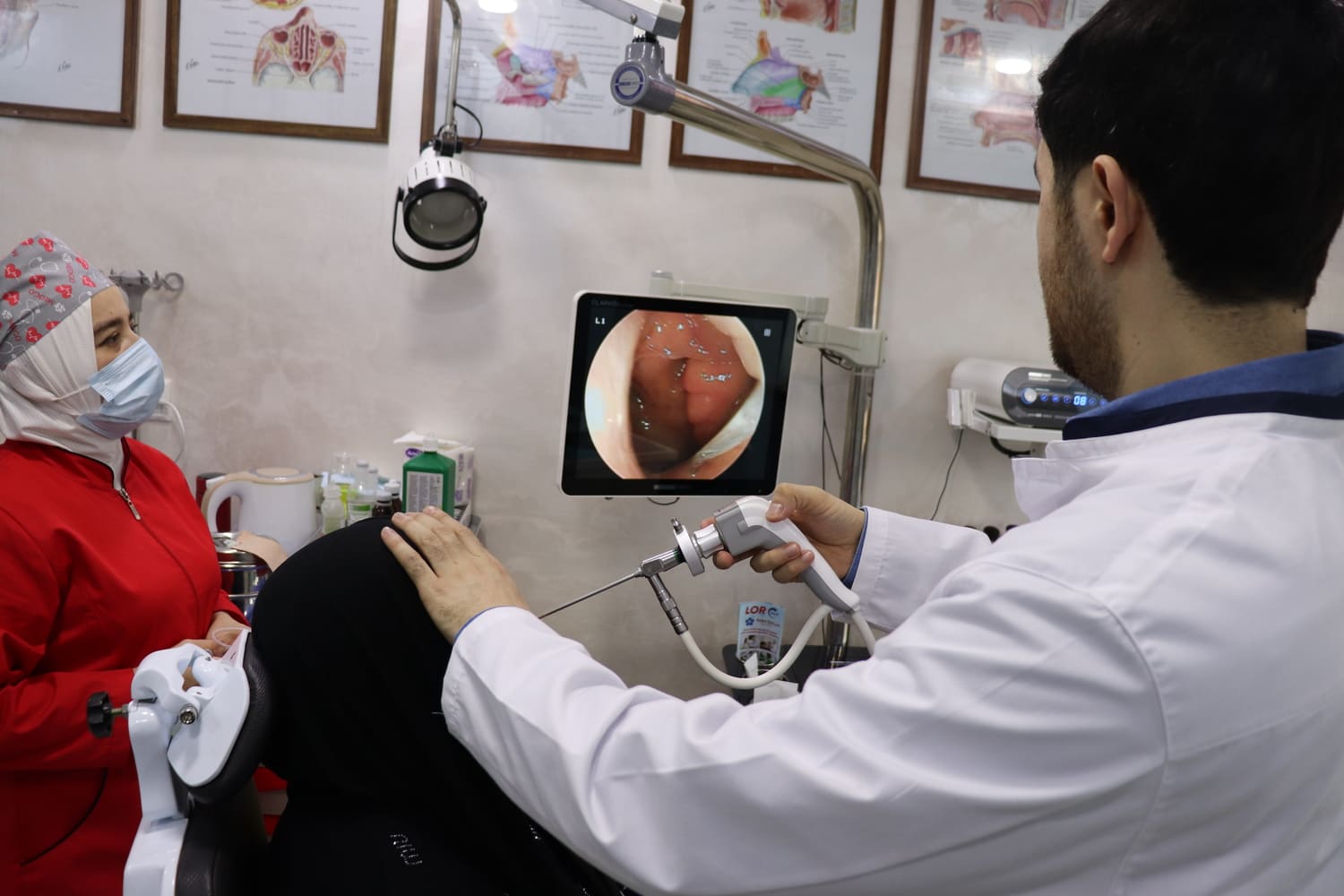
Assessment starts with an examination by an ENT doctor. The ear canal and eardrum are viewed under magnification with an otoscope, a microscope or an endoscope; often the discharge first has to be gently removed with fine suction, because otherwise the perforation or a cholesteatoma is hard to see. Further steps depend on the findings:
- an ear swab — to identify bacteria or fungi and choose the right medicine, especially if earlier treatment has not worked;
- audiometry — measures how much hearing has been lost and what type of loss it is; it is also needed to plan surgery and judge the result. The test is explained in our article on audiometry and tympanometry;
- a CT scan of the temporal bones — when cholesteatoma is suspected, when there are signs of complications, or before surgery, to show the bone and the hearing bones in detail;
- in some cases an MRI scan — to look for recurrent cholesteatoma or complications spreading towards the brain.
Treatment with drops and looking after the ear
In mucosal CSOM the aim of treatment is a “dry” ear. Several measures are usually combined:
- Ear cleaning (aural toilet). The doctor removes discharge and debris with suction under the microscope. Drops reach the inflamed lining much better in a clean ear.
- Antibiotic ear drops. These generally work better than tablets, because the medicine goes straight to the site of infection. When the eardrum has a hole, only drops that do not harm the inner ear (non-ototoxic drops) are used, so the doctor chooses the preparation and decides how long to use it.
- Keeping water out. When showering or washing your hair, a piece of cotton wool coated in petroleum jelly placed in the ear canal helps, and swimming is best avoided for the time being.
- Antibiotic tablets or injections are prescribed only in particular situations, for example when the infection is spreading.
Putting vegetable oil, alcohol, garlic or other home remedies into the ear, or cleaning deep inside with cotton buds, is not recommended: it can make the infection worse and damage the inner ear. Even when treatment stops the discharge, the perforation usually does not close by itself, and the inflammation may come back later.
Surgery: tympanoplasty, ossiculoplasty and mastoidectomy
If the discharge keeps returning, the hole does not heal, hearing is reduced or a cholesteatoma is found, surgery is discussed. The ENT surgeon chooses the type and extent of the operation after the examination and tests:
| Operation | What is done | When it is needed |
|---|---|---|
| Tympanoplasty | The hole in the eardrum is closed with the patient’s own tissue (fascia or cartilage) | Mucosal CSOM with recurrent discharge and a perforation that has not healed |
| Ossiculoplasty | The damaged chain of hearing bones is rebuilt | When the ossicles are eroded and hearing is significantly reduced |
| Mastoidectomy | The mastoid air cells are opened and the cholesteatoma and diseased tissue are removed | Cholesteatoma or complications involving the mastoid |
These steps are often combined in a single operation. The first goal is to remove the disease completely and leave a safe, dry ear; improving hearing is the second goal, and the result depends on the state of the ossicles and the inner ear. More detail is available on our pages about tympanoplasty and ossiculoplasty.
After surgery and everyday life
After the operation the ear canal is usually packed with a dressing, which may stay in for up to a few weeks. During this time you will be advised to keep the ear dry, avoid blowing your nose hard, sneeze with your mouth open and avoid heavy exertion. Your doctor will tell you when it is safe to fly and to swim. Hearing is not assessed straight away but after healing — usually a few months later, with repeat audiometry.
Cholesteatoma can come back, so regular check-ups are needed for years after surgery, sometimes with MRI scans or a planned second-stage operation. If hearing is not fully restored, a hearing aid can be discussed. Treating colds promptly and stopping smoking lower the risk of flare-ups.
Questions to ask your ENT doctor
At your appointment, ask: do I have a perforation and where is it; are there signs of cholesteatoma; which tests do I need; how and for how long should I use the drops; if I need surgery, which operation is it and what can I expect; when should I come back for a check-up. At Saba Darmon clinic, ENT specialists carry out the examination, and tests such as audiometry and CT scanning are available. When indicated, tympanoplasty and ossiculoplasty are performed at the clinic, with the surgeon choosing the method after assessment. The doctor will discuss other treatment options and next steps with you individually. You can find more on the page of our otolaryngology department.
Frequently asked questions
Will a discharging ear clear up on its own?
In chronic suppurative otitis media the discharge may stop for a while, but the hole in the eardrum usually does not heal by itself, and the inflammation returns after a cold or when water gets into the ear. Each flare-up can reduce hearing a little. So if discharge lasts longer than two weeks or keeps coming back, see an ENT doctor, who will find the cause, clean the ear and choose suitable treatment.
Is a cholesteatoma a cancer?
No, a cholesteatoma is not a cancer and does not spread to other organs. However, it slowly grows in the middle ear and can erode the surrounding bone, the hearing bones and the balance organ. That is why it is usually removed surgically rather than simply watched. Drops do not get rid of a cholesteatoma; they only reduce inflammation for a while. Long-term follow-up is needed even after surgery.
Which ear drops are safe with a chronic ear infection?
When the eardrum has a hole, drops go straight into the middle ear, and some medicines can damage the inner ear. For this reason antibiotic drops should be chosen only by a doctor, who also decides how long to use them. Drops work better if the ear is cleaned first. Do not put alcohol, vegetable oil, garlic or other home remedies into the ear, as they can worsen infection and harm hearing.
Will my hearing improve after tympanoplasty?
Many people hear better once the perforation is closed, but the result depends on the condition of the hearing bones and the inner ear. If the ossicles have been eroded, they can be rebuilt with ossiculoplasty. Hearing is assessed after full healing, usually a few months later, with repeat audiometry. The main aim of the operation is a dry, safe ear; better hearing is the second aim.
Can I swim with chronic otitis media?
If there is a hole in the eardrum, water can enter the middle ear and trigger a flare-up. So during treatment it is best to avoid swimming, and to protect the ear canal with cotton wool coated in petroleum jelly when showering or washing your hair. In some cases the doctor may allow special swimming earplugs. After surgery, the surgeon will tell you when swimming is safe, depending on how the ear has healed.
Related reading:
Doctors for consultation
Chronic suppurative otitis media and cholesteatoma are assessed and treated by our ENT doctors, who perform tympanoplasty and ossiculoplasty when indicated. Our doctors in this field:




Book an appointment with an ENT doctor
Does your ear keep discharging, or has your hearing dropped? An ENT examination and a hearing test will help find the cause and choose the right treatment.
Call now — +998 71 210-30-30Contacts
Address: 7A/3 Nurafshon street, Tashkent
Phone: +998 71 210-30-30 · WhatsApp: +998 95 662-30-30
Opening hours: Monday–Saturday, 09:00–18:00
E-mail: