


Useful articles

Otitis Externa (Swimmer’s Ear): Symptoms, Causes and Treatment
Doctor's blog
sbdrmn
Direction: Robotic surgery · All services
Otitis externa (swimmer’s ear) is inflammation of the skin of the outer ear canal, usually triggered by water in the ear, cleaning with cotton buds or wearing earphones. It causes pain that worsens when the outer ear is pulled, along with itching and discharge. Below we cover the causes and symptoms, how it differs from a middle-ear infection, treatment, fungal infection and when it becomes dangerous.
Contents
- What otitis externa is
- Causes of otitis externa: water, cotton buds and more
- Symptoms of otitis externa
- How otitis externa differs from a middle-ear infection
- How otitis externa is treated
- Fungal ear infection (otomycosis)
- When otitis externa becomes dangerous
- How to prevent swimmer’s ear
- Frequently asked questions
What otitis externa is
Otitis externa is inflammation of the skin of the outer ear canal, the passage that runs from the outer ear to the eardrum. It is usually caused by bacteria and less often by fungi. It is widely known as “swimmer’s ear” because it is common in people who spend a lot of time in water. Otitis externa can occur at any age and usually affects one ear. With the right treatment it generally clears within one to two weeks.
The skin of the ear canal is protected by a thin layer of earwax, which repels water and makes it harder for germs to multiply. When this protection is lost — because the skin becomes soggy, is scratched or the wax is cleaned away completely — infection can easily take hold.
Causes of otitis externa: water, cotton buds and more
- Water — swimming and frequent showering, especially in a hot climate; moisture left in the ear softens the skin.
- Cotton buds and other objects — cleaning the ear with a cotton bud, a matchstick or a finger scratches the skin and removes its protective layer. How to look after your ears properly is explained in the article on earwax blockage.
- Skin conditions — eczema, seborrhoeic dermatitis and psoriasis make the skin of the ear canal dry and itchy.
- Hearing aids and earphones — they block the ear canal for long periods, trap warmth and moisture, and rub the skin.
- Allergy to hair dye, hairspray, shampoo and similar products.
- Diabetes and a weakened immune system — both make infection more likely.
Symptoms of otitis externa
- ear pain that gets worse when you pull on the outer ear or press on the small flap in front of the ear canal — the most typical sign of otitis externa;
- itching — often starts before the pain;
- watery or thick discharge from the ear, sometimes with an unpleasant smell;
- a blocked feeling in the ear and slightly reduced hearing, due to swelling of the canal or a build-up of discharge;
- redness and swelling of the skin of the ear canal; in severe cases, swollen lymph nodes around the ear.
The pain can sometimes be so severe that chewing and lying on the affected side become difficult.
How otitis externa differs from a middle-ear infection
Both conditions are called “otitis”, but they affect different parts of the ear and are treated differently.
| Feature | Otitis externa | Middle-ear infection (otitis media) |
|---|---|---|
| Where | Skin of the ear canal, outside the eardrum | The middle-ear space behind the eardrum |
| Pain when the outer ear is pulled | Yes, it gets worse | Usually no change |
| What came before | Water, ear cleaning, earphones | Often a cold or a runny nose |
| Who gets it most | Swimmers, adults, hearing aid users | Young children |
| Fever | Uncommon | Common |
| Main treatment | Cleaning the ear canal, ear drops | As the doctor decides — pain relief, sometimes antibiotics |
If pus from a middle-ear infection bursts through the eardrum, the ear starts to discharge and this can look like otitis externa — there is more about this in the article on a perforated eardrum. In children, painless hearing loss is often caused by fluid in the middle ear — read about glue ear. Only an examination by a doctor can tell the two apart reliably.
How otitis externa is treated
The ENT doctor draws up a treatment plan after examining the ear. It usually includes:
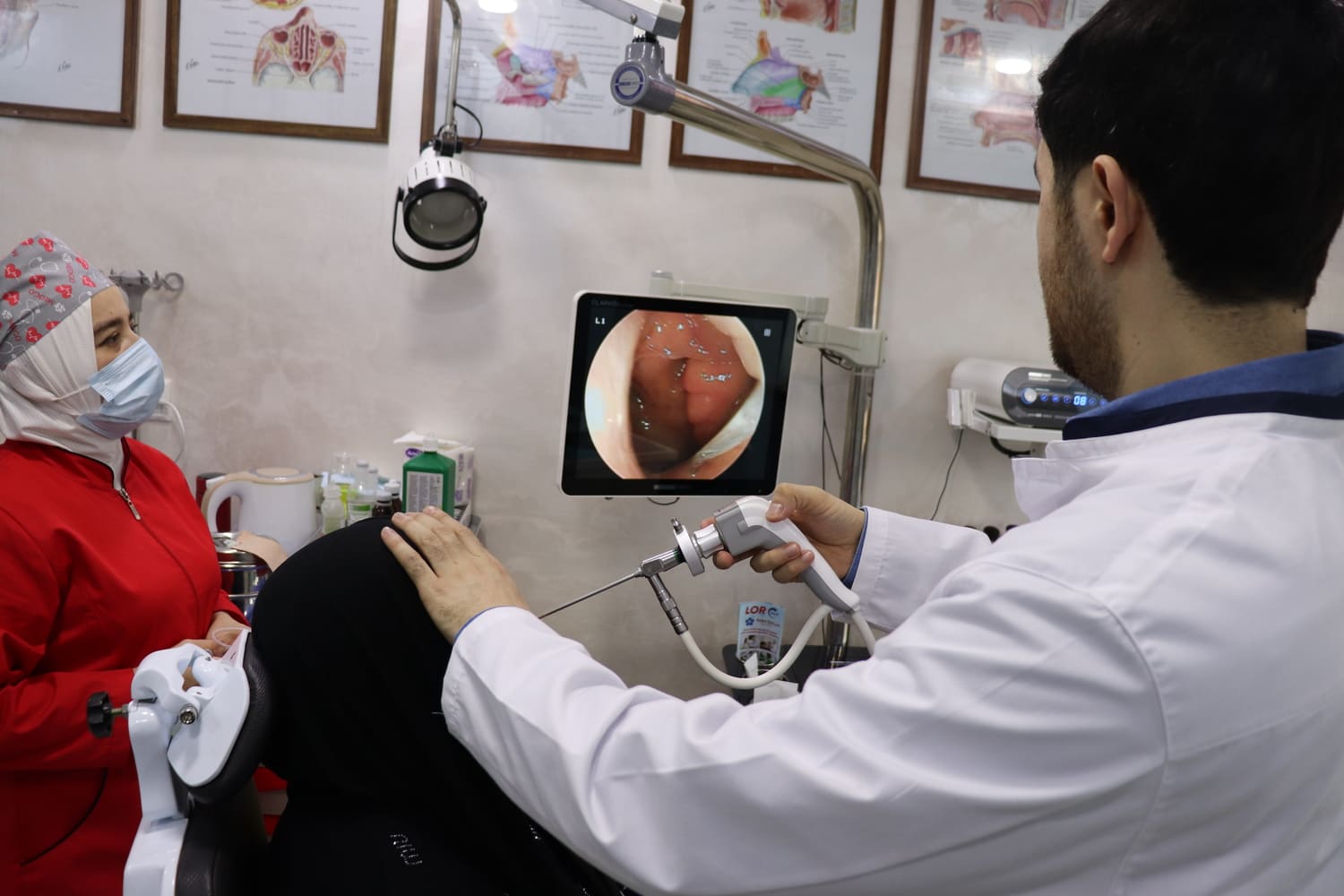
- Cleaning the ear canal (aural toilet) — under a microscope or endoscope, the doctor carefully removes discharge, crusts and wax with fine instruments or gentle suction. Ear drops work much better in a clean canal.
- Prescribed ear drops — the doctor chooses the type and the length of the course after checking that the eardrum is intact. If the canal is very swollen, a thin wick may be placed in it so that the drops can reach deeper.
- Pain relief — as advised by the doctor.
- Keeping the ear dry — no swimming during treatment, and protecting the ear from water when showering.
- Antibiotic tablets are usually needed only if the infection has spread beyond the ear canal or there are risk factors.
While the ear is healing it is best to avoid earphones and hearing aids as far as possible. If the symptoms have not eased within a few days, or are getting worse, come back for a review. If hearing does not return to normal once the swelling and discharge have settled, the doctor may suggest audiometry.
Fungal ear infection (otomycosis)
Some cases of otitis externa are caused by fungi. This tends to happen after long use of antibiotic ear drops, in hot and humid weather, or in people with a weakened immune system. The main signs are intense itching, a feeling of fullness and a white, grey or black coating in the ear canal. Pain may be milder than in a typical bacterial infection. Otomycosis needs thorough cleaning of the ear canal and specific antifungal treatment — ordinary antibiotic drops do not help and can even make it worse.
When otitis externa becomes dangerous
In people with diabetes, an illness or treatment that suppresses the immune system, and in older adults, severe ear pain that is worse at night together with persistent discharge can be a sign of malignant (necrotising) otitis externa. In this condition the infection spreads to the bone around the ear canal and needs urgent treatment. Do not wait either if you notice swelling and redness spreading around the ear, onto the face or neck, a high fever, weakness of the face or a sharp decline in how you feel — seek medical help immediately or call 103.
How to prevent swimmer’s ear
- after swimming or a shower, tilt your head to let the water drain out and gently pat the outer ear dry with a towel;
- do not clean the ear canal with cotton buds — earwax has a protective role;
- regular swimmers can use swimming earplugs or a swimming cap;
- keep earphones and hearing aids clean, do not share them, and give your ears regular breaks;
- if you have eczema or dermatitis, keep the skin condition under control with a dermatologist;
- if otitis externa keeps coming back, see an ENT doctor to find out why.
Whether ear pain and discharge are due to otitis externa, a middle-ear infection or another problem can only be established by an ENT doctor after an examination, who will also choose the treatment. You can read more on the pages of our ENT department and services.
Frequently asked questions
How long does otitis externa last?
With proper treatment, most people feel better within a few days and recover fully in one to two weeks. If there is no improvement, a review is needed.
How do I know if I have swimmer’s ear?
The most typical sign is pain that gets worse when you pull on the outer ear. Itching, discharge and a blocked feeling are also common. An ENT doctor confirms the diagnosis with otoscopy.
Can I rinse my ear if I have otitis externa?
Do not rinse the ear yourself or clean it with cotton buds. An ENT doctor can clean the ear canal safely.
Can I swim with otitis externa?
Swimming is not advised during treatment, as the ear needs to stay dry. The doctor will tell you at the follow-up visit when it is safe to go back in the water.
Can I choose ear drops myself?
No. The doctor chooses drops after checking that the eardrum is intact: some drops can cause harm if there is a perforation, and a fungal infection needs different treatment.
What does a fungal ear infection look like?
Intense itching, a feeling of fullness and a white, grey or black coating in the ear canal. It does not respond to ordinary antibiotic drops.
What should I do if I have diabetes and ear pain?
If the pain is severe or worse at night and the discharge does not stop, see a doctor without delay: in diabetes otitis externa can become serious.
Related reading:
Doctors for consultation
Otitis externa is assessed and treated by our ENT doctors, who clean the ear canal under a microscope and choose the treatment. Our doctors in this field:




Book an appointment with an ENT doctor
Is your ear painful, itchy or discharging? An examination and cleaning of the ear canal bring quick relief.
Call now — +998 71 210-30-30Contacts
Address: 7A/3 Nurafshon street, Tashkent
Phone: +998 71 210-30-30 · WhatsApp: +998 95 662-30-30
Opening hours: Monday–Saturday, 09:00–18:00
E-mail: