Useful articles
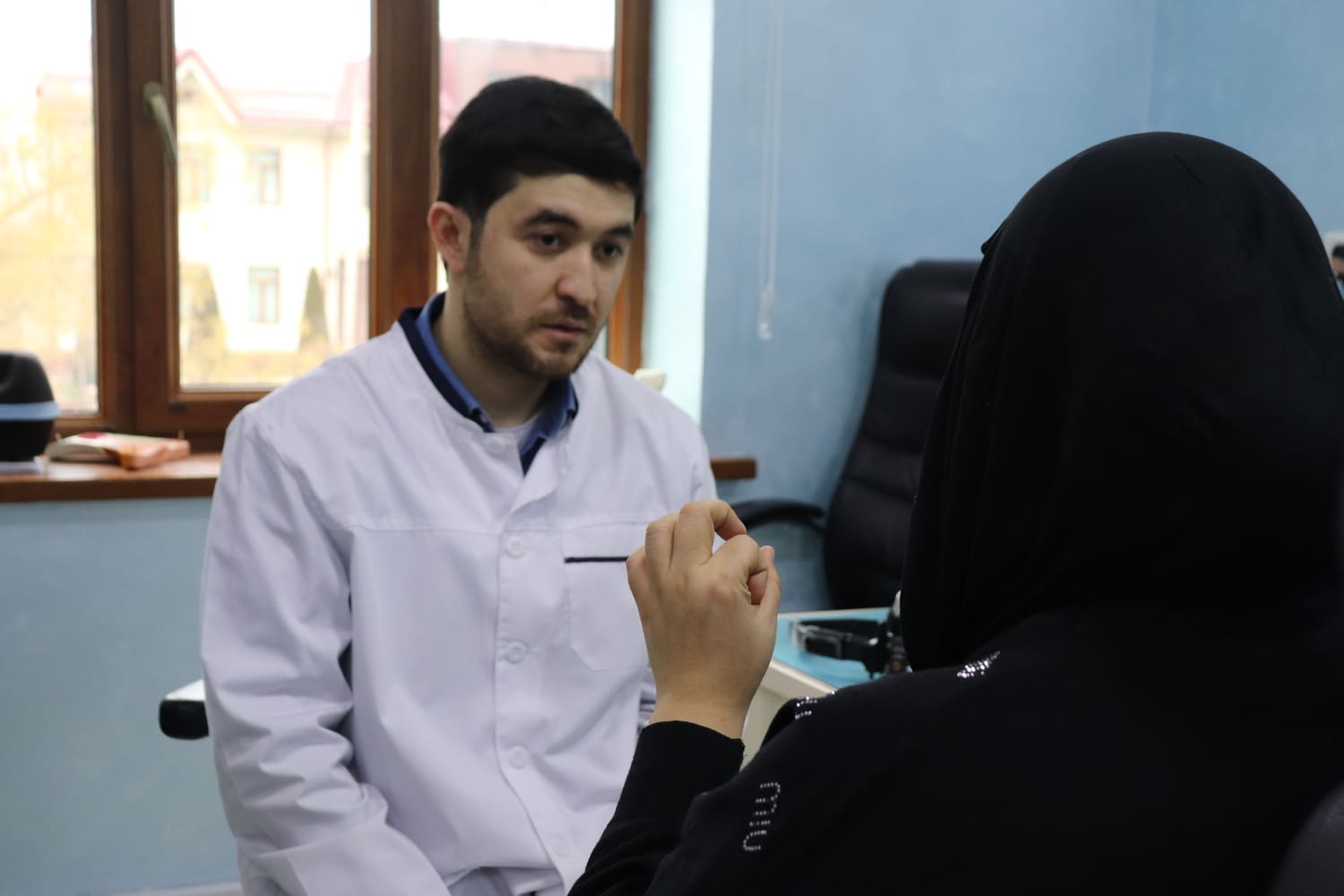
Glue Ear in Children: Why Hearing Drops and When a Grommet Is Needed
Doctor's blog
sbdrmn
Direction: Robotic surgery · All services
If a child keeps saying "what?", turns the TV up and does not turn round when called — more often than not it is not inattention but fluid in the middle ear and reduced hearing. The condition is called glue ear: it does not hurt or cause fever, but it affects speech development. Below: diagnosis, observation, and when a grommet is needed.
Contents
Glue ear — painless, but harmful
The middle-ear cavity (behind the eardrum) is normally filled with air and connected to the back of the nose through the Eustachian tube. In children this tube is narrow and short, and adenoids block it easily. Once air stops getting in, thick fluid collects in the middle ear — this is otitis media with effusion, or glue ear. Unlike acute infection it does not hurt and causes no fever, so it goes unnoticed for months.
What parents notice: the child turns the TV up, does not answer straight away, keeps saying "what?", speech lags behind peers, the child seems inattentive at school. This is not "character" — hearing may be reduced.
How the diagnosis is made
- otoscopy — fluid behind the eardrum and retraction are visible;
- tympanometry — a painless measurement of eardrum mobility that reliably shows fluid;
- audiometry — the level of hearing (by an age-appropriate method);
- nasopharyngeal endoscopy — the size of the adenoids and the state of the tube opening.
Observation and conservative treatment first
In many children the fluid clears by itself within 2–3 months after a cold. Meanwhile the ENT doctor recommends nasal hygiene, exercises for the Eustachian tube (blowing up balloons, the Valsalva manoeuvre), and treatment of allergy and nasal congestion. Antibiotics usually do not help glue ear — they are for acute infection.
When a grommet (ventilation tube) is needed
If fluid persists for more than 3 months with hearing reduced in both ears, speech is delayed, or the eardrum is retracted with a risk of damage — grommet insertion is discussed. This is a tiny tube placed in the eardrum through a small incision: it lets air into the middle ear, the fluid drains, and hearing usually improves at once.
In children the operation is done under a short general anaesthetic, through the ear canal with no external incision; most go home the same day. If the adenoids are enlarged, the ENT doctor proposes removing them at the same time (adenoidectomy) — otherwise the fluid collects again.
A grommet is not permanent: after some months it comes out by itself and the eardrum heals. In that time the Eustachian tube is expected to "recover" and work on its own.
What to watch while the grommet is in place
- water in the ear when bathing — earplugs or care, as the ENT doctor advises;
- discharge from the ear — a sign of infection; drops are prescribed, see the doctor without delay;
- check-ups: whether the grommet is in place or has come out, and how hearing is — at the scheduled times.
What to agree with your doctor
How long the fluid has been present; the level of hearing; whether to wait longer or insert a grommet; whether to do adenoidectomy at the same time; which tests anaesthesia needs; the bathing routine. The list of pre-operative tests is in a separate article.
Frequently asked questions
Does glue ear clear up on its own?
In many children yes — within 2–3 months. That is why observation is recommended first. If fluid persists and hearing is reduced, a grommet is discussed.
Is grommet insertion painful?
In children it is done under a short general anaesthetic; the child feels nothing. Afterwards there is usually no pain, or very little.
Can a child swim with a grommet?
As the ENT doctor advises: usually yes with earplugs, but no diving and no dirty water.
When does the grommet come out?
Usually by itself after some months; the eardrum heals over. The doctor checks this at follow-up.
Must the adenoids be removed too?
If they are enlarged and block the Eustachian tube — yes, otherwise the fluid collects again. The ENT doctor decides from the endoscopy findings.
Will hearing recover fully?
Once the fluid is gone, hearing usually returns fully. The key is not to delay: time matters for speech development.
Related reading:
Doctors for consultation
Glue ear and grommet insertion are handled by our ENT doctors. Our doctors in this field:


Book an appointment with an ENT doctor
Does your child often say "what?" or turn the TV up? Have their hearing checked — tympanometry is painless and takes a few minutes.
Call now — +998 71 210-30-30Contacts
Address: 7A/3 Nurafshon street, Tashkent
Phone: +998 71 210-30-30 · WhatsApp: +998 95 662-30-30
Opening hours: Monday–Saturday, 09:00–18:00
E-mail: