


Useful articles

Bladder Stones: Symptoms, Causes and How They Are Removed
Doctor's blog
sbdrmn
Direction: Robotic surgery · All services
Bladder stones are hard lumps of mineral salts that form inside the bladder. They develop most often in people whose bladder does not empty completely — above all, older men with an enlarged prostate. A stone may cause lower abdominal pain, a stream that suddenly cuts off and blood in the urine, or it may cause no symptoms at all. Below we explain the symptoms and causes of bladder stones, how they are diagnosed and how they are removed.
Contents
- What are bladder stones and how do they form?
- Causes of bladder stones: why urine stagnates
- Symptoms of bladder stones
- Bladder stone, kidney stone or enlarged prostate: how they differ
- When to seek urgent help
- How bladder stones are diagnosed
- How bladder stones are removed
- Treating the cause and preventing new stones
- Seeing a urologist at Saba Darmon clinic
- Frequently asked questions
What are bladder stones and how do they form?
A healthy bladder empties almost completely each time, so the salts in urine have no chance to settle. If some urine is always left behind, it becomes concentrated, the salts crystallise and gradually harden into a stone. There may be one stone or several, as small as a grain of sand or as large as a hen’s egg. In adults a bladder stone is almost always the result of another problem — a blockage to the flow of urine or a bladder that does not contract well. That is why removing the stone alone is not enough: unless the cause is dealt with, another will form. Less often, a stone travels down from the kidney, lodges in the bladder and grows there.
Causes of bladder stones: why urine stagnates
The key condition is urine sitting in the bladder. This can be caused by:
- benign prostatic hyperplasia — the most common cause in men: the enlarged gland squeezes the channel and urine is left in the bladder;
- urethral stricture — narrowing of the urethra by scar tissue;
- neurogenic bladder — poor bladder muscle function after spinal cord injury or stroke, in diabetes and in other nerve conditions;
- a long-term urinary catheter or other foreign bodies, whose surface collects salt deposits;
- repeated urinary tract infections — some bacteria change the make-up of urine and speed up stone formation;
- in women, a dropped bladder (cystocele) or stitch material left from earlier surgery.
Not drinking enough adds to the risk.
Symptoms of bladder stones
A small stone can go unnoticed for years and be found by chance on a scan done for another reason. Symptoms appear when the stone irritates the bladder wall or blocks the outlet:
- pain in the lower abdomen, above the pubic bone; in men it is often felt at the tip of the penis;
- a stream that suddenly stops and starts again when you change position, for example by turning on your side;
- frequent, urgent trips to the toilet, especially when moving about, and burning;
- blood in the urine, most often at the end of urination;
- cloudy, unpleasant-smelling urine and repeated infections.
Symptoms that get worse with walking or jolting and ease when lying down are typical of a bladder stone.
Bladder stone, kidney stone or enlarged prostate: how they differ
These three conditions have similar symptoms and often occur together, so only tests can give a definite answer.
| Feature | Bladder stone | Kidney or ureteric stone | Enlarged prostate |
|---|---|---|---|
| Where it hurts | Lower abdomen, tip of the penis | Loin and side, spreading to the groin; severe, in waves | Usually no pain |
| Urine stream | Stops suddenly, restarts with a change of position | Usually unchanged | Weak and thin; slow to start, dribbling at the end |
| Blood in the urine | Common, at the end of urination | Common, during an attack | Less common |
| Effect of movement | Worse on walking | Not related to position; the person cannot get comfortable | None |
| Nausea and vomiting | Not typical | Common during an attack | Not typical |
When to seek urgent help
Bladder stones are usually treated on a planned basis, but some situations cannot wait.
Contact a urologist or go to an emergency department straight away if you cannot pass urine and your lower abdomen feels full and painful; if your urine turns dark red and contains clots; if fever and shivering come with pain or burning; or if the pain is severe and your usual painkiller does not help. If a high temperature comes with marked weakness, confusion or fainting, or if bleeding is heavy, call 103 immediately.
How bladder stones are diagnosed
Diagnosis is usually straightforward. The urologist asks about your symptoms, examines the prostate in men and arranges:
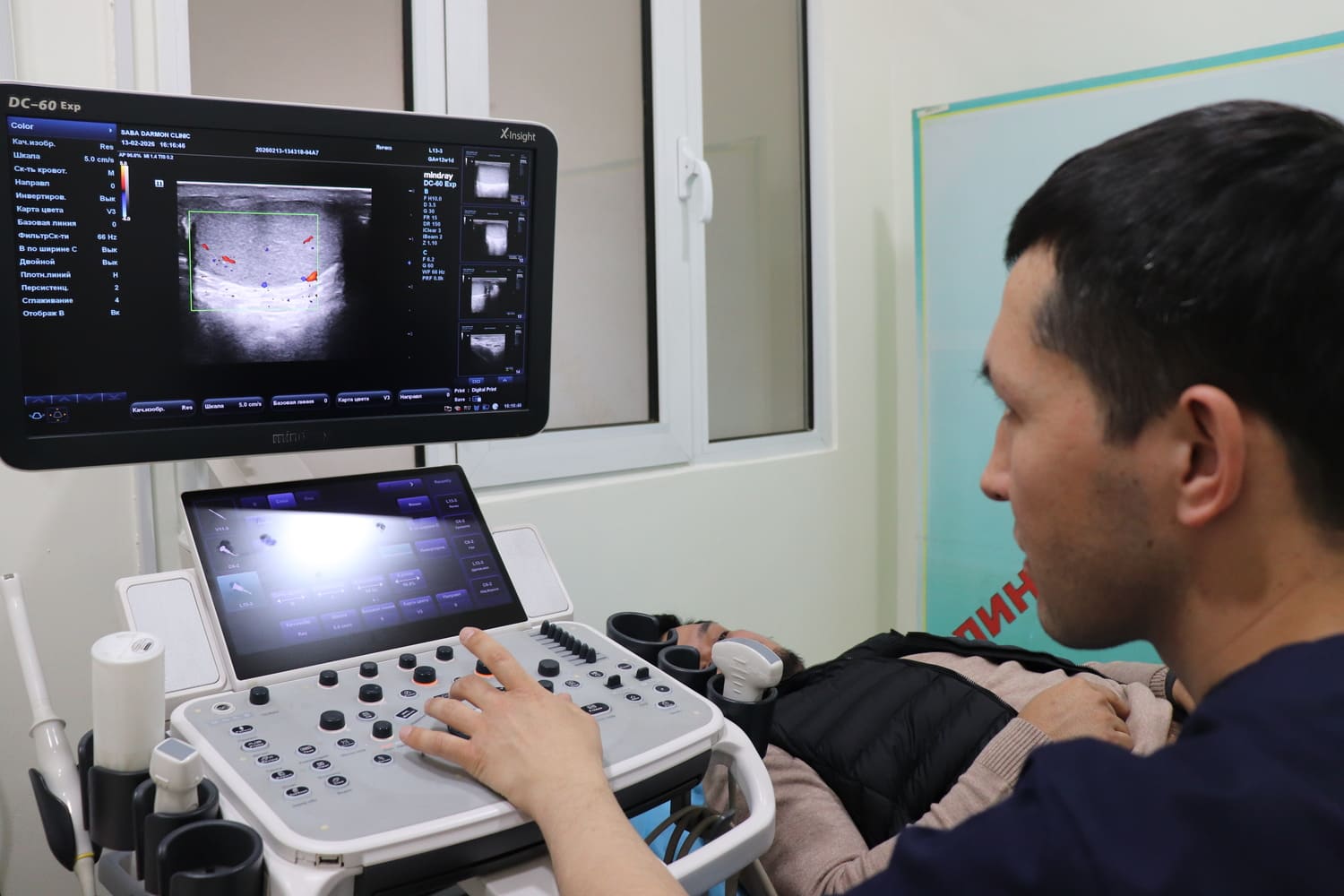
- a bladder ultrasound scan — in a full bladder the stone shows clearly and shifts when you change position; prostate size and residual urine are measured at the same time;
- a urine test and urine culture, to detect infection and choose the right antibiotic;
- an X-ray or CT scan to clarify the number and size of the stones and the state of the kidneys; some stones do not show on a plain X-ray, whereas CT detects almost all of them;
- blood tests of kidney function;
- cystoscopy — a look inside the bladder with a thin camera; the urologist will arrange it if needed.
How bladder stones are removed
Small stones sometimes pass on their own with plenty of fluids, but only if urine can flow freely. Dissolving stones with medicines rarely works: it is possible only for stones of a certain composition and takes a long time. Most patients need the stone removed.
| Method | How it is done | When it is chosen |
|---|---|---|
| Transurethral cystolitholapaxy | An instrument is passed along the urethra, the stone is broken up with laser or pneumatic energy and the fragments are washed out; no cut in the skin | The most widely used method in adults |
| Percutaneous (suprapubic) removal | An instrument is passed straight into the bladder through a small puncture above the pubic bone | Large or multiple stones, or a narrow urethra |
| Open surgery | The stone is removed whole through a cut in the lower abdomen | Very large stones, or when open prostate surgery is planned at the same time |
The right method depends on the size and number of stones, the state of the urethra and prostate, and your other health conditions. A catheter is usually left in for a short time afterwards, and the urine may be slightly pink. If you take blood thinners, say so in advance — do not stop them on your own.
Treating the cause and preventing new stones
Once the stone is out, the main question is why it formed. If an enlarged prostate is responsible, the urologist may suggest prostate surgery at the same time as stone removal or later. Most often this is transurethral resection (see recovery after TURP); for a very large gland other methods are considered too, as explained in large prostate adenoma: TURP or robotic surgery. A urethral stricture is treated separately. With a neurogenic bladder, the doctor teaches a way of emptying the bladder regularly, and a long-term catheter is changed on schedule.
Everyday measures are simple: drink enough fluid unless you have been told to limit it; do not hold on for long periods; take your time and empty your bladder fully; have urinary infections treated properly. A follow-up ultrasound scan will pick up residual urine and new stones in good time.
Seeing a urologist at Saba Darmon clinic
If your stream keeps cutting off, or you have lower abdominal pain or blood in your urine, do not put off being seen. At Saba Darmon clinic you can see a urologist and have urine and blood tests, an ultrasound scan of the bladder and prostate with measurement of residual urine, and a CT scan (MSCT); TURP is also performed at the clinic. The urologist will discuss the method of stone removal with you after the examination. Bring previous scan and test results and a list of your medicines. Ask what caused the stone, whether the cause can be treated at the same time as removal, and how long recovery will take. To book, contact our urology department.
Frequently asked questions
Can a bladder stone pass on its own?
Small stones sometimes pass in the urine if you drink plenty of fluids, but only when urine can flow freely. Bladder stones usually form precisely because there is a blockage, such as an enlarged prostate or a narrowed urethra, so the stone tends to stay in the bladder and grow. Only a urologist can advise watchful waiting, and only after tests; if there is pain, bleeding or infection, the stone is removed.
Can bladder stones be dissolved with medicines?
Only rarely. Dissolving is possible just for stones of a certain composition, takes a long time and needs regular test monitoring; most bladder stones do not respond to medicines. Herbal remedies and teas sold to “dissolve stones” have no proven effect and simply delay treatment. The urologist works out the likely type of stone and the right method from your test results. Do not take medicines on your own initiative.
Will the stone come back after it is removed?
If the cause is not dealt with, yes — the risk of recurrence is high. A bladder stone is a consequence of stagnant urine, so an enlarged prostate, a urethral stricture or incomplete bladder emptying needs treating. Sometimes prostate surgery is carried out at the same time as stone removal. Afterwards, drinking enough, treating infections and having residual urine checked by ultrasound all lower the risk of a new stone.
What happens if a bladder stone is left untreated?
A stone constantly irritates the bladder wall: infections keep returning, blood appears in the urine, and pain and frequent urination affect daily life. The stone can block the bladder outlet and cause acute urinary retention. Long-standing obstruction and infection weaken the bladder muscle and may eventually harm the kidneys. So even if symptoms are mild, it is worth agreeing a plan with a urologist once a stone has been found.
Is a bladder stone the same as a kidney stone?
No. Kidney stones are more often linked to metabolism and the make-up of urine, and cause severe pain in the loin that comes in waves. Bladder stones usually form because urine cannot drain properly from the bladder, and cause lower abdominal pain and an interrupted stream. Occasionally a stone that has come down from the kidney stays in the bladder. Both can occur together, which is why the kidneys are checked as well.
Doctors for consultation
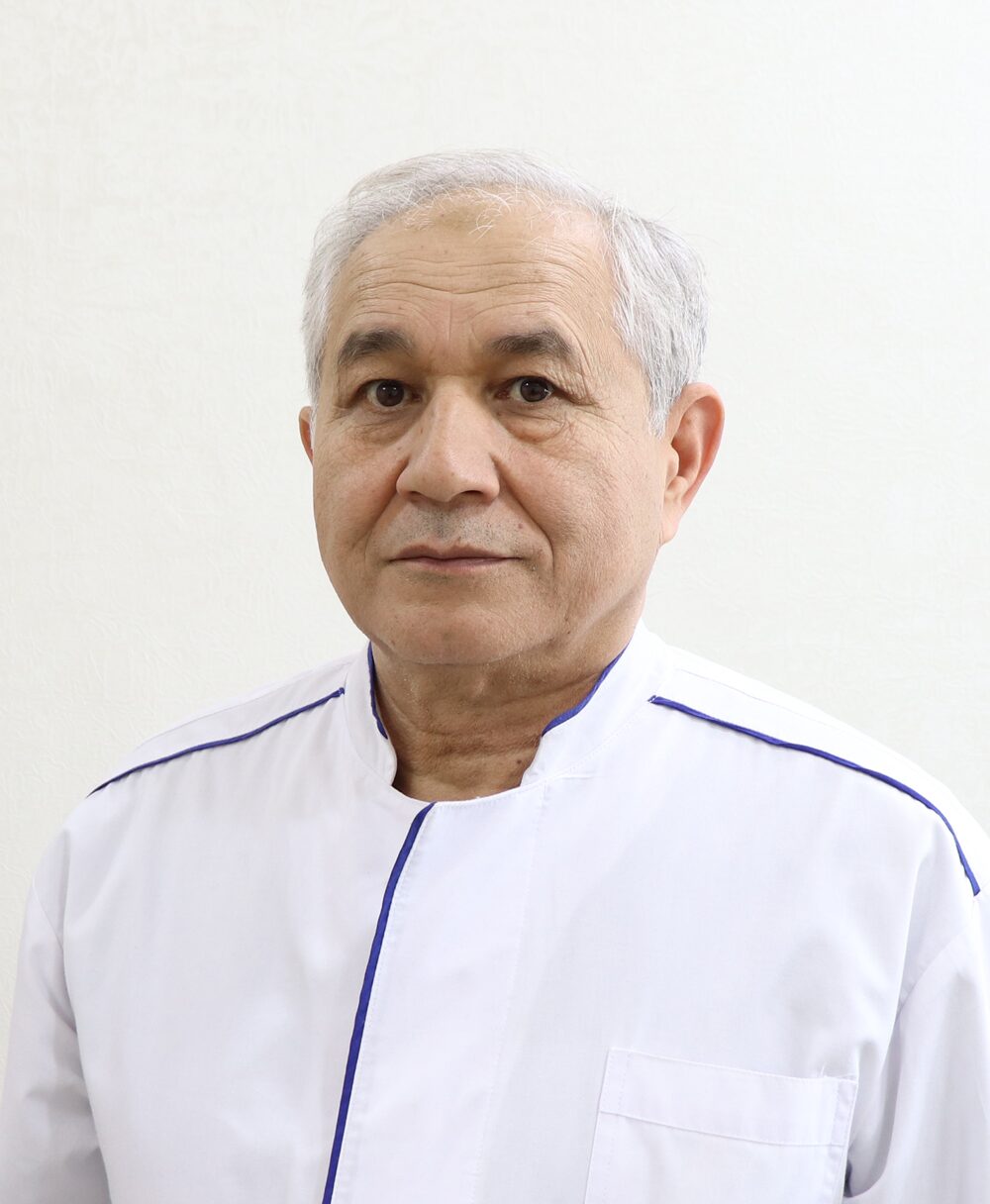
Our urologists assess and treat bladder stones and the conditions that cause them. Our doctors in this field:

Book an appointment with a urologist
Is your stream cutting off, or do you have lower abdominal pain or blood in your urine? A urology consultation and an ultrasound scan will help find the cause.
Call now — +998 71 210-30-30Contacts
Address: 7A/3 Nurafshon street, Tashkent
Phone: +998 71 210-30-30 · WhatsApp: +998 95 662-30-30
Opening hours: Monday–Saturday, 09:00–18:00
E-mail: