


Useful articles

Blood in Urine: What to Do and When to See a Urologist
Doctor's blog
sbdrmn
Direction: Robotic surgery · All services
When you see blood in your urine, the first question is: what should I do now? When do you need urgent help, what should you avoid at home and which tests will a urologist do? In this guide, based on the advice of Saba Darmon urologists, we explain the steps one by one. The key rule: blood in the urine must be investigated, even if it appeared only once.
Contents
- Step one: don’t panic, but don’t ignore it
- Is it really blood? Other things that can colour urine
- What causes blood in the urine: the main reasons
- When not to wait and seek urgent help
- What to do and what not to do at home
- At the urologist: which tests are done
- Treatment depends on the cause
- At Saba Darmon Clinic
- Frequently asked questions
Step one: don’t panic, but don’t ignore it
Seeing blood in your urine is frightening, but it does not automatically mean a serious illness. Most often the cause is treatable: a urinary tract infection, a stone or an enlarged prostate. At the same time, one rule is firm: blood in the urine should always be investigated, even if it appeared only once and then went away. Painless bleeding deserves particular attention. It can be the only early sign of a bladder or kidney tumour.
Before you see a doctor, remember or write down the following. It will make the diagnosis much faster:
- the colour of the urine: pink, red, like “meat washings”, or dark brown;
- whether there were clots and what shape they were (thin, worm-like clots often come from the upper urinary tract);
- whether the blood was at the start, at the end or throughout the stream;
- whether you had pain, burning, frequent urination or a fever;
- which medicines you have taken recently, including blood thinners, and whether there was heavy exertion or an injury.
Is it really blood? Other things that can colour urine
Red urine is not always blood. Beetroot, some berries, food colourings and certain medicines (rifampicin, for example) can turn urine red or orange. In women, menstrual blood can get into the sample. After very intense exercise, blood can also appear in the urine for a short time. That is why the first test is a general urinalysis, which shows whether red blood cells are really present. Blood that cannot be seen with the naked eye is called microscopic haematuria. It is often found by chance in a test done for another reason, and it deserves the same careful investigation.
Women should give the sample outside their period. After strenuous exercise, it is advisable to repeat the test after 2–3 days.
What causes blood in the urine: the main reasons
| What it looks like | Possible cause | What is usually checked |
|---|---|---|
| Burning, frequent urination, lower abdominal pain | Cystitis, urinary tract infection | Urinalysis, urine culture |
| Fever, back pain, chills | Pyelonephritis (kidney infection) | Blood and urine tests, kidney ultrasound |
| Severe colicky pain in the back or side | Kidney or ureteric stone | Ultrasound, CT to look for a stone |
| Man over 50, weak stream, getting up at night | Enlarged prostate | Prostate ultrasound, PSA |
| Painless visible blood, especially in a smoker | Possible bladder or kidney tumour | CT urography, cystoscopy |
| Swelling, high blood pressure, protein in the urine | Glomerular kidney disease (glomerulonephritis) | Tests, nephrologist review |
More about kidney infection: pyelonephritis: symptoms and treatment. On regular checks of kidney function: chronic kidney disease. Blood thinners usually do not cause bleeding by themselves; they tend to “unmask” a hidden cause. A patient taking them therefore still needs a full work-up.
When not to wait and seek urgent help
- there are clots in the urine and you cannot pass urine at all or only with great difficulty;
- there is a lot of blood, the urine is dark red and you feel dizzy and weak;
- back pain comes with a high fever and chills;
- you have unbearable colicky pain (renal colic);
- the blood appeared after an injury to the abdomen or lower back.
In these situations go to a clinic or call an ambulance straight away. Otherwise, book a urologist within the next few days. There is no reason to wait for weeks.
What to do and what not to do at home
- Drink as usual. Avoid very concentrated urine, but don’t drink excessively either. Too much fluid “dilutes” the blood and can make the test less accurate.
- Don’t start antibiotics on your own. An antibiotic taken before the urine test and culture hides the real picture.
- Don’t take medicines to stop bleeding on your own, and don’t stop blood thinners without agreeing it with your doctor.
- Avoid heavy exertion and alcohol for a few days.
- Even if the blood has gone, don’t cancel your urology appointment.
At the urologist: which tests are done
The work-up goes step by step, from simple to more complex. Not every patient needs every step; the urologist decides the plan:
- Consultation and examination. In men, the prostate is also assessed.
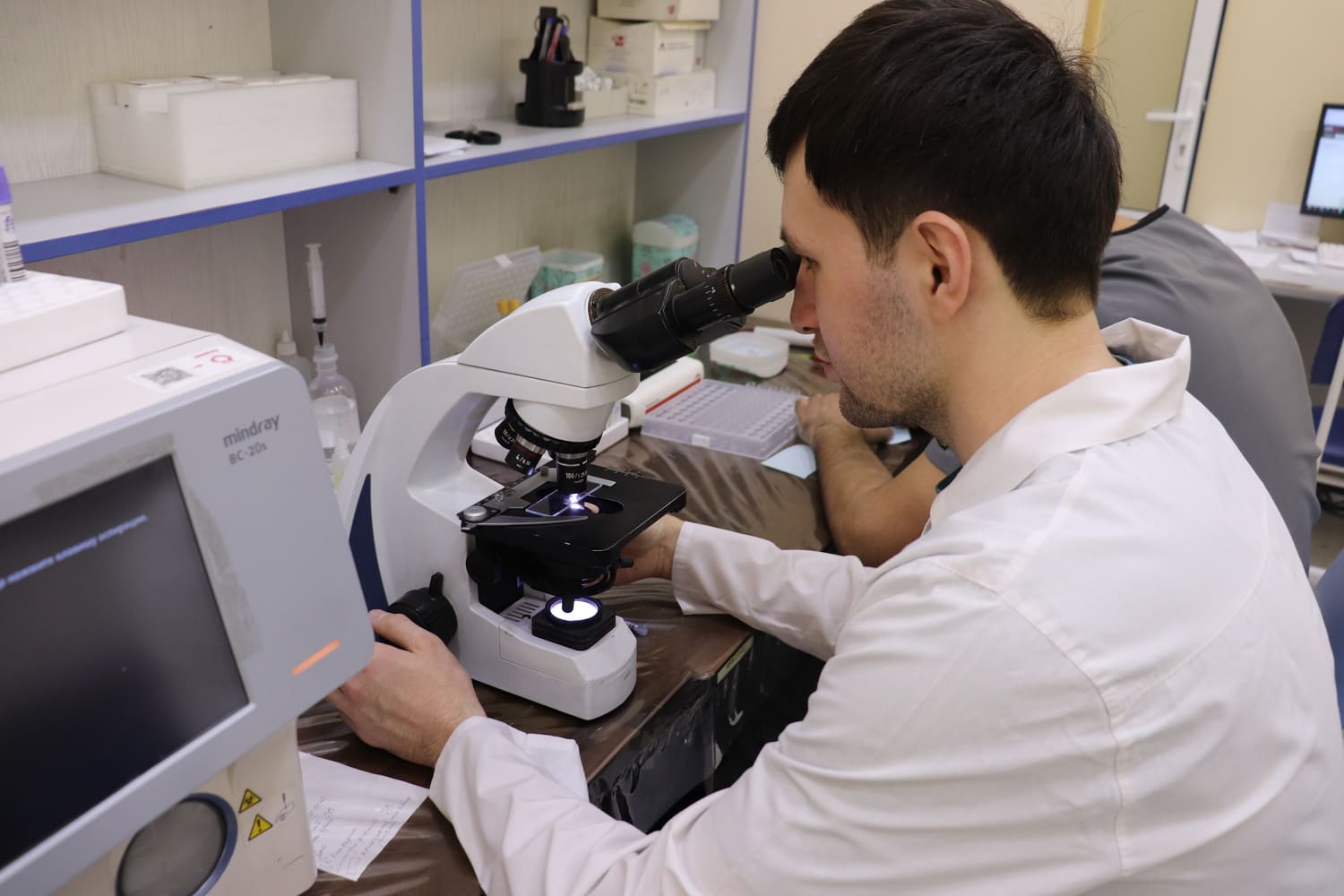
- Urine tests: a general urinalysis, the Nechiporenko test and, if needed, a urine culture. The three-glass test helps show where the blood is coming from.
- Blood tests: a full blood count, creatinine and, in men if needed, PSA.
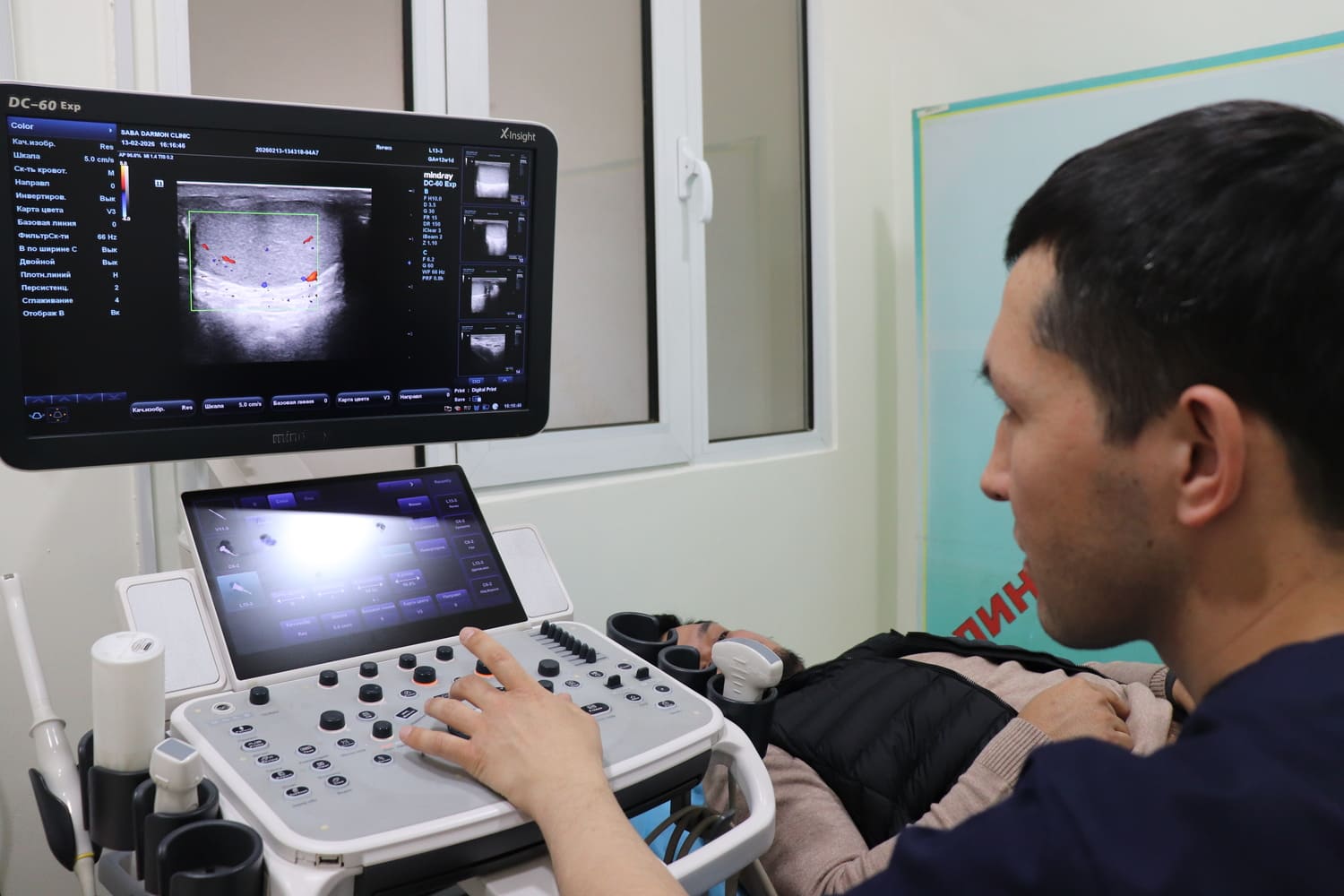
- Kidney and bladder ultrasound is a painless first test that shows stones, dilatation of the kidney and growths.
- CT urography is the main method for assessing the upper urinary tract in visible haematuria. Contrast shows the kidneys, ureters and bladder in detail. If a stone is suspected, a non-contrast kidney CT is often enough.
- Cystoscopy looks at the bladder from the inside. It is recommended for patients at risk of a bladder tumour, especially smokers over 40.
Treatment depends on the cause
“Blood in the urine” is a symptom, not a diagnosis, so treatment depends on the cause that is found. An infection is treated with an antibiotic chosen according to the culture result. Small stones often pass on their own with medication and plenty of fluids, while larger ones are broken up or removed. For an enlarged prostate, medication or surgery is considered. If a tumour is found early, there is a good chance it can be removed. Many operations are now performed minimally invasively, including with a surgical robot: robotic partial nephrectomy for a kidney tumour. If glomerulonephritis is suspected, the urologist works together with a nephrologist.
In many patients the work-up finds no serious cause. In that case the urologist recommends repeating the test after a certain period. This is not “doing nothing” but appropriate follow-up.
At Saba Darmon Clinic
At our clinic, urine and blood tests, kidney and bladder ultrasound and CT urography are all done in one building, so most of the work-up can be completed in a single day. A urologist reviews the results and explains the next step clearly. Please bring any previous test and ultrasound results and a list of the medicines you take.
Frequently asked questions
I had blood in my urine once and it went away. Do I still need tests?
Yes. Even a single episode of visible blood needs a urologist’s review and tests, because some serious conditions, including bladder tumours, show up as intermittent, painless bleeding.
My urine test found red blood cells, but my urine looks normal. Is this dangerous?
This is microscopic haematuria. It often has a harmless cause, but it can also point to an infection, a stone or kidney disease. The test is repeated first, and if it is confirmed, the urologist plans the work-up.
I take a blood thinner. Is that why there is blood in my urine?
The medicine can make bleeding worse, but it usually just reveals a hidden cause. A full work-up is therefore still needed. Do not stop the medicine without agreeing it with your doctor.
Which doctor should I see — a urologist or a GP?
For visible blood, go straight to a urologist. If there is swelling, high blood pressure and protein in the urine, a nephrologist is involved as well.
How long do the tests take and what do they cost?
Urine tests and ultrasound are often ready the same day, and CT can usually be done on the day of your visit. The cost depends on which tests you need. You can get exact information by calling +998 71 210-30-30.
Related reading:
Doctors for consultation
If you notice blood in your urine, a urologist plans the work-up. Saba Darmon urologists:


Noticed blood in your urine?
Even if it happened only once, book a urologist: tests, an ultrasound and the urologist’s examination can be done in one day at one clinic.
Call now — +998 71 210-30-30Contacts
Address: 7A/3 Nurafshon street, Tashkent
Phone: +998 71 210-30-30 · WhatsApp: +998 95 662-30-30
Opening hours: Monday–Saturday, 09:00–18:00
E-mail: