


Useful articles

Urethral Stricture in Men: Symptoms, Diagnosis and Treatment Options
Doctor's blog
sbdrmn
Direction: Robotic surgery · All services
A urethral stricture is a narrowing of the urethra in men caused by scar tissue. It shows itself through a weak stream, straining, a feeling of incomplete emptying and repeated infections. Below: the causes and symptoms, when emergency help is needed, how the condition is diagnosed, treatment options from dilatation to urethroplasty, and an honest look at how often a stricture comes back.
Contents
What a urethral stricture is
The urethra is the tube that carries urine from the bladder to the outside. In men it is fairly long (about 18–20 cm) and runs through the prostate, the perineum and the penis. A stricture is a narrowing of part of this tube caused by scar tissue in its wall. Scar tissue contracts over time, so the narrowing usually gets gradually worse and the urine stream becomes thinner and thinner. A stricture may be short (1–2 cm) or long, and it may lie in the part of the urethra inside the penis or deeper — and the choice of treatment depends largely on exactly that.
Causes of urethral stricture
- Injury from catheters and instruments — after a catheter has been in place for a long time, after cystoscopy or after endoscopic prostate operations. For example, a stricture can occasionally develop after surgery for a large prostate adenoma.
- Infections — especially urethritis that was not fully treated (including sexually transmitted infections), which can leave scarring years later.
- Trauma — a straddle injury to the perineum (for example, falling onto a bicycle crossbar) or a tear of the urethra with a pelvic fracture.
- Lichen sclerosus — a chronic inflammatory skin condition of the glans and foreskin that can narrow the urethral opening and the first part of the urethra.
- Sometimes no cause is found (an idiopathic stricture).
Symptoms of urethral stricture
The symptoms usually build up slowly over months or years, so many men get used to them without noticing how much things have changed:
- a weak, thin stream, or a stream that splits or sprays;
- having to strain to pass urine, and passing urine taking a long time;
- a feeling of incomplete emptying, and dribbling after passing urine;
- passing urine often, and getting up at night to do so;
- recurrent urinary tract infections, prostatitis or inflammation of the epididymis;
- sometimes blood in the urine — see the article on blood in urine for more.
The same complaints occur when the prostate is enlarged, so tests are needed to tell a stricture apart from benign prostatic hyperplasia. A stricture is more likely in younger men and in men who have had a catheter or an injury in the past.
If you cannot pass urine at all and have severe pain and a feeling of fullness in the lower abdomen, this is acute urinary retention. Do not wait: seek emergency help immediately or call 103. Difficulty passing urine together with fever and shivering also needs urgent medical attention.
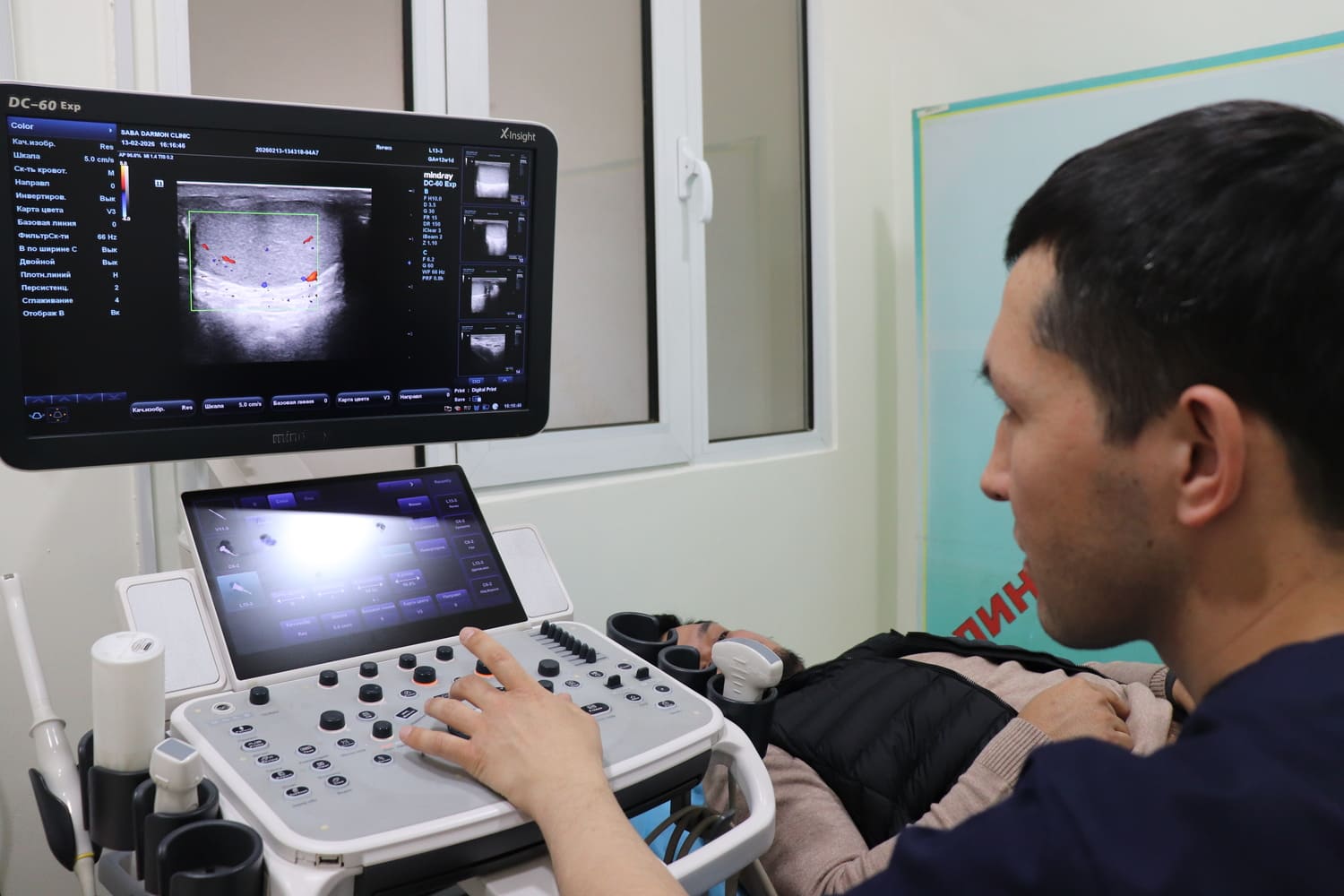
How a urethral stricture is diagnosed
- Uroflowmetry — you pass urine into a special device that measures how fast it flows. With a stricture the flow curve is low and stretched out, forming a “plateau”.
- Ultrasound for residual urine — shows how much urine is left in the bladder after you have passed urine; read more about prostate and bladder ultrasound.
- Urethrography — a contrast agent is introduced into the urethra and X-ray images are taken. The position, length and number of narrowings are clearly visible, which is the most important information for planning surgery.
- Urethrocystoscopy — looking inside the urethra with a thin optical instrument.
- Urine tests and a urine culture — to find and treat any infection before further treatment.
Treatment options and their results
The method is chosen according to the length and position of the stricture and whether it has been treated before. One important fact to know: simple stretching and cutting procedures bring quick relief, but the stricture often comes back, especially if it is long or has recurred before.
| Method | What is done | Who it suits | Recurrence |
|---|---|---|---|
| Dilatation | The urethra is gradually stretched | A short stricture, or when temporary relief is needed | Often returns; regular repeat stretching may be needed |
| Optical urethrotomy | The scar is cut from the inside through an endoscope | A short stricture found for the first time | Good results in some men; repeat urethrotomies become less and less effective |
| Urethroplasty (anastomotic) | The narrowed segment is removed and the ends are joined | A short stricture, particularly after trauma | Usually the most durable long-term result |
| Buccal graft urethroplasty | The urethra is widened with a patch of lining from inside the cheek | A long or recurrent stricture | Durable results in most men, but a complex operation |
If a repeat urethrotomy has not helped, it is usually better to discuss urethroplasty rather than repeating the same procedure again and again. Which method suits you is decided by the urologist on the basis of your test results.
What happens after the operation
A catheter is usually left in place for a while — how long depends on the method used. If a graft has been taken from the cheek, the mouth feels sore for a few days, but it normally heals quickly. Once the catheter is removed, the urine flow is checked.
Follow-up after stricture treatment
Because a stricture can come back, regular follow-up after treatment matters: uroflowmetry and an ultrasound for residual urine are done a few months later, then once a year or at the intervals your doctor advises. If the stream becomes weak again or infections return, do not wait — see a urologist, because a recurrence picked up early is easier to treat.
If you notice your urine stream getting thinner, do not put it down to age. You can read more on the page of our urology department and in the services catalogue.
Frequently asked questions
Can a urethral stricture go away on its own?
No. Scar tissue does not disappear by itself, and the narrowing usually gets worse over time. That is why you should see a urologist once symptoms appear.
Does a weak urine stream always mean a stricture?
Not necessarily: an enlarged prostate or a bladder problem can cause the same thing. Uroflowmetry, ultrasound and, if needed, urethrography show the real cause.
Can a urethral stricture be treated with tablets?
Medicines do not remove scar tissue; they are used only to treat infection. Widening or rebuilding the urethra requires an endoscopic or surgical procedure.
Does a stricture come back after urethrotomy?
It can, especially if the stricture is long or has been treated before. This is why regular follow-up is advised, and urethroplasty is discussed for recurrent strictures.
What is urethroplasty?
It is an operation in which the narrowed segment is removed and the ends rejoined, or the urethra is widened with a graft from inside the cheek. It is more complex, but in most men it gives a durable long-term result.
What should I do if I cannot pass urine at all?
This is an emergency — seek urgent medical help straight away or call 103. Do not try to insert a catheter yourself.
How long is follow-up needed after stricture treatment?
The first check is usually a few months after treatment, followed by yearly tests. Your urologist will set the exact schedule for you.
Related reading:
Doctors for consultation
Urethral strictures are assessed by our urologists, who choose the treatment according to the position and length of the narrowing. Our doctors in this field:


Book an appointment with a urologist
Has your urine stream become weaker? Uroflowmetry and ultrasound in a single visit help to find the cause.
Call now — +998 71 210-30-30Contacts
Address: 7A/3 Nurafshon street, Tashkent
Phone: +998 71 210-30-30 · WhatsApp: +998 95 662-30-30
Opening hours: Monday–Saturday, 09:00–18:00
E-mail: