


Useful articles

Acute Urinary Retention: Causes and Emergency Care
Doctor's blog
sbdrmn
Direction: Robotic surgery · All services
Acute urinary retention is a sudden inability to pass urine even though the bladder is full — a painful condition that needs emergency care. In men it is most often linked to an enlarged prostate, but medicines, constipation, alcohol, anaesthesia and neurological conditions can also be responsible. Below: the symptoms, the causes, what not to do at home, how it is treated in hospital, how it differs from chronic retention and what happens next.
Contents
- What is acute urinary retention?
- Symptoms: how to recognise urinary retention
- What causes urinary retention?
- Urinary retention in women and neurological warning signs
- If you cannot pass urine: what to do and what not to do
- Acute versus chronic urinary retention
- In hospital: the catheter and tests
- After the catheter: a trial without catheter and treating the cause
- Seeing a urologist: questions to ask
- Frequently asked questions
What is acute urinary retention?
Acute urinary retention is a sudden, complete inability to pass urine even though the bladder is full. As the bladder stretches, it causes severe pain low in the tummy and an intense, unbearable urge to urinate. This is not something to wait out: the bladder needs to be emptied with a catheter within hours. Being unable to pass urine is therefore a medical emergency, and you should go to an emergency department or see a urologist the same day — ideally within the same few hours. Acute urinary retention most often affects men over 50 with an enlarged prostate, but it can also happen to women and to younger people.
Symptoms: how to recognise urinary retention
- a strong urge to urinate, but no urine comes out at all, or only a few drops;
- increasing pain and a feeling of pressure in the lower abdomen, below the navel;
- a tense, tender swelling above the pubic bone that you can feel with your hand — this is the overfilled bladder;
- restlessness, sweating and being unable to get comfortable in any position.
Many men will have noticed warning signs beforehand: a weak stream, getting up at night to pass urine, needing to go often, or feeling that the bladder never quite empties. These symptoms can point to an enlarged prostate — read more in our article on benign prostatic hyperplasia.
What causes urinary retention?
Retention happens when something physically blocks the outflow of urine, when the bladder muscle cannot squeeze strongly enough, or when the nerves that control the bladder are not working properly. Often several factors add up at once: for example, a man with an enlarged prostate catches a cold, takes a decongestant or a cold remedy, and then drinks alcohol on top of that.
| Group of causes | Examples |
|---|---|
| Prostate and urethra | Benign prostatic enlargement (the most common cause in men), prostatitis, urethral stricture |
| Medicines | Anticholinergic medicines, decongestants for a blocked nose, some antidepressants and antihistamines, opioid painkillers |
| Bowels and lifestyle | Severe constipation, drinking a lot of alcohol, holding on for a long time |
| After surgery and anaesthesia | General anaesthetic, spinal or epidural anaesthesia, painkillers and bed rest |
| Blockage inside the bladder | A stone or blood clots (for example, when there is bleeding into the urine) |
| Neurological causes | Spinal disease or injury, cauda equina syndrome, complications of diabetes, stroke |
| In women | Pelvic organ prolapse, pelvic masses, the period after childbirth |
A narrowing of the urethra can make the stream gradually weaker over years and eventually lead to complete retention — read more in our article on urethral stricture.
Urinary retention in women and neurological warning signs
In women, acute urinary retention is less common. It is usually linked to prolapse of the womb or vaginal walls, a large mass in the pelvis, the first days after giving birth, or recovery from an operation. For this reason, a woman with urinary retention may also need a gynaecological examination. One situation deserves special attention: cauda equina syndrome, in which the nerve roots at the bottom of the spine become compressed. It causes low back pain, weakness or numbness in the legs, loss of feeling around the genitals and back passage (the “saddle area”), and difficulty passing urine or loss of bladder control. If these signs appear together, you need emergency help without any delay, because prompt treatment can protect nerve function.
If you cannot pass urine: what to do and what not to do
The key rule is not to lose time. The longer the bladder stays overfilled, the worse the pain becomes and the more its muscle is overstretched. Here is what not to do:
- do not drink lots of water or tea to try to “force” the urine out — this only fills the bladder further and makes the pain worse;
- do not take water tablets (diuretics) on your own initiative;
- do not press on your abdomen, and do not try to insert a catheter yourself or let someone without medical training do it;
- do not drink alcohol or try out new medicines;
- do not wait in the hope that it will “settle by morning”.
Take a list or the packets of all the medicines you use with you — this helps the doctor find the cause more quickly.
If you have been unable to pass urine for several hours and your lower abdomen is full and painful, go to an emergency department or a urologist straight away. If urinary retention comes with back pain, weakness in the legs or numbness in the saddle area, a high temperature and shivering, confusion, severe pain or blood clots in the urine — or if you cannot get there on your own — call 103 immediately.
Acute versus chronic urinary retention
Urinary retention is not always sudden and painful. In chronic retention, the bladder stretches slowly over months and does not empty completely each time you go.
| Feature | Acute retention | Chronic retention |
|---|---|---|
| Onset | Sudden, over hours | Gradual, over months or years |
| Pain | Severe, in the lower abdomen | Often none, or very mild |
| Passing urine | Not possible at all | Possible, but the stream is weak and the bladder does not empty fully |
| Other signs | Restlessness, a tense, overfilled bladder | Dribbling, wetting at night, repeated urinary infections |
| How it is found | Straight away, from symptoms and examination | Often by chance, when an ultrasound shows a lot of urine left in the bladder |
| Urgency | A medical emergency | Planned assessment, including a check of kidney function |
Long-standing chronic retention puts back-pressure on the kidneys and can reduce how well they work — see our article on chronic kidney disease. How the urine left in the bladder is measured is explained in our article on prostate and bladder ultrasound.
In hospital: the catheter and tests
The first step is to empty the bladder. Usually a soft catheter is passed through the urethra, and the pain eases almost at once. If a catheter cannot be passed this way — for example, because of a stricture — a suprapubic catheter is placed through a small opening just above the pubic bone. The volume of urine drained is measured, as this helps to show how long the retention has been building up. The doctor then looks for the cause:
- asking about your symptoms, the medicines you take and any previous illnesses;
- examining your abdomen and, if needed, checking the prostate with a gloved finger, as well as looking for neurological signs;
- arranging a urine test for infection and blood, and blood tests that show how well the kidneys are working;
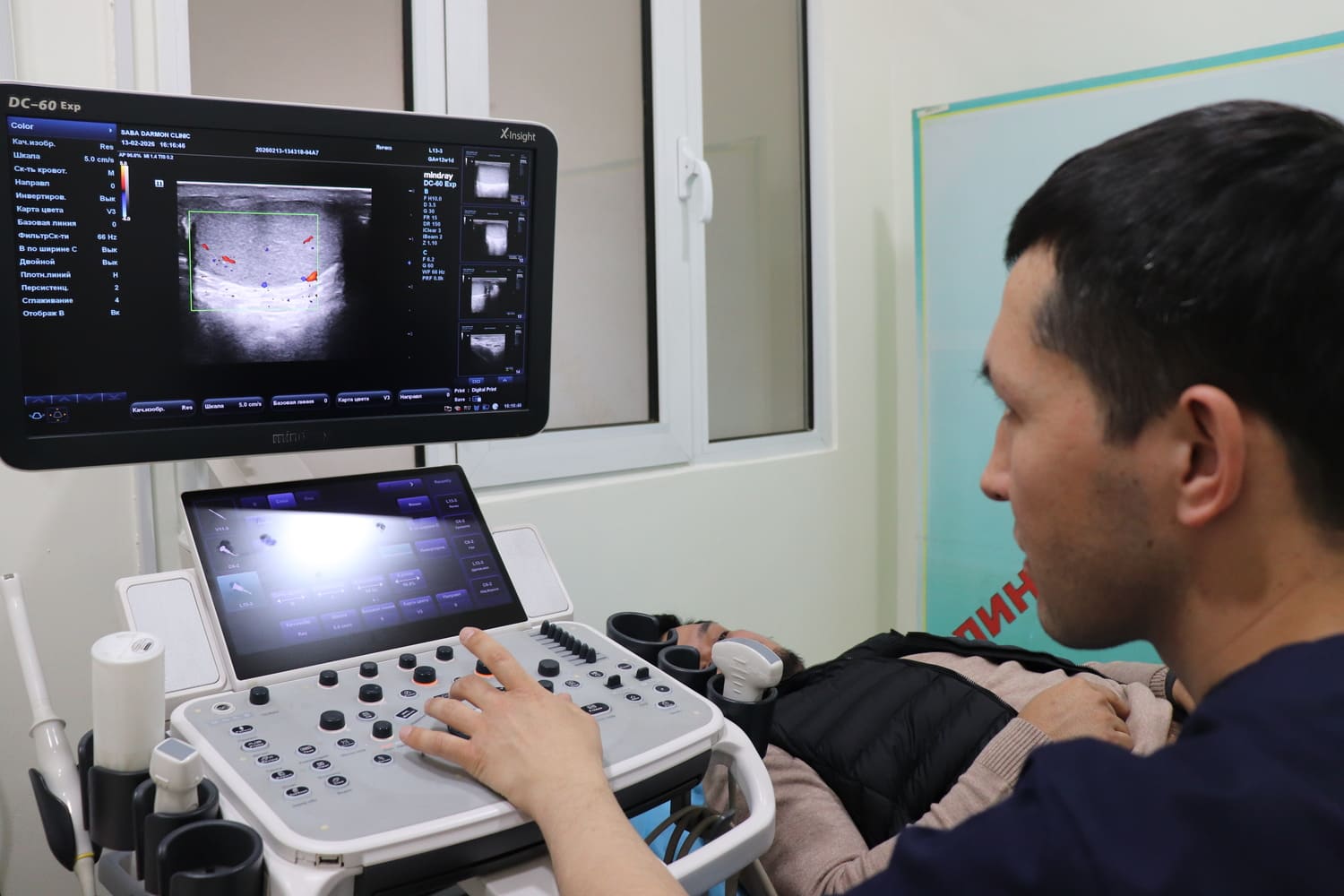
- performing an ultrasound scan of the kidneys, bladder and prostate.
If a very large amount of urine had built up, the kidneys may produce a lot of urine for a while after the catheter goes in, so some patients are kept in hospital for observation. A PSA blood test is usually done later rather than straight away, because retention and the catheter itself can raise the level temporarily. If there is fever and shivering, a kidney infection is ruled out — read about pyelonephritis.
After the catheter: a trial without catheter and treating the cause
If the cause was temporary — a medicine, constipation, alcohol or an anaesthetic — normal urination often returns once it has been dealt with. When the prostate is enlarged, the usual approach is:
- The catheter is left in for a few days, and a medicine from the alpha-blocker group is often started; it relaxes the smooth muscle in the prostate and bladder neck.
- The catheter is then removed to see whether you can pass urine on your own, and the urine left behind is checked.
- If this trial succeeds, treatment and monitoring of the prostate continue.
- If it fails, or retention keeps coming back, surgery is usually discussed — most often transurethral resection of the prostate (TURP). For a very large prostate, other methods may also be considered, as explained in our article on large prostate adenoma: TURP or robotic surgery.
To lower the chance of it happening again, do not ignore early signs of difficulty passing urine, treat constipation, keep alcohol to a minimum, and before starting any new medicine — especially combination cold and flu remedies — tell your doctor or pharmacist that you have a prostate problem.
Seeing a urologist: questions to ask
After an episode of retention, it is worth asking: what caused it, how long the catheter will stay in and how to look after it, when the trial without catheter will take place, which medicines you should avoid and whether you are likely to need an operation. At Saba Darmon clinic, urologists diagnose and treat urination problems: ultrasound of the kidneys, bladder and prostate, measurement of residual urine and laboratory tests are available, and TURP is also performed at the clinic, with the treatment method chosen by the urologist after examination. Find out more on the page of our urology department.
Frequently asked questions
What can I do at home if I cannot pass urine?
There is no safe way to relieve urinary retention at home. Do not drink lots of water, do not take water tablets, do not press on your abdomen and do not try to insert a catheter yourself. Take a list of your medicines and go to an emergency department or a urologist within the same few hours. If you have back pain, leg weakness, saddle numbness or a high fever, or cannot get there yourself, call 103.
Is acute urinary retention dangerous?
Yes, it is an emergency. If the bladder stays overfilled for a long time, besides severe pain its muscle becomes overstretched, and its ability to contract may be reduced afterwards. Prolonged retention also puts back-pressure on the kidneys. A catheter placed promptly relieves the pain quickly and lowers the risk of complications; the doctor then finds the cause and plans treatment.
How long will I need a catheter?
That depends on the cause. If it is temporary — a medicine, constipation or an anaesthetic — the catheter may be needed only briefly. With an enlarged prostate it is often left in for a few days while an alpha-blocker is started, and then a trial without catheter is arranged. If that trial fails, the catheter stays in longer and surgery is discussed. Your urologist will decide the exact timing.
Will I definitely need an operation after urinary retention?
Not always. If the cause was temporary, normal urination often returns once it has been dealt with. In men with an enlarged prostate, passing urine may recover after the catheter is removed, and treatment with medicines can then continue. However, if the trial without catheter fails or retention keeps coming back, surgery such as transurethral resection of the prostate is usually discussed.
Which medicines can cause urinary retention?
Anticholinergic medicines, decongestants for a blocked nose and the combination cold remedies that contain them, some antidepressants and antihistamines, and opioid painkillers can all have this effect. The risk is especially high in men with an enlarged prostate. Before starting any new medicine, tell your doctor or pharmacist about your prostate problem, and do not stop prescribed medicines on your own.
Related reading:
Doctors for consultation
The cause of urinary retention is investigated and treatment is planned by our urologists, who perform TURP when needed. Our doctors in this field:


Book an appointment with a urologist
Has your stream become weak, or have you already had an episode of urinary retention? A urology consultation will help find the cause and lower the risk of it happening again.
Call now — +998 71 210-30-30Contacts
Address: 7A/3 Nurafshon street, Tashkent
Phone: +998 71 210-30-30 · WhatsApp: +998 95 662-30-30
Opening hours: Monday–Saturday, 09:00–18:00
E-mail: