


Useful articles

Vocal Cord Nodules and Polyps: When Hoarseness Will Not Go Away
Doctor's blog
sbdrmn
Direction: Robotic surgery · All services
Vocal cord nodules and polyps are the most common benign causes of hoarseness that will not go away. They develop most often in people who use their voice for work, in children who shout a lot and in smokers. If your voice has been hoarse for more than three weeks, an ENT doctor should examine your larynx. Below: the causes, the symptoms, how nodules, polyps, cysts and Reinke’s oedema differ, diagnosis, voice therapy, surgery and everyday vocal hygiene.
Contents
- What vocal cord nodules and polyps are
- Why they develop: causes and risk factors
- Symptoms: hoarseness and other voice changes
- Nodules, polyps, cysts and Reinke’s oedema: what is the difference?
- When hoarseness needs to be checked
- Diagnosis: laryngoscopy and stroboscopy
- Treatment of vocal cord nodules and polyps
- Vocal hygiene: everyday rules
- After surgery and preventing recurrence
- What to ask the doctor and how the clinic can help
- Frequently asked questions
What vocal cord nodules and polyps are
Your voice is produced by two thin, elastic folds in the larynx (voice box) called the vocal cords, or vocal folds. When you speak or sing, they come together and spring apart hundreds of times a second. If their edges are smooth, they close completely and the voice sounds clear. If a growth appears on the edge, the cords cannot close fully, air “leaks” through, and the voice becomes hoarse, rough, breathy or tires quickly.
The most common benign (non-cancerous) growths are nodules — symmetrical, callus-like thickenings on both cords; a polyp — usually on one side, soft and sometimes containing blood vessels; and a cyst — a small fluid-filled sac beneath the lining. Smokers can develop another condition, Reinke’s oedema, in which both cords swell along their length. None of these is cancer, but the cause of hoarseness that will not go away can only be found by looking at the larynx.
Why they develop: causes and risk factors
The main cause is overusing or misusing the voice. Speaking loudly, shouting, long conversations over background noise and frequent throat clearing strike the same point on the cords again and again. Over time a protective thickening — a nodule — forms there. This is why nodules are most common in people whose voice is a working tool:
- teachers, nursery staff and sports coaches;
- singers, actors and presenters;
- call-centre staff, shop assistants and managers who talk a great deal;
- children who shout a lot — especially active school-age children who love noisy games.
A polyp often appears after a single episode of severe vocal strain (for example, shouting at a football match or a violent coughing fit), when a small bleed may occur inside the cord. Smoking, stomach acid reaching the throat (reflux), dry air, frequent colds and allergies all increase the risk. Reinke’s oedema is seen almost exclusively in people who have smoked for many years.
Symptoms: hoarseness and other voice changes
The main symptom is hoarseness (dysphonia): the voice sounds rough, croaky, breathy or “cracked”. Other signs include:
- the voice gets worse towards the end of the day and tires after long periods of talking;
- difficulty reaching high notes, or the voice breaking while singing;
- a quieter voice that does not carry, so you have to push to be heard;
- a feeling of a “lump” in the throat and a constant urge to clear it;
- tired neck and throat muscles when speaking.
A sore throat, pain on swallowing and frequent tonsillitis are usually related to the tonsils rather than the vocal cords — you can read more in our article on chronic tonsillitis. Acute laryngitis with a cold usually settles within a week or two.
Nodules, polyps, cysts and Reinke’s oedema: what is the difference?
These conditions cause similar symptoms, but they are managed differently:
| Condition | Location | Main cause | Usual first step |
|---|---|---|---|
| Nodules | On both cords, opposite each other | Long-term vocal overuse | Voice therapy and vocal hygiene |
| Polyp | Usually on one side | Severe vocal strain, smoking | If small — voice therapy; often microsurgery |
| Cyst | Usually on one side, beneath the lining | Blocked gland duct, vocal strain | Often microsurgery, with voice therapy before and after |
| Reinke’s oedema | Swelling along both cords | Many years of smoking, reflux | Stopping smoking; surgery if needed |
Hoarseness has other causes too: vocal cord paralysis (for example, after thyroid or chest surgery), papillomatosis, chronic laryngitis and cancer of the larynx. That is why an accurate diagnosis is only possible after an examination.
When hoarseness needs to be checked
International guidance advises that if hoarseness lasts longer than three weeks, the larynx should be examined by an ENT (ear, nose and throat) doctor — a test called laryngoscopy. Smokers, people who drink a lot of alcohol and those over 45 should be particularly careful not to delay, because it is important to rule out cancer of the larynx. Taking antibiotics or steroid medicines for hoarseness on your own is not recommended: it wastes time while the real cause remains unknown.
If breathing becomes difficult, you hear a noisy, high-pitched sound when breathing in (stridor) or feel as if you are choking, call 103 immediately. If you cough up blood or bloodstained phlegm, notice a new lump in the neck, have severe pain on swallowing or pain spreading to the ear, lose weight without trying, or suddenly lose your voice after shouting, see an ENT doctor as soon as possible. Severe one-sided throat pain, difficulty opening the mouth and a muffled “hot potato” voice can be signs of a peritonsillar abscess.
Diagnosis: laryngoscopy and stroboscopy
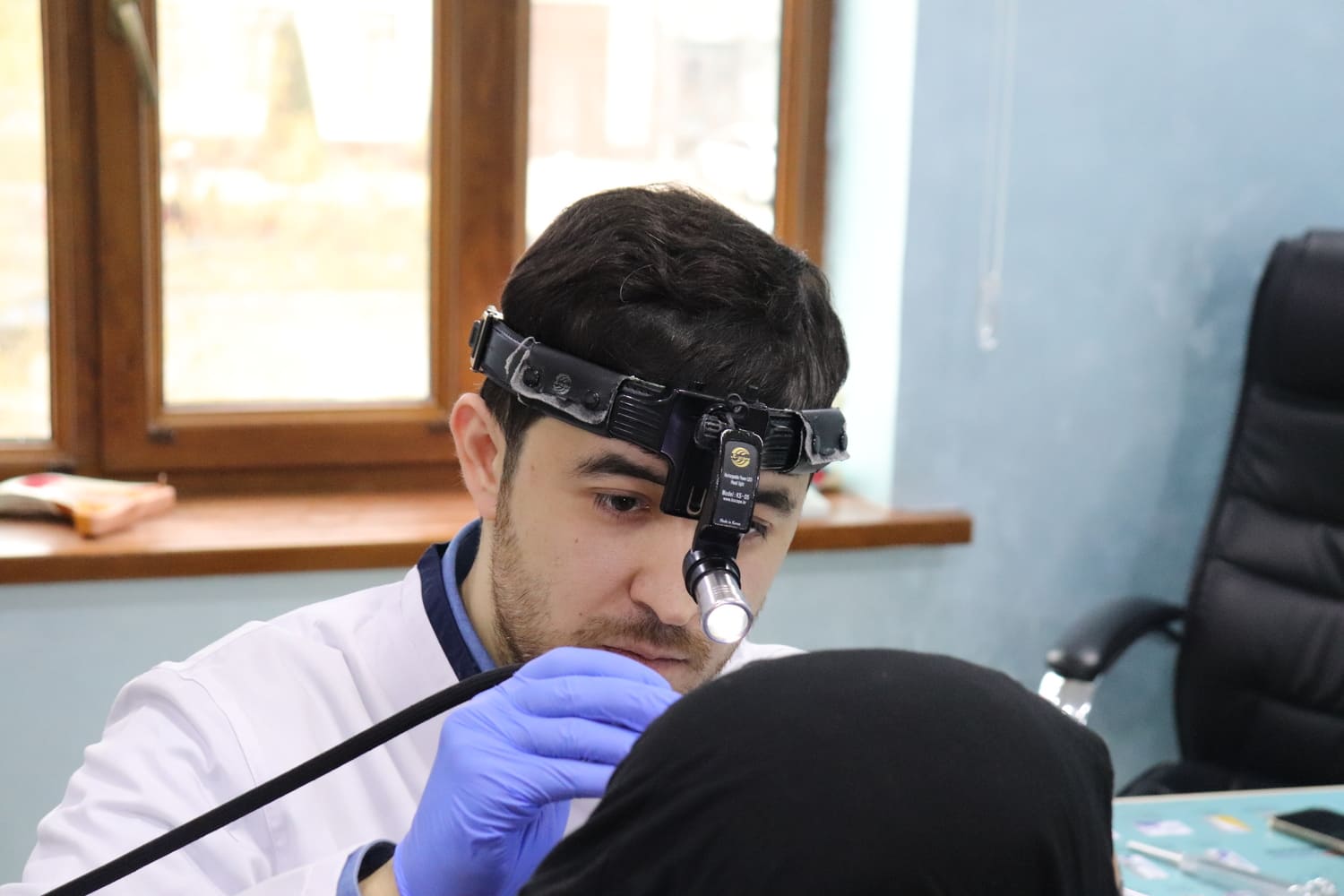
The doctor starts by asking questions: how long your voice has been different, what your job is, whether you smoke, and whether you have heartburn or a burning feeling in the throat. Then the larynx is examined. Today the main method is laryngoscopy: a thin flexible endoscope is passed through the nose, or a rigid one is placed in the mouth, and the vocal cords are shown magnified on a screen. It usually takes a few minutes and is well tolerated with a local anaesthetic spray.
Videostroboscopy is a special lighting technique that shows the vibration of the cords as if in slow motion. It helps to tell nodules, polyps and cysts apart and to judge how well each cord is vibrating. If needed, the quality of the voice is assessed, signs of reflux are looked for, and a neck ultrasound scan is arranged if there is a lump. If anything looks suspicious, a small tissue sample (biopsy) is taken.
Treatment of vocal cord nodules and polyps
The treatment depends on the type and size of the growth, how much you rely on your voice and your own preferences. The ENT doctor decides together with you after an examination.
| Method | When it is used | What to expect |
|---|---|---|
| Voice therapy (sessions with a speech and language therapist) | First choice for nodules; also before and after surgery | Several weeks of regular exercises; many nodules shrink or disappear |
| Vocal hygiene and tackling risk factors | In every case | Less strain on the voice and a lower risk of recurrence |
| Treating reflux and inflammation | When there are signs of reflux or allergy, as prescribed by the doctor | The lining settles and voice therapy works better |
| Phonomicrosurgery | Most polyps and cysts, nodules that persist after therapy, suspicious changes | Through the mouth, no external cuts, under a microscope; followed by voice rest and therapy |
Phonomicrosurgery (microlaryngoscopy) is usually carried out under a general anaesthetic. A special tube is passed through the mouth into the larynx, and under a microscope very fine instruments are used to remove only the growth, preserving as much of the healthy layer of the cord as possible. You can read about the types of anaesthesia in our article on anaesthesia and about preparation on the page on tests before an operation. In children with nodules, surgery is rarely needed: the main approach is age-appropriate voice therapy and less shouting.
Vocal hygiene: everyday rules
- drink enough water through the day and keep indoor air from becoming too dry;
- do not shout or raise your voice over noise; use a microphone for lessons and performances;
- do not whisper — whispering strains the cords at least as much as normal speech, and sometimes more;
- instead of clearing your throat, take a sip of water or swallow;
- rest your voice when you have a cold or are hoarse;
- stop smoking and avoid smoky rooms — smoking is also linked to snoring, as explained in our article on snoring and sleep apnoea;
- if you have heartburn, avoid large late-evening meals and limit alcohol.
After surgery and preventing recurrence
Phonomicrosurgery leaves no external scar, and mild throat discomfort may be felt for a few days. A few days of voice rest are usually recommended, after which the voice is used more gradually, following the advice of the surgeon and the voice therapist. Full recovery of the voice can take several weeks. The most important thing is to change the habits that led to the growth in the first place; otherwise a nodule or polyp can come back. That is why voice therapy and a follow-up laryngoscopy remain important after the operation.
What to ask the doctor and how the clinic can help
At the appointment you might ask: what exactly has been found on the cords, can it be treated without surgery, how long will voice therapy take, how can I protect my voice at work, and when should I come back for a check? At Saba Darmon clinic, ENT doctors examine the larynx and recommend the tests needed to find the cause of hoarseness. The doctor will discuss the treatment options with you after the examination, including whether surgery is needed, and explain the next steps. If your voice has been hoarse for more than three weeks, especially if you smoke, do not put off being checked. You can read more on the page of our otolaryngology department.
Frequently asked questions
Can vocal cord nodules go away on their own?
Small nodules often shrink or disappear when vocal load is reduced and good vocal hygiene is followed. The main treatment is voice therapy with a speech and language therapist, who teaches you to breathe correctly and use your voice without strain. If habits do not change, however, nodules tend to persist or grow. The ENT doctor checks progress with a follow-up laryngoscopy and explains the next steps.
What is the difference between a polyp and nodules?
Nodules usually sit symmetrically on both vocal cords and develop from long-term overuse of the voice. A polyp is more often on one side and tends to form after shouting or a violent coughing fit, or in smokers. Voice therapy is the first choice for nodules, whereas polyps often need phonomicrosurgery. Only laryngoscopy and stroboscopy can reliably tell them apart, so an examination is needed.
How long should hoarseness last before I see a doctor?
International guidance advises that hoarseness lasting more than three weeks should be checked by an ENT doctor, who will examine the larynx. Smokers, people who drink a lot of alcohol and anyone over 45 should be particularly careful not to delay. If breathing becomes difficult or you hear stridor, call 103 immediately; if you cough up blood or notice a lump in the neck, see an ENT doctor as soon as possible.
Can a vocal cord polyp turn into cancer?
Nodules, polyps and cysts are benign growths and do not usually turn into cancer. However, cancer of the larynx can also start with hoarseness, particularly in smokers. That is why persistent hoarseness should never be assumed to be “just a polyp” without an examination. The doctor performs a laryngoscopy and, if anything looks suspicious, takes a small tissue sample to make an accurate diagnosis.
How long should I stay silent after surgery?
After phonomicrosurgery a few days of voice rest are usually recommended, and the exact period is set by the surgeon who performed the operation. Whispering is not advised during this time either. The voice is then used more gradually under the guidance of a voice therapist, and full recovery can take several weeks. To stop the growth coming back, it is important to continue voice therapy and good vocal hygiene.
Related reading:
Doctors for consultation
When hoarseness persists, our ENT doctors examine the larynx, find the cause and discuss the treatment options. Our doctors in this field:




Book an appointment with an ENT doctor
Has your voice been hoarse for more than three weeks, or does it tire quickly? An ENT examination with laryngoscopy will find the cause and help choose the right treatment.
Call now — +998 71 210-30-30Contacts
Address: 7A/3 Nurafshon street, Tashkent
Phone: +998 71 210-30-30 · WhatsApp: +998 95 662-30-30
Opening hours: Monday–Saturday, 09:00–18:00
E-mail: