


Useful articles

Inguinal Hernia in Men: Symptoms, Risks and Surgical Options
Doctor's blog
sbdrmn
Direction: Robotic surgery · All services
An inguinal hernia is a bulge of abdominal contents through the inguinal canal into the groin or scrotum. It is much more common in men, because the spermatic cord passes through this canal. Below: the types of hernia, the symptoms, how to tell it apart from a hydrocele or varicocele, the danger of strangulation, why surgery is the only cure, open and laparoscopic repair, and recovery.
Contents
- What an inguinal hernia is: the anatomy in simple terms
- Symptoms of an inguinal hernia
- Hernia, hydrocele or varicocele: how to tell them apart
- Strangulated hernia: when you need help immediately
- Why surgery is the only cure for an inguinal hernia
- Open or laparoscopic hernia repair: which one suits you?
- Recovery after inguinal hernia surgery
- Effects on the testicle and on fertility
- Frequently asked questions
What an inguinal hernia is: the anatomy in simple terms
The abdominal wall in the groin is naturally weaker than elsewhere, because this is where the inguinal canal runs. In men the spermatic cord — the vas deferens together with the blood vessels and nerves of the testis — passes through this canal on its way to the testicle. When pressure inside the abdomen pushes the lining of the abdomen, together with a loop of bowel or fatty tissue, out through this weak spot, the result is an inguinal hernia. It is far more common in men than in women.
- Indirect hernia — travels inside the inguinal canal alongside the spermatic cord and can descend into the scrotum. It is often linked to a weakness present from birth and is seen in young men too.
- Direct hernia — the back wall of the canal weakens and the hernia bulges straight forwards. It is more typical of older men and those who do heavy physical work.
Factors that encourage a hernia include a chronic cough, constipation, straining to pass urine (for example with an enlarged prostate), heavy lifting, excess weight and smoking.
Symptoms of an inguinal hernia
- a bulge in the groin or scrotum that gets bigger when standing, coughing or straining and shrinks or disappears when lying down;
- a heavy, dragging feeling or discomfort in the groin, especially at the end of the day and when lifting;
- sometimes mild pain or burning — although many men have no pain at all.
Hernia, hydrocele or varicocele: how to tell them apart
Not every swelling in the scrotum is a hernia. The diagnosis is made by a doctor after an examination and an ultrasound scan; the table below gives only a general orientation:
| Feature | Inguinal hernia | Hydrocele | Varicocele |
|---|---|---|---|
| What it is | Abdominal contents bulging out | Fluid collecting around the testicle | Enlarged veins of the testicle |
| Lying down | Often shrinks or goes back in | Does not change | Gets smaller as the veins empty |
| On coughing | A cough impulse is felt and it enlarges | No cough impulse | May fill slightly |
| To the touch | Continues from the groin into the scrotum | Smooth and tense, surrounding the testicle | Feels like a “bag of worms” |
| Read more | This article | hydrocele treatment | about varicocele |
Strangulated hernia: when you need help immediately
If a hernia suddenly becomes hard and painful, will not go back in when you lie down, the skin over it turns red, or you develop nausea, vomiting, a swollen abdomen or cannot pass wind, this may be a strangulated hernia. The blood supply to the bowel may be at risk. Do not wait and do not try to force the hernia back in: seek emergency help immediately or call 103.
Why surgery is the only cure for an inguinal hernia
A hernia does not heal by itself: no medicine, exercise or truss can close the defect in the abdominal wall. A truss only holds the bulge in temporarily, and wearing one for a long time may weaken the tissues further. Over time a hernia usually gets bigger. In some men with very few symptoms a doctor may suggest watchful waiting, but that decision is only made after an examination. A planned operation is generally much safer than an emergency one carried out once complications have set in.
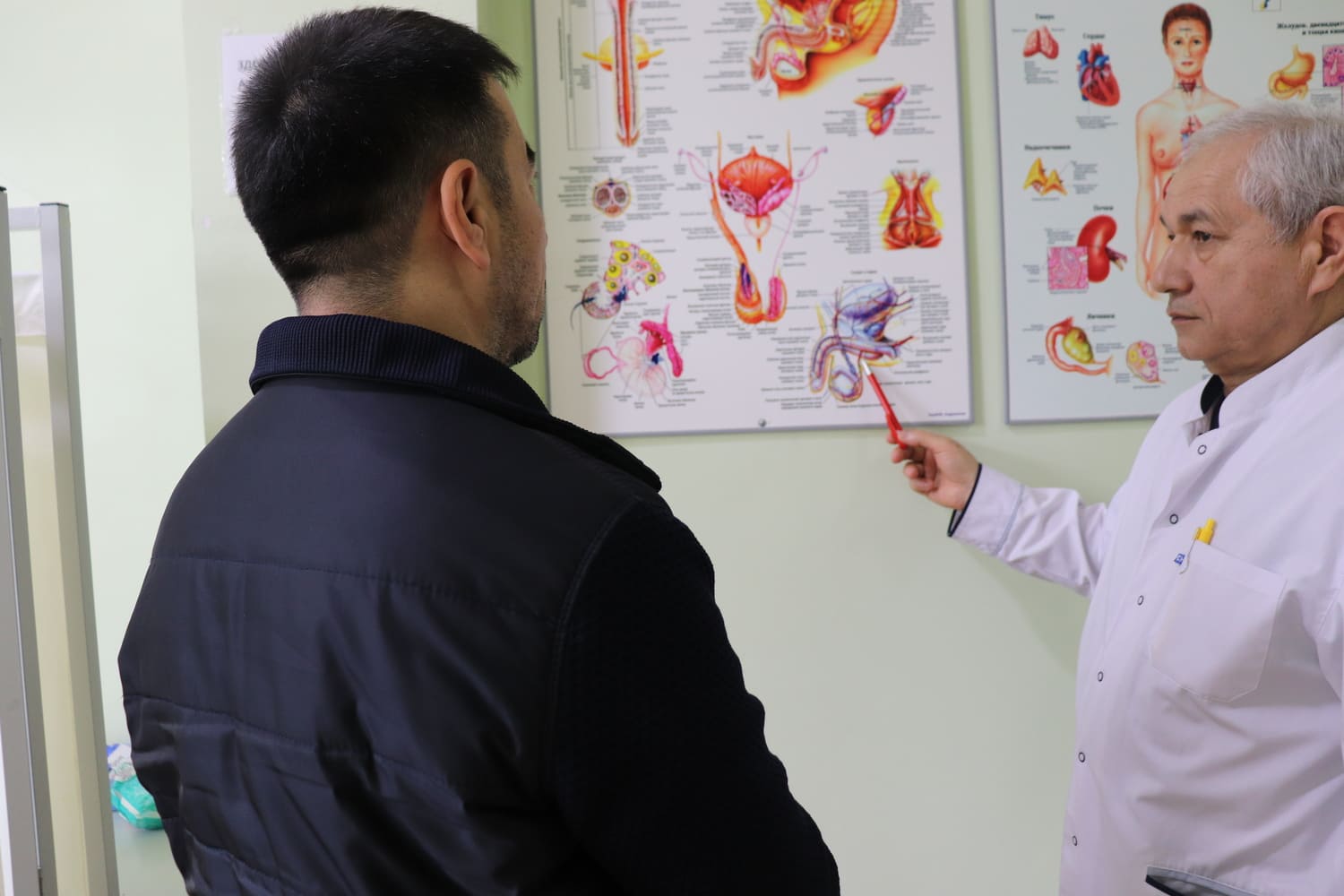
Open or laparoscopic hernia repair: which one suits you?
In modern operations the weak area is reinforced with a special mesh, which lowers the risk of the hernia coming back. There are two main approaches:
| Criterion | Open repair (Lichtenstein) | Laparoscopic repair (TAPP / TEP) |
|---|---|---|
| Incision | One cut in the groin | 3 small keyhole incisions in the abdominal wall |
| Anaesthesia | Local, spinal or general | Usually general anaesthesia |
| Pain afterwards | May be somewhat greater | Often less, with a quicker return to normal activity |
| Hernias on both sides | Two separate incisions | Both sides repaired through the same keyholes |
| Recurrent hernia | Convenient if the previous repair was laparoscopic | Convenient if the previous repair was open |
| Used with caution in | A good choice when general anaesthesia is risky | Men who have had major lower abdominal surgery |
In experienced hands both methods give reliable results. For hernias on both sides, or a hernia that has returned after an open repair, laparoscopy is often preferred. More detail: laparoscopic hernia repair and open hernia surgery. In selected cases another option may be discussed — read about robot-assisted hernia repair in a separate article. The surgeon chooses the method after examining you.
Recovery after inguinal hernia surgery
- most patients are up and walking on the day of surgery or the next day, and go home soon afterwards;
- light work and everyday tasks can usually be resumed within 1–2 weeks;
- heavy lifting and strenuous exercise are limited for the period your surgeon advises (often several weeks);
- it is important to avoid constipation and severe coughing during healing;
- temporary swelling or bruising of the scrotum can occur and usually settles on its own.
Effects on the testicle and on fertility
Because the operation is carried out right next to the spermatic cord, men often worry about the testicle and about fertility. Serious complications — injury to the vas deferens, reduced blood supply to the testicle or shrinkage of the testicle — are rare. They are slightly more likely with repeat operations and with large hernias extending into the scrotum. Some men experience long-lasting groin pain after the repair. If you are planning to have children, tell your surgeon before the operation so that this can be taken into account.
If you notice a bulge in your groin or scrotum, do not put off seeing a doctor — a planned operation is much safer than an emergency one. You can read more on the page of our urology department.
Frequently asked questions
Can an inguinal hernia go away on its own?
No. The defect in the abdominal wall does not close by itself, and a hernia usually grows over time. Only an operation can cure it, and the decision is made after a doctor has examined you.
Should I wear a truss for an inguinal hernia?
A truss does not cure a hernia; it only holds it in temporarily. Wearing one for a long time can weaken the tissues further, so use it only if a doctor recommends it.
How do I know if my inguinal hernia is strangulated?
The hernia suddenly becomes hard and painful and will not go back in, often with vomiting and a swollen abdomen. This is an emergency — call 103 straight away.
Is laparoscopic or open hernia surgery better?
In experienced hands both give reliable results. Laparoscopy is often preferred for hernias on both sides and for recurrences after open repair, while open repair suits men in whom general anaesthesia is risky; the surgeon decides.
When can I go back to work after inguinal hernia surgery?
Most people return to light work within 1–2 weeks. Heavy lifting is restricted for several weeks, and your surgeon will tell you exactly how long.
Can inguinal hernia surgery cause infertility?
This is rare. Injury to the vas deferens or to the blood supply of the testicle is slightly more likely with repeat operations and large hernias, so tell your surgeon in advance if you are planning children.
Which doctor operates on an inguinal hernia?
A surgeon performs the repair, and a urologist may be involved when the hernia extends into the scrotum. For hernias in general, read the article on abdominal hernia.
Related reading:
Doctors for consultation
Inguinal hernias are assessed by our urologists and surgeons, who choose open or laparoscopic repair according to the type of hernia. Our doctors in this field:



Book an appointment with a surgeon or urologist
Noticed a bulge in your groin or scrotum? An examination and ultrasound help to find the cause and choose the right type of repair.
Call now — +998 71 210-30-30Contacts
Address: 7A/3 Nurafshon street, Tashkent
Phone: +998 71 210-30-30 · WhatsApp: +998 95 662-30-30
Opening hours: Monday–Saturday, 09:00–18:00
E-mail: