


Useful articles

Mitral Valve Prolapse: Is It Dangerous, Symptoms and When Follow-Up Is Needed
Doctor's blog
sbdrmn
Direction: Robotic surgery · All services
Mitral valve prolapse means that the leaflets of the valve between the left atrium and the left ventricle bulge back towards the atrium each time the heart contracts. It is one of the most common findings on heart ultrasound reports, and in most people it is harmless. Below we explain when a prolapse is simply a feature of how the valve is built and when it needs follow-up, what symptoms it can cause, whether sport and pregnancy are safe, and which signs call for urgent help.
Contents
- What is mitral valve prolapse and is it dangerous?
- What causes the valve to prolapse?
- Symptoms of mitral valve prolapse
- What matters most: how much the valve leaks
- Possible complications
- When to seek urgent help
- How mitral valve prolapse is diagnosed
- Treatment and follow-up
- Sport, pregnancy and visits to the dentist
- Seeing a cardiologist at Saba Darmon
- Frequently asked questions
What is mitral valve prolapse and is it dangerous?
The mitral valve sits between the left atrium and the left ventricle of the heart and has two leaflets. When the ventricle contracts, the leaflets close tightly and stop blood from flowing back into the atrium. In mitral valve prolapse (often shortened to MVP), one or both leaflets are stretchier than usual and bulge back towards the atrium, like a small dome, as the valve closes. This is found on a heart ultrasound in roughly two to three people in every hundred. For most of them it is harmless: the valve still closes well, the heart works normally and life expectancy is not affected.
What decides the risk is not the bulging itself but how much blood the valve lets back through — the degree of mitral regurgitation, also called a leaky valve. So being told “you have a prolapse” is only half of the diagnosis. The key question is whether there is a leak and how large it is.
What causes the valve to prolapse?
In most cases the cause lies in the way the valve tissue is built from birth. The connective tissue is softer, the leaflets are thickened and slightly too large, and the fine cords that anchor them (the chordae) are longer than normal. Doctors call this myxomatous change. The tendency often runs in families. Less commonly, prolapse appears as part of an inherited connective tissue condition such as Marfan syndrome.
You cannot bring on a prolapse through stress, lifestyle or exercise, and it cannot be passed on like an infection. In some people the changes in the valve slowly progress over the years, and raised blood pressure adds to the strain on the leaflets. That is why keeping blood pressure under control matters; if there is any doubt, your doctor may suggest 24-hour blood pressure monitoring.
Symptoms of mitral valve prolapse
Most people have no symptoms at all, and the prolapse is picked up by chance during a test done for another reason. When symptoms do occur, they are usually these:
- a feeling of missed, extra or irregular heartbeats — most often caused by ectopic (extra) beats; rhythm problems are covered in our article on heart arrhythmia;
- sharp or vague chest discomfort that is not linked to physical effort;
- when the leak is significant — breathlessness on exertion, tiring easily, or shortness of breath when lying flat.
Anxiety, panic attacks, a sense of not getting enough air and cold hands have often been blamed on prolapse, but studies have not confirmed the link. These complaints are just as common in people without a prolapse and have more to do with the autonomic nervous system and anxiety — see our article on vegetative-vascular dystonia. In other words, finding a small prolapse on a scan is not a reason to stop looking for the real cause of feeling unwell.
What matters most: how much the valve leaks
An echocardiography report always states the degree of regurgitation alongside the word “prolapse”. Your follow-up plan depends on it.
| Leak | What it means | Follow-up |
|---|---|---|
| None or trivial | The valve closes almost completely; the heart chambers are not enlarged | No restrictions; an echocardiogram every few years, or sooner if new symptoms appear |
| Moderate | Some blood flows back into the atrium, and the heart is coping with it for now | Regular cardiology review and echocardiography, usually every one to two years; blood pressure control |
| Severe | A large volume of blood flows back; the left atrium and ventricle may gradually enlarge | Close cardiology follow-up; if criteria are met, valve repair is considered at a cardiac surgery centre |
Only echocardiography can tell these grades apart — you cannot judge it from how you feel. Even a severe leak may cause no symptoms for a long time, so it is important not to skip the check-ups you have been given.
Possible complications
Complications are uncommon and mainly affect people whose leaflets are clearly thickened and whose valve leaks significantly.
- Worsening regurgitation. Occasionally one of the cords snaps, the leak increases suddenly and breathlessness gets worse quickly. A severe leak that lasts for years overloads the heart muscle and can lead to chronic heart failure.
- Rhythm problems. Ectopic beats are common and usually harmless. If the left atrium becomes enlarged, atrial fibrillation may develop.
- Infective endocarditis — a bacterial infection of the valve; this is rare.
- Dangerous ventricular arrhythmias are very rare and occur in a small higher-risk group; a cardiologist looks for signs of this risk on the ECG, the echocardiogram and longer rhythm recordings.
When to seek urgent help
Most people with a prolapse never find themselves in this situation, but it is worth knowing the warning signs.
Call 103 straight away if you faint or come close to fainting; if a fast, irregular heartbeat starts and does not settle within a few minutes, especially with weakness or chest pain; if breathlessness suddenly gets worse or you cannot breathe lying down; or if one side of the face droops, an arm or leg goes weak, or speech becomes slurred. See a cardiologist within the next few days if you have an unexplained fever lasting several days with shivering and marked weakness, or if breathlessness is gradually increasing.
How mitral valve prolapse is diagnosed
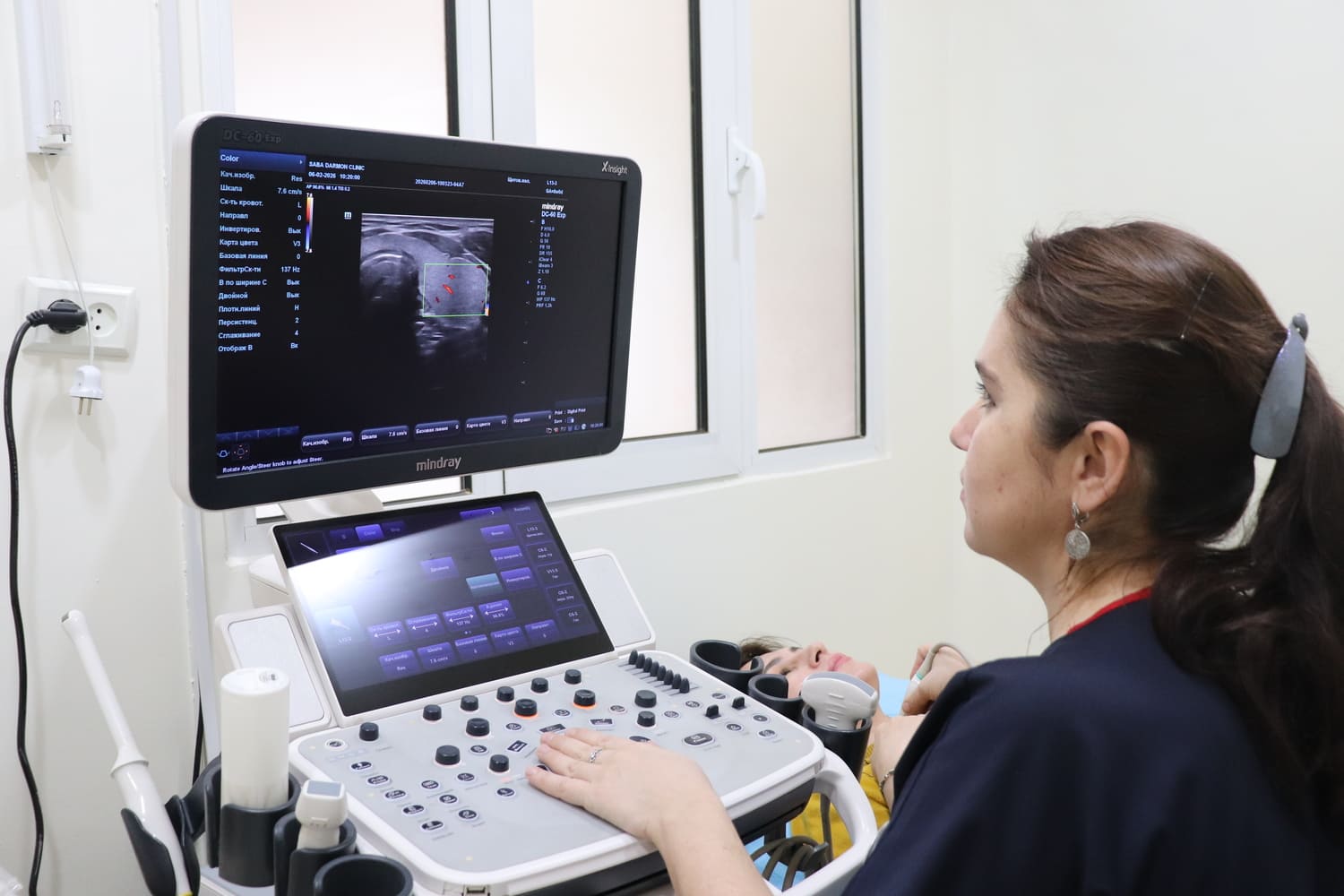
When listening to your heart, a doctor may hear a characteristic click or a murmur, but the diagnosis can only be confirmed by echocardiography. The scan shows how far the leaflets bulge, how thick they are, the degree of leak, the size of the heart chambers and how well the ventricle is pumping. What the test involves is explained in our article on echocardiography, the heart ultrasound scan.
In the past, when older echocardiography criteria were in use, this diagnosis was made far too often: because the valve ring is naturally saddle-shaped, healthy leaflets could look as if they were bulging in some views. Today’s criteria are stricter. A diagnosis made many years ago may therefore not be confirmed on a modern scan — that is not a mistake, simply better accuracy.
An ECG is usually recorded as well. If you are troubled by irregular beats, the doctor will arrange or refer you for a 24-hour rhythm recording (Holter monitoring). Some people need an exercise test, a transoesophageal echocardiogram or a cardiac MRI scan; the cardiologist will refer you for these if they are needed.
Treatment and follow-up
A prolapse with no leak, or only a trivial one, needs no treatment. There is no medicine that “corrects” the leaflets, and none is needed. The purpose of follow-up is to notice in good time if the valve changes.
- If palpitations bother you, the first step is to cut down on triggers: caffeine, energy drinks, alcohol, smoking and lack of sleep. If necessary, the doctor may prescribe a medicine that slows the heart rate, for example from the beta-blocker group.
- If your blood pressure is raised, treating it reduces the load on the valve.
- If atrial fibrillation develops, the cardiologist will decide whether you need treatment to prevent blood clots.
- With a severe leak — particularly if symptoms appear, or the left ventricle starts to enlarge or pump less well — surgery is considered. Repairing the valve is preferred to replacing it. These operations are carried out in specialised cardiac surgery centres; the cardiologist will organise the tests needed for the decision and refer you.
Take any medicine only as prescribed, and do not start or stop it on your own.
Sport, pregnancy and visits to the dentist
Sport. If there is no significant leak and you have had no rhythm problems or fainting, physical activity is not restricted and is good for you. If you are planning competitive sport or very strenuous training, discuss it with a cardiologist first.
Pregnancy. A prolapse without significant regurgitation does not stand in the way of pregnancy or childbirth. When planning a pregnancy, show your echocardiography report to your obstetrician; with a moderate or severe leak, cardiology follow-up will be needed.
Antibiotics before dental treatment. Under current guidelines, antibiotics before dental procedures are not needed for prolapse alone. They are reserved for people at high risk, such as those with an artificial heart valve or a previous episode of endocarditis. The best protection is good oral hygiene and regular dental check-ups.
Seeing a cardiologist at Saba Darmon
At Saba Darmon Medical Center you can see a cardiologist and have an ECG, echocardiography, 24-hour blood pressure monitoring and laboratory tests. Bring your previous echocardiography reports (from different years if you have them), any ECG tracings and a list of the medicines you take: comparing results over time can matter more than the newest scan on its own. Useful questions to ask include: how severe is my leak, when should the next echocardiogram be done, are there any limits on sport or pregnancy, and which symptoms mean I should come back earlier than planned? If surgery comes into question, the cardiologist will discuss the treatment options and next steps with you. To book a visit, contact our cardiology department.
Frequently asked questions
Is mitral valve prolapse dangerous?
For most people it is not. Prolapse is found in about two to three people in every hundred, and in the great majority the valve still closes well and the heart works normally. The risk depends on how much blood the valve lets back through, known as the degree of regurgitation. With no leak or only a trivial one, no restrictions or treatment are needed and a check-up every few years is enough. A moderate or severe leak needs regular cardiology follow-up.
Can mitral valve prolapse go away on its own?
The structure of the leaflets does not change, so a true prolapse does not go away, but in most people it stays stable and harmless for life. Sometimes a diagnosis made many years ago using older criteria is not confirmed on a modern echocardiogram, simply because the test has become more accurate. In some people the leak increases over the years, which is why it is important to repeat echocardiography at the intervals your cardiologist recommends.
Can I exercise with mitral valve prolapse?
If there is no significant leak and you have had no fainting or serious rhythm problems, sport and physical activity are not restricted — in fact they are good for your heart and circulation. Before competitive sport or very strenuous training, see a cardiologist, who will review your echocardiogram and ECG and arrange further tests if needed. With moderate or severe regurgitation, the safe level of exertion is decided individually.
Do I need antibiotics before dental treatment?
No. Under current international guidelines, antibiotics before dental procedures are not needed for prolapse alone. This kind of prevention is reserved for people at high risk, such as those with an artificial heart valve or a previous episode of infective endocarditis. The most reliable way to protect the valve is good oral hygiene and regular visits to the dentist. If you are unsure which group you belong to, ask your cardiologist.
When is surgery needed for mitral valve prolapse?
Surgery is considered only for severe mitral regurgitation: when symptoms such as breathlessness and tiredness appear, or when echocardiography shows the left ventricle enlarging or pumping less well. Repairing the valve is preferred to replacing it. These operations are performed in specialised cardiac surgery centres. The cardiologist will arrange the necessary tests, explain the options and refer you. Most people with a prolapse never need an operation.
Related reading:
Doctors for consultation
Assessment and follow-up of heart valve conditions are provided by our cardiologists. Our doctors in this field:



Book an appointment with a cardiologist
Has a scan shown a prolapse, or are palpitations bothering you? A cardiology consultation will clarify whether follow-up is needed.
Call now — +998 71 210-30-30Contacts
Address: 7A/3 Nurafshon street, Tashkent
Phone: +998 71 210-30-30 · WhatsApp: +998 95 662-30-30
Opening hours: Monday–Saturday, 09:00–18:00
E-mail: